
 English
 中文简体


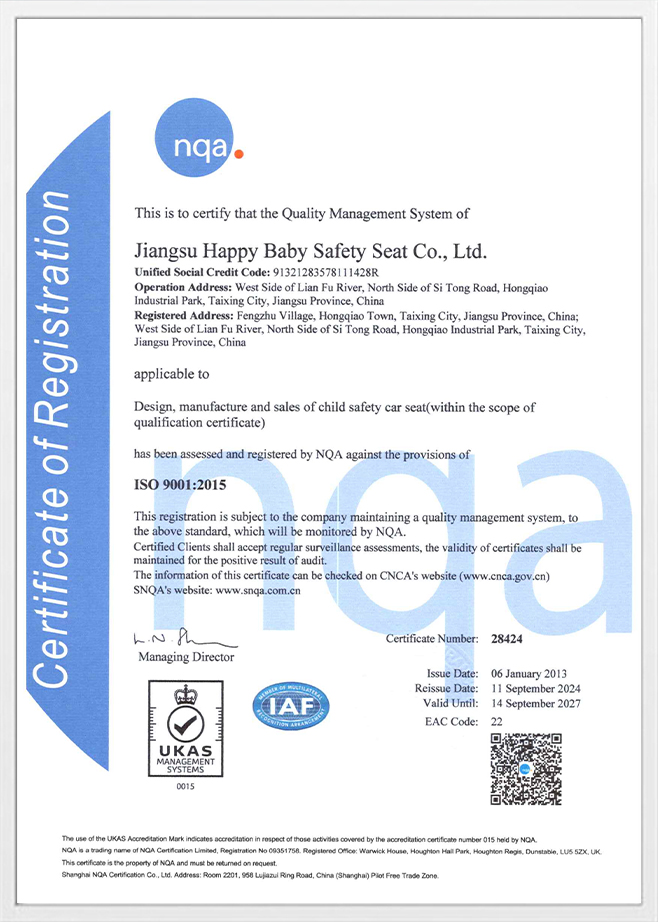
Since its establishment in 2011, the company has been professional China Extended Rear Facing i-Size Car Seat Manufacturers and Wholesale Extended Rear Facing i-Size Car Seat Factory, and has closely followed the development trends of domestic and international markets, strictly adhered to the European ECE-R44, ECE-R129 and Chinese GB (CCC) standards, and passed the ISO 9001:2008 quality management system certification to ensure stable supply and reliable quality.
Drawing on the care of parents and professional experience in automotive safety, we combine user-friendly designs for parents with strict manufacturing standards to ensure children are comfortable and happy, allowing parents to relax and focus on their trips.

Extended Rear Facing i-Size Car Seat Wholesale
2026 R129 i-Size Certified · Extended Rear-Facing to 105cm
Extended Rear Facing
i-Size Car Seat
Built to make rear-facing travel practical well past the R129 minimum — a taller shell, longer legroom allowance, and a recline range that keeps older toddlers comfortable facing the rear.
- ✔ i-Size (R129) Certified
- ✔ Rear-Facing Usable to 105cm
- ✔ Extra Legroom Allowance
- ✔ 40–105cm / Birth–Approx. 4 Years
Extended RF Seat
i-Size · Rear-Facing to 105cm
Birth to Approx. 4 Years, Rear-Facing
R129 · i-Size
Featured Products
Explore our full range of R129 certified convertible car seats


Extended Rear Facing i-Size Car Seat: The Complete Guide
The Extended Rear Facing i-Size Car Seat starts from a well-documented safety principle: the longer a child remains rear-facing, the lower their injury risk in a frontal collision, since the seat shell absorbs crash forces across the back and head instead of concentrating them at the neck. R129 sets 15 months as a legal minimum; this seat is engineered to make staying rear-facing well beyond that point genuinely comfortable, not just legally permitted.
Comfort, not safety, is usually the sticking point. Parents often move children to forward-facing early over concerns about cramped legs or an unhappy toddler, despite research showing no increased injury risk from bent-knee rear-facing sitting. This seat responds with an 18% legroom allowance increase over a standard rear-facing shell, measured against common vehicle rear-seat dimensions.
A taller shell supports an older toddler's proportions. Rather than a shell sized primarily around infant use, this model's height and shoulder-zone foam density are built to remain protective and comfortable for a heavier, taller rear-facing toddler approaching the 105cm limit.
The anti-rebound structure is sized accordingly. A reinforced rear-impact bar and anti-rebound bracing are tested against the higher mass typical of an older rear-facing child, not only lighter infant weights.
Recline adapts to the child, not just the age. Settings span from a newborn's near-flat sleep position through to a more upright, alert posture suited to an older toddler who wants to see out the window while still facing the rear.
Small comfort details add up. Breathable fabric panels positioned behind the knee-bend area address the heat build-up that can accompany extended bent-knee sitting on longer drives.
In summary, the Extended Rear Facing i-Size Car Seat takes the well-supported case for rear-facing longer and removes the practical comfort objections that usually cut it short.
Extended Rear-Facing Data
The evidence base for keeping children rear-facing well past the legal minimum.
Injury Risk by Age of Forward-Facing Transition
Relative injury risk index by transition ageBased on published crash-test research
Legroom Allowance vs. Standard Rear-Facing Shell
Bent knees rear-facing carry no added injury riskR129 height-based fit
Households Reaching 105cm Rear-Facing
73% of families using this seat kept
their child rear-facing all the way
to the 105cm height limit
their child rear-facing all the way
to the 105cm height limit
Side Impact Force Reduction
R129 vs. R44 (improvement)Data from TÜV tests
Making Extended Rear-Facing Actually Practical
The evidence for extended rear-facing is strong; the challenge is usually comfort, not safety — this seat solves for comfort.
01
Taller Rear-Facing Shell
A taller shell than a typical convertible seat keeps a growing toddler's head supported rear-facing all the way to the 105cm limit.
02
18% Extra Legroom Allowance
A shell profile that allows more natural knee-bend room, addressing the most common parental concern about extended rear-facing comfort.
03
Wide Recline Range for Older Toddlers
Recline settings tuned for both a newborn's flat sleep position and an older toddler's more upright, alert rear-facing posture.
04
Reinforced Anti-Rebound Bar
A rear-impact bar and anti-rebound structure sized for the greater mass of an older, heavier rear-facing toddler.
05
No-Rethread Harness Through the Full Range
Strap height adjusts via a single lever from newborn through to 105cm, without ever needing to unthread the webbing.
06
Breathable Fabric for Longer-Legged Sitting
Ventilated fabric panels behind the knees address the warmth that builds up with a bent-knee rear-facing position over time.


ABOUT HAPPY BABY
When Safety Counts, We’re Always Ready.
40,000m²
Factory Building Area
200+
Employee
2011
Established
10M
Annual export volume
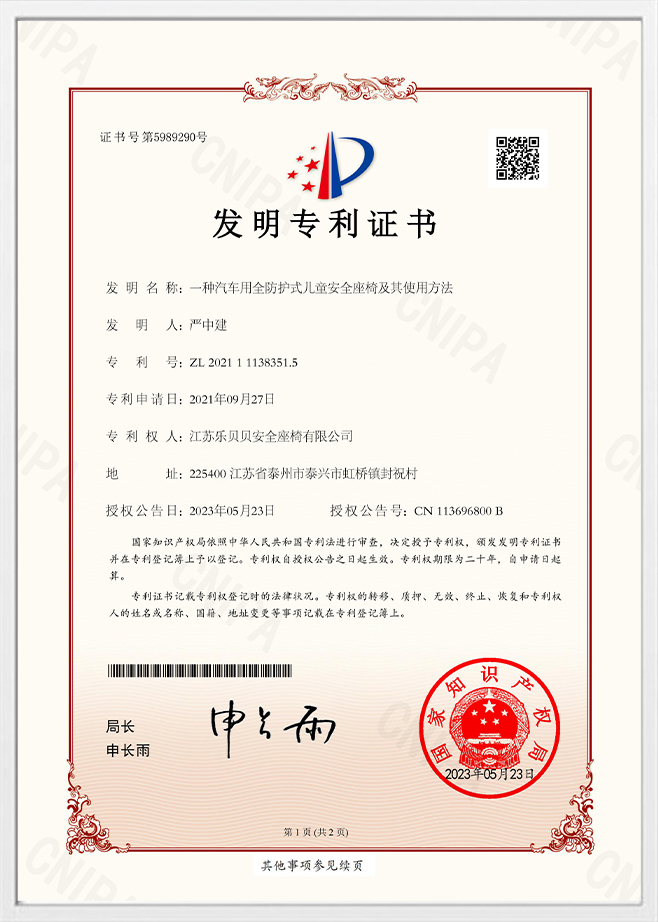
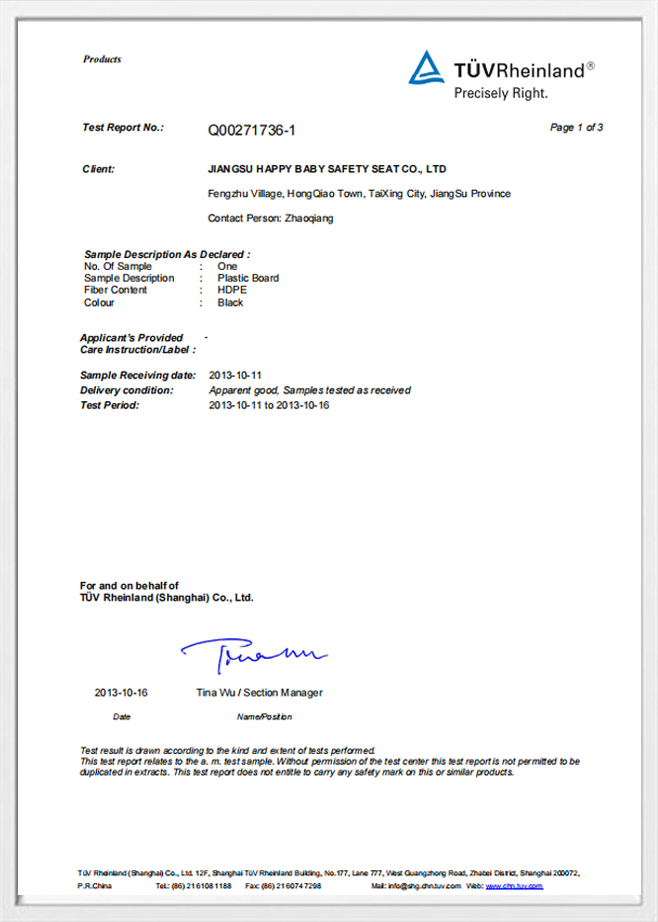
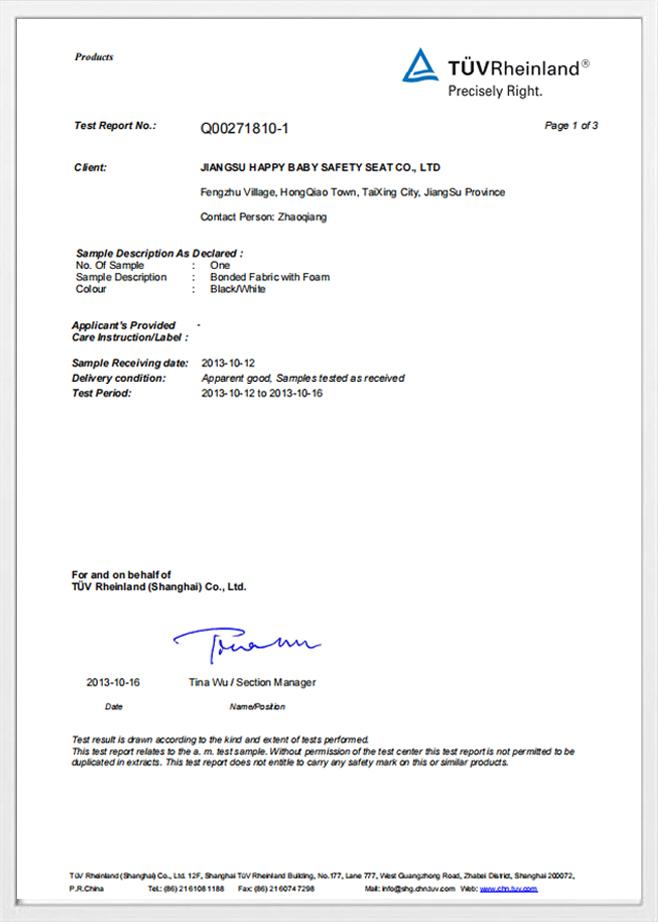
Certificate Of Honor

Relevant Certification
Standards and certification are significant means to show the quality and social responsibility of fabric products. Obtaining these certifications encourages sustainable and ethical production methods and builds the trust of partners and customers in a company.

CCC

CE

ISO

GSG

TÜV
WHY HAPPY BABY?

Rigorous Testing
Strict supervision of partner factories, ongoing Physical & chemical testing.
Safety First
From thoughtful design to shock-absorbing materials, our child safety seats are all equipped with safety features.
Durable and Long-Lasting
Our children's car safety seats are made of sturdy and high-quality materials and have undergone strict quality control and testing procedures.
Ergonomics
Simulate the curvature of the mother's embrace to keep the spine of infants and young children in a relaxed state and reduce the fatigue caused by long-distance travel.
PRODUCT TESTING VIDEO
Our products have passed static and dynamic collision (frontal/side/rolling scene simulation), impact, tensile force, fatigue and durability tests
Frontal Impact Test
Tensile Force Test
Side Impact Test
How We Work
Consultation
Understand the customer's market positioning, functional requirements, certification requirements (ECE, CCC, etc.), and provide professional selection suggestions.
01
Design & Customization
OEM: Provide customized appearance, Logo and packaging based on the customer's brand. ODM: Rapidly develop new styles based on existing product platforms. Discussion on industrial design, fabric selection, and functional configuration.
02
Prototyping & Validation
3D prototyping, functional prototyping, internal testing + third-party laboratory verification, and sample submission for review.
03
Certification & Compliance
Assist in completing the certification process for the target market (ECE, CCC, ISO, SGS/ TUV) and provide complete technical documentation.
04
Mass Production
Automated and standardized production lines, with strict quality control processes (IQC, IPQC, OQC).
05
Delivery & Logistics
Multiple international transportation solutions (sea/air) are available, and destination warehousing and distribution connection can be supported.
06
After-Sales Support
Multiple international transportation solutions (sea/air) are available, and destination warehousing and distribution connection can be supported.
07
R129 (i-Size)
Extended Rear-Facing Design
R129 sets 15 months as a rear-facing minimum; this seat is engineered to make rear-facing comfortable and practical all the way to its 105cm certified limit.
- ✓ Rear-Facing Certified to 105cm: The shell and harness are rated for rear-facing use across the seat's full height range, not just the youngest portion of it.
- ✓ Legroom Testing: Internal cabin-space testing confirms the shell's extra legroom allowance across a range of common vehicle rear-seat dimensions.
- ✓ Anti-Rebound Bar Sized for Toddler Mass: The rear-impact structure is tested against the higher mass of an older rear-facing toddler, not only newborn or infant weights.
- ✓ Side-Impact Testing: Deep side wings are tested at multiple heights within the rear-facing range, reflecting how posture changes as the child grows.
- ✓ No-Rethread Harness Testing: The single-lever strap adjuster is cycle-tested across the full growth range this extended rear-facing design covers.
R129 · i-Size
Cert. #R129-2026-XR16
- Height Range: 40 – 105 cm
- Weight Range: 0 – 18 kg
- Orientation: Rear-Facing to 105cm
- Installation: ISOFIX + Anti-Rebound Bar
- Legroom: +18% vs. Standard Shell
- Fabric: Oeko-Tex 100 Certified, Breathable
- Harness: No-Rethread, 5-Point
Extended Rear-Facing vs. Standard Convertible Seat
Both may share a similar height range on paper, but the shell design determines how far rear-facing actually stays comfortable.
Extended Rear-Facing Seat
- Taller shell for older rear-facing toddlers.
- 18% extra legroom allowance.
- Recline tuned for an alert toddler posture.
- Anti-rebound bar sized for toddler mass.
- Breathable panels behind the knees.
Standard Convertible Seat
- Shell sized more toward average use.
- Standard legroom allowance.
- Recline mainly tuned for infant sleep.
- Anti-rebound bar sized more generally.
- Standard fabric throughout.
Why the Extended Design Helps
- Makes staying rear-facing past 2 years realistic.
- Fewer complaints about cramped knees.
- More comfortable for an alert, awake toddler.
- Tested against a heavier rear-facing child.
- Reduced heat build-up on longer trips.
Material & Construction
Shaped specifically to extend how long rear-facing stays comfortable, not just legally required.
Shell
Taller polypropylene shell profile, sized to support an older toddler's head and shoulders while rear-facing at 105cm.
Anti-Rebound Structure
Reinforced rear-impact bar and anti-rebound bracing sized against the higher mass of a toddler rather than only infant weights.
Foam
Multi-layer EPS with additional density at the shoulder zone, addressing the broader shoulders of an older rear-facing child.
Fabric
Oeko-Tex 100 certified, with breathable panels positioned behind the knee-bend area of a rear-facing toddler.
Technical Specifications
Precise details for informed decision‑making.
40–105 cm
Height Range
0–18 kg
Weight Range
Rear-Facing to 105cm
Orientation Limit
ISOFIX
Installation Type
+18%
Legroom Allowance
No-Rethread
Harness Adjustment
8.3 kg
Net Weight
5 Years
Warranty Period
Frequently Asked Questions
What parents ask about keeping a toddler rear-facing longer.
1. Is it uncomfortable for a toddler to sit rear-facing with bent knees?
Most toddlers naturally cross their legs or rest their feet up the vehicle seatback, and research has found no increased injury risk from bent-knee rear-facing positioning, even over long periods.
2. How much extra legroom does this seat actually offer?
Internal testing measured approximately 18% more legroom allowance compared to a standard rear-facing shell, based on common vehicle rear-seat dimensions.
3. What's the real safety benefit of staying rear-facing longer?
Published crash-test research shows injury risk drops substantially the longer a child remains rear-facing, since the seat and shell absorb crash forces across the back and head rather than concentrating them on the neck.
4. Can this seat still support a newborn, or is it only for older toddlers?
Yes, it's certified from 40cm and includes recline settings suited to newborn sleep positioning, in addition to the more upright settings that suit an alert older toddler.
5. Does the anti-rebound bar work for a heavier rear-facing toddler?
Yes, it's specifically tested against the higher mass typical of an older rear-facing child, not only lighter infant weights.
6. Will my child overheat sitting rear-facing for long periods?
Breathable fabric panels are positioned behind the knee-bend area specifically to address heat build-up during extended rear-facing sitting.
7. At what point should I consider switching to forward-facing?
R129's minimum is 15 months, but many safety authorities and this seat's own design support staying rear-facing up to its full 105cm limit, generally around 4 years old.
8. Is this seat bulkier than a standard convertible model?
It's taller than average to accommodate an older rear-facing toddler's head, though its width and installation footprint remain similar to our other convertible seats.
9. How does the no-rethread harness work across such a wide range?
A single lever raises the strap height from newborn slots through to the maximum rear-facing height, without ever needing to remove and rethread the webbing.
10. Is there a forward-facing mode on this seat?
This model is rear-facing only, purpose-built for extended rear-facing use; once your child exceeds 105cm you'll transition to a forward-facing or all-stage model.
Rear-Facing, Made Comfortable Enough to Last
Extra legroom, a taller shell, and toddler-sized anti-rebound protection, built to make extended rear-facing practical, not just possible.
Learn More at Happy BabyComprehensive technical data · 5-Year warranty · Global compliance

For the safety of babies' travel, we are committed to being a reliable partner for babies and families, and to becoming an expert in children's car safety seats. This is our eternal pursuit.
Contact Us
For exclusive deals and latest offers, sign up by entering your email address below.
CONTACT INFORMATION
-
Address: North of Sitong Road and west of Lianfu Port, Hongqiao Industrial Park, Taixing City, Jiangsu Province
-
Phone: +86 15996087029
-
E-mail: [email protected]
Copyright © JIANGSU HAPPY BABY SAFETY SEAT CO., LTD. All Rights Reserved.
Wholesale Extended Rear Facing i-Size Car Seat Manufacturers