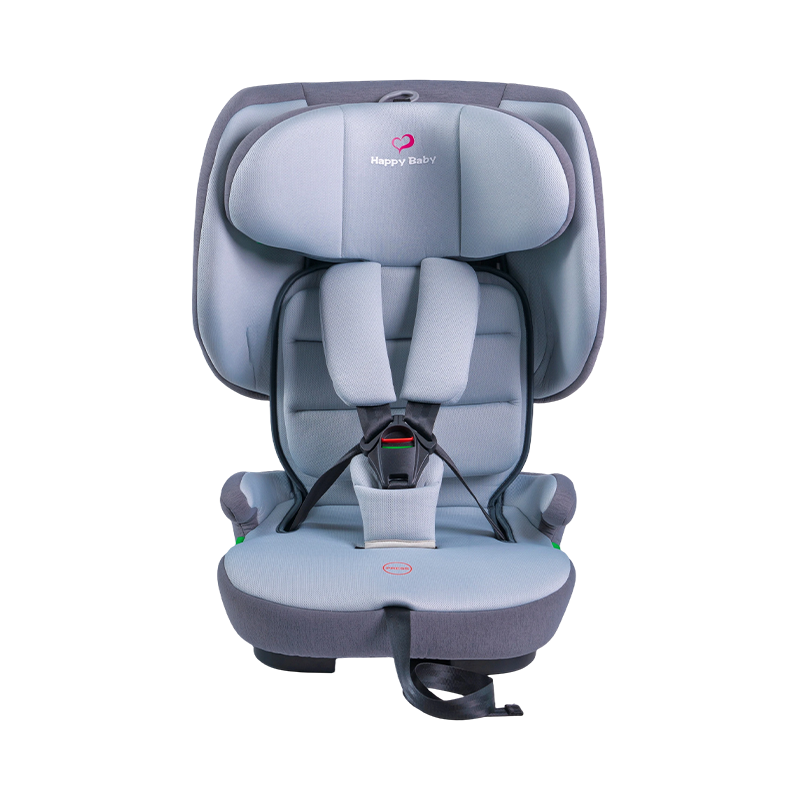
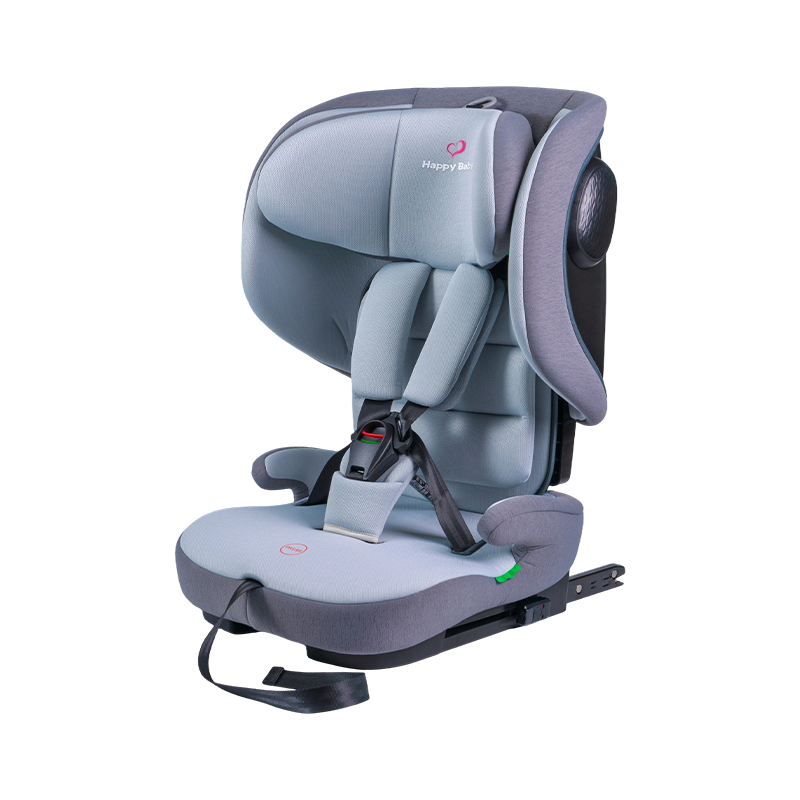
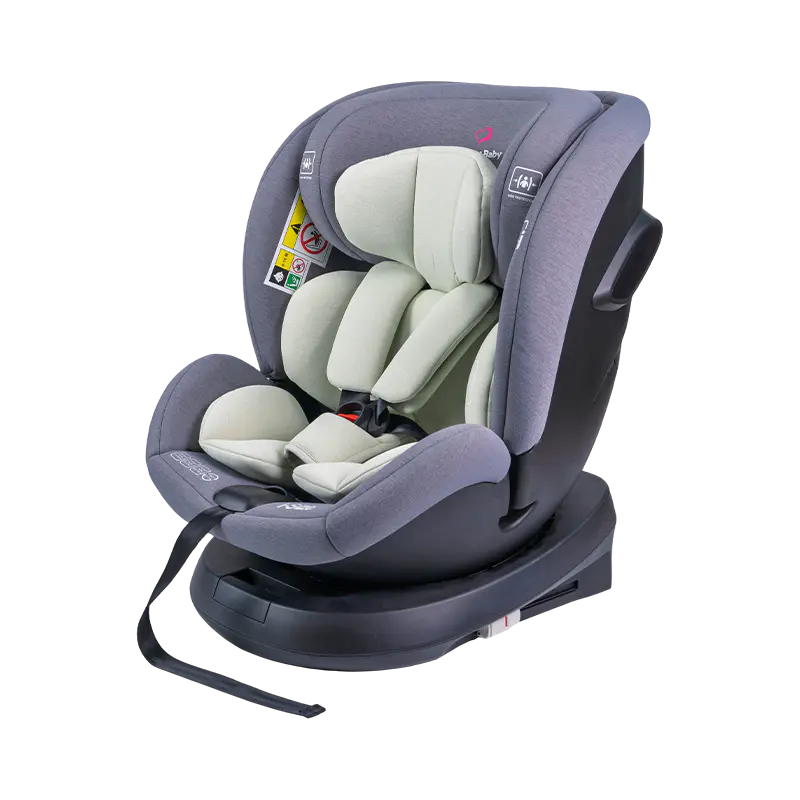
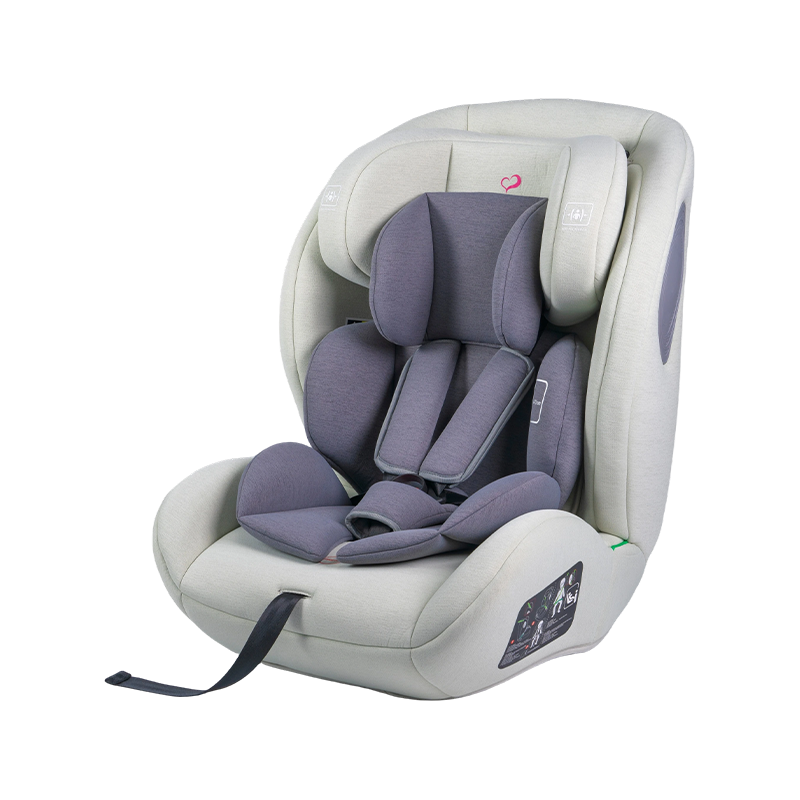
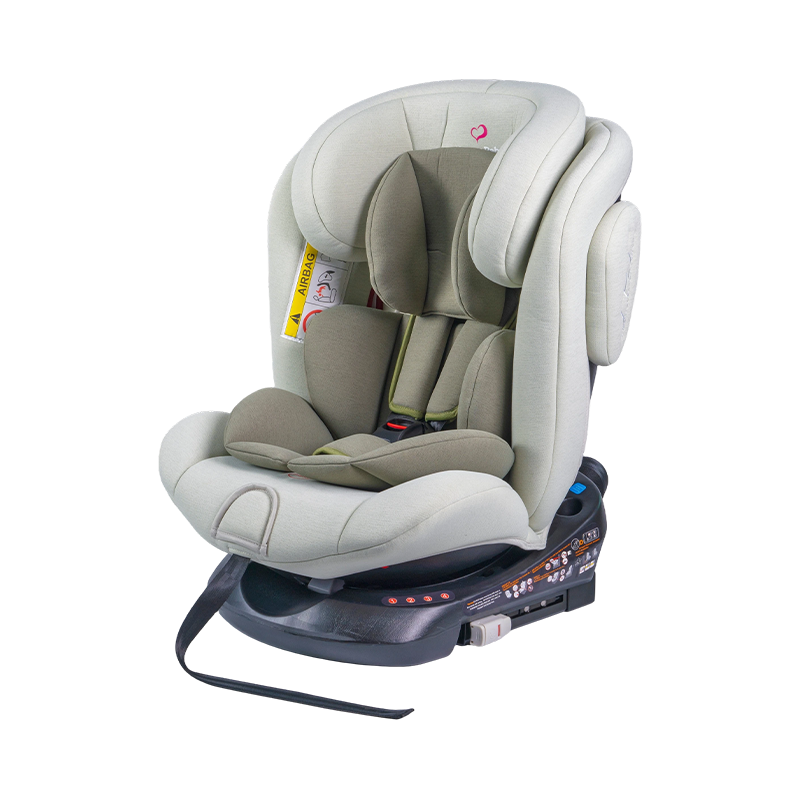
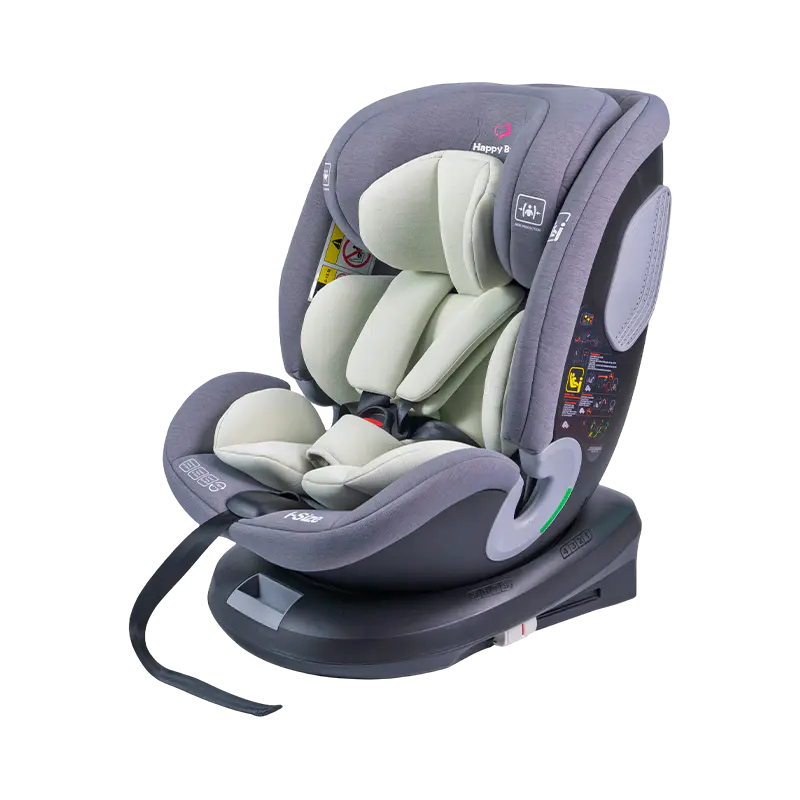
HB337
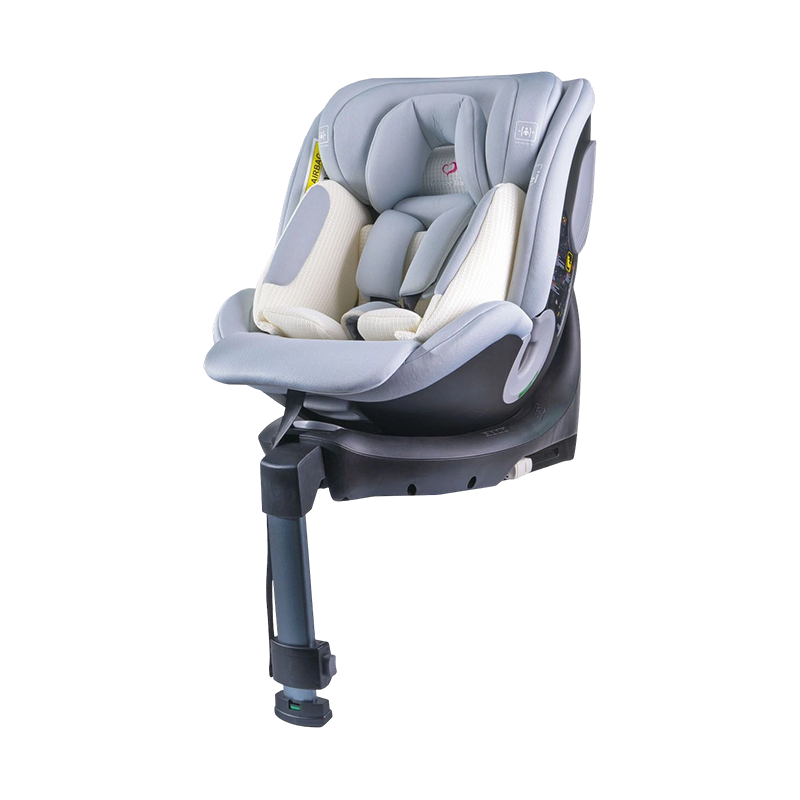
ISOFIX I-Size Foldable safety car seat 76-150cm
The HB337 ISOFIX I-Size Foldable safety car seat suitable for children from 76cm to 150cm in height, this car seat combines safety features with practical convenience. With its foldable backrest, adjustable headrest, and easy-to-operate reclining positions, the HB337 car seat offers a flexible, user-friendly design that evolves with your child's needs.
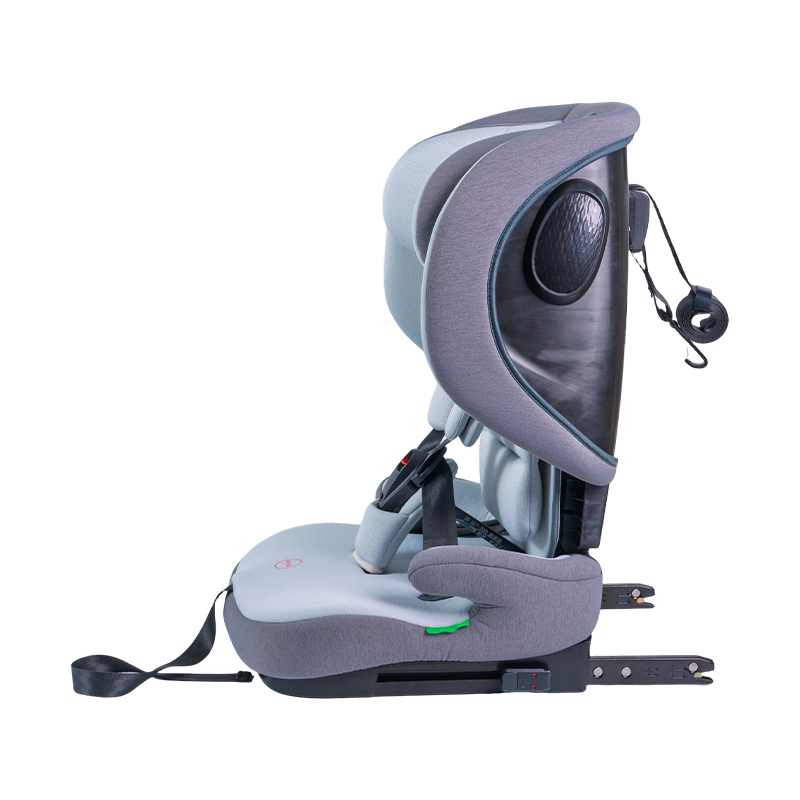
Key Features: Forward-Facing Design (Child Height 76-150cm): The HB337 car seat is designed for forward-facing use, suitable for children between 76cm and 150cm tall. This makes it ideal for toddlers and growing children, providing a secure and comfortable travel experience. Integral 5-Point Harness System: Equipped with a built-in 5-point harness system, this car seat ensures your child is securely fastened during every journey. The harness adjusts easily as your child grows, providing maximum safety and stability. Four Reclining Positions with One-Hand Operation: The seat body features four reclining positions that can be adjusted with just one hand, allowing parents to quickly find the most comfortable position for their child. Whether your child is awake or sleeping, this feature ensures a more relaxed and enjoyable ride. Adjustable Headrest for Growing Baby: The HB337 car seat includes an adjustable headrest, allowing you to modify the height to suit your child's growth. This feature ensures your child’s neck and head are properly supported as they grow, providing both comfort and safety.
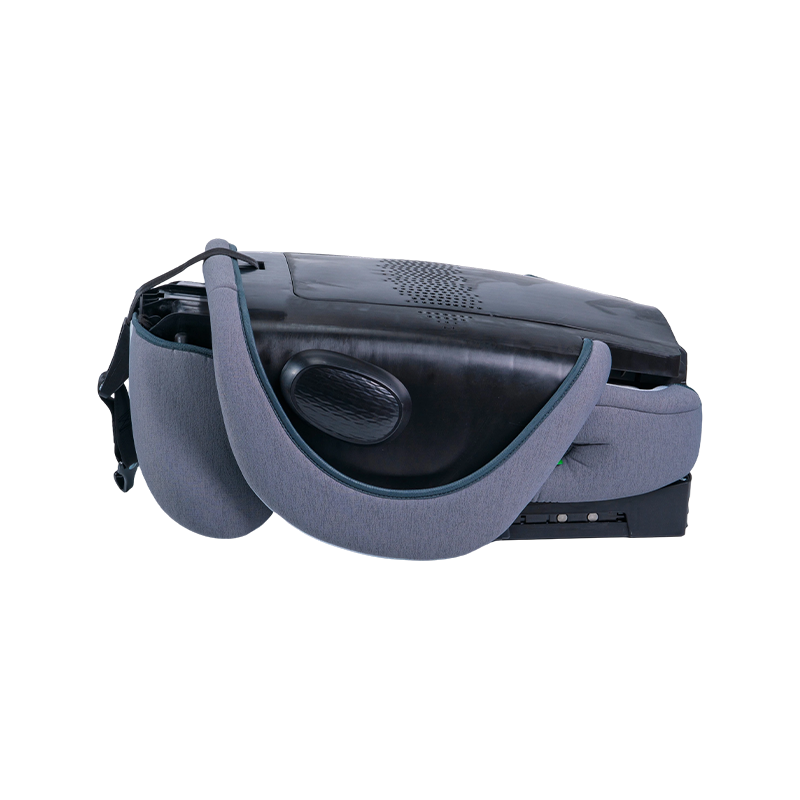
1)Injection mould making 2)Forward facing: Child height 76-150cm 3) Integral 5-point harness system 4) four reclining positions for seat body with one single hand operation 5)Adjustable headrest for growing baby use 6)Foldable backrest .
R129 / i-Size Child Restraint
HB337 ISOFIX I-Size Foldable Safety Car Seat, 76–150cm
A forward-facing, height-based seat built to stay with one child from early toddlerhood through the booster years, instead of being swapped out at every growth stage. The folding backrest, four one-hand recline positions and a headrest that grows with the child are the details a parent actually touches every day — this section looks at what sits behind those details: the standard it is tested to, how the harness and shell work together in an impact, and how to judge whether a seat like this fits a specific car and child.
76–150cmHeight coverage
4Recline positions
R129i-Size regulation
Understanding The Standard
What "I-Size" Actually Changes About How a Seat Is Tested
"I-Size" is not a marketing label — it refers to UN Regulation R129, the ECE child-restraint standard that replaced the older R44 framework in most of the European market. The name on the box matters less than what the regulation requires underneath it, and that is where the real difference between an i-Size seat and an older-generation seat shows up.
R44 classified seats by the child's weight and grouped them into bands — Group 0+, Group 1, Group 2/3 — with the parent left to judge, sometimes incorrectly, whether a child's weight matched the right group. R129 classifies primarily by height, which tracks a child's actual body proportions more closely than weight alone, and it adds a mandatory side-impact test that R44 never required. A seat carrying an R129 approval mark has been tested for a lateral collision scenario in addition to the frontal and rear tests both standards share, and it is checked for compatibility with ISOFIX anchor points rather than relying solely on the vehicle's adult seatbelt to hold the seat in place during a crash.
For the HB337, the practical result is a seat with a defined 76–150cm operating window, a shell profile shaped to manage side-impact energy, and connection points designed to lock into a vehicle's ISOFIX anchors rather than depend entirely on correct seatbelt routing — which is also the installation method most parents get wrong when a seat only offers a belt-path option.
Core Capabilities
Six Details Behind the HB337's Day-to-Day Comfort and Fit
A car seat is judged twice: once by a test lab measuring deceleration forces, and once by a tired parent buckling in a squirming toddler at 7am. The features below were chosen with both in mind.
01
Integral 5-Point Harness
A built-in harness with straps over both shoulders, both hips and between the legs distributes crash force across the strongest parts of a child's skeleton rather than concentrating it at the abdomen.
02
One-Hand, Four-Position Recline
A single lever adjusts the seat body across four recline angles, so a parent can drop the seat back for a sleeping toddler without waking them by fumbling with a two-handed mechanism.
03
Growth-Adjustable Headrest
Headrest height moves independently of the harness height in most i-Size designs, keeping the head properly supported as a child grows without needing to re-thread harness straps every few months.
04
Foldable Backrest
The backrest folds flat for storage or transport between homes — useful for families splitting time between two vehicles or grandparents who only need the seat installed occasionally.
05
ISOFIX-Compatible Base Connection
Rigid connectors lock directly into a vehicle's built-in ISOFIX anchor points, removing the seatbelt-routing errors that are the most common cause of loose, incorrectly installed seats.
06
Forward-Facing Shell Geometry
The shell and side wings are profiled for the 76–150cm forward-facing stage specifically, rather than being a rearward-facing infant shell stretched to cover an age range it was not designed for.
Safety Mechanism
What Happens Inside the Seat During an Impact
None of these stages are visible in daily use, which is exactly why they are worth explaining — a parent buckling a harness is trusting an engineering chain they cannot see.
1
Harness engages
The 5-point harness tightens across shoulders and hips the instant forward motion begins, keeping the torso against the seat back.
2
Shell absorbs energy
Energy-absorbing structure inside the shell compresses to reduce the force transmitted to the child on frontal impact.
3
Side wings contain lateral motion
Deep side wings around the head and torso are shaped to limit sideways travel during the lateral impact scenario R129 specifically tests for.
4
ISOFIX anchors resist rotation
Rigid ISOFIX connectors limit how far the whole seat can pitch or rotate on the vehicle bench, keeping the harness geometry consistent through the event.
5
Headrest limits head travel
Correctly positioned headrest wings reduce how far the head can move relative to the torso, which is where whiplash-type injury risk concentrates.
Technical Reference
HB337 Specification Summary
Figures below describe the product class and confirmed regulatory scope; exact packed dimensions, shell weight and fabric composition can be confirmed against the current production batch and any OEM/ODM customization applied to a specific order.
Attribute
Specification
Regulatory standard
UN R129 (i-Size)
Installation orientation
Forward-facing
Height range
76cm – 150cm
Harness type
Integral 5-point harness
Recline positions
4, single-hand adjustment
Headrest adjustment
Multi-position, independent of harness height
Backrest
Foldable for storage and transport
Vehicle connection
ISOFIX anchor points
Shell construction
Injection-moulded, energy-absorbing structure
Color options, fabric pattern, printed branding and packaging are configurable for OEM and ODM orders; contact the factory for current lead times on customized runs.
Why Correct Use Matters
The Difference Correct Restraint Use Makes
The single biggest factor in how well any car seat performs is not the model — it is whether it is installed correctly and used on every trip. The two references below illustrate why that detail gets so much attention in child-passenger-safety guidance.
Relative Injury Risk Reduction, Age-Appropriate Restraint vs. Seatbelt Alone
Widely cited child-passenger-safety figures; ranges vary by study and age group
Figures represent commonly cited reductions in fatal injury risk for correctly used, age-appropriate restraints compared with no restraint or an adult seatbelt used alone; the exact percentage varies across studies and countries, but the direction and scale are consistent.
Recline Position vs. Recommended Use Stage
Illustrative guide — always confirm against the seat's own instruction manual and the child's actual size
Younger, shorter children generally sit better in a more reclined position, particularly for sleeping during longer trips, while older children closer to the 150cm limit are usually more comfortable upright — the four-position recline exists to follow that shift as the same child grows through the range.
Troubleshooting Reference
Installation Mistakes That Show Up Most Often
Child-passenger-safety technicians who run seat-check events report a small, repeating set of errors across almost every brand and model. None of them are unique to this seat, but they are worth naming plainly rather than assuming they only happen to other people.
Common Mistake
Why It Happens
What to Check
Harness too loose across the shoulders
Strap tightened once at installation and not rechecked as bulky seasonal clothing changes
Pinch test: no slack should be pinchable in the strap at the shoulder once buckled
Headrest left at an old height setting
Headrest height adjusted less often than a child's actual growth rate
Re-check headrest position at the start of each season, not only when it looks obviously wrong
ISOFIX connectors not fully clicked in
Connector engaged on one side but not seated evenly on both
Confirm a visual or audible click indicator on both connectors before driving
Recline angle mismatched to child's age
Position set once at purchase and never revisited as the child grows into the range
Move to a more upright position as the child approaches the top of each height band
Seat installed in a position blocked by an airbag
Forward-facing seat placed in a front passenger seat with an active frontal airbag
Check the vehicle manual for airbag guidance before installing any forward-facing seat up front
In Practice
How One Seat Follows a Child Through Several Growth Stages
To make the 76–150cm range concrete, it helps to walk through what actually changes for a family using the same seat over several years rather than replacing it at each stage.
A child moving into a forward-facing seat around three years old typically sits close to the lower end of the HB337's range, usually in one of the more reclined positions, with the headrest set low and the harness straps at their lowest routing height. Over the following one to two years, the main adjustments a parent makes are headrest height and harness length, tracked against the child's actual growth rather than against age in months — two children of the same age can need different settings.
By the time the same child approaches school age, the seat typically moves toward a more upright recline position, both because the child no longer naps as often on shorter trips and because an upright position better suits a taller torso. The transition through the top of the range, as the child nears 150cm, is usually the point where families start comparing this seat against a backless or high-back booster — a comparison worth making deliberately rather than switching early simply because a child has outgrown the look of a full harnessed seat while still being well below the height and maturity level a booster assumes.
The scenario above assumes typical, average growth; a family with a child who grows unusually quickly or slowly should rely on the seat's actual height markings and instruction manual rather than age as a guide, since R129 classification is built around height specifically because it tracks real body proportions more reliably than age does.
Installation Method
ISOFIX vs. Seatbelt-Only Installation
Installation error is consistently one of the largest gaps between a car seat's tested performance and its real-world performance, which is why the connection method is worth understanding on its own.
Seatbelt-OnlyHigher error risk
Depends on correct belt routing through the seat's belt path every single trip; a twisted belt or wrong path is a common, easy-to-miss mistake.
ISOFIX + Support Leg / Top TetherAdded rotation control
Rigid anchors plus a support leg or top tether reduce forward pitch during impact beyond what ISOFIX connectors alone provide.
HB337 ISOFIX ConnectionConsistent, repeatable fit
Rigid connectors click into the vehicle's built-in anchor points, giving an audible and visual confirmation that installation is correct.
Who This Seat Fits
Family Situations the HB337 Is Designed Around
A single-seat solution across 76–150cm is not the right fit for every family, but it solves specific, common situations well.
Growing Toddlers to School Age
One seat that follows a child from early forward-facing use through to approaching booster height, reducing the number of times a family needs to research and buy a replacement seat.
Two-Vehicle Households
The foldable backrest makes it realistic to move the seat between a family car and a second vehicle without treating the move as a major undertaking.
Grandparents and Occasional Carers
ISOFIX installation gives a clear, repeatable fit for a seat that is installed and removed only occasionally, where practice with belt-routing is less likely to build up.
Long-Distance Family Trips
Four recline positions support longer journeys where a child is likely to sleep for part of the trip, without needing to stop and readjust the seat manually.
Retail and Specialty Baby Stores
A clearly explained i-Size seat with visible ISOFIX connectors and a defined height range is easier for in-store staff to explain and for parents to compare against alternatives.
Private-Label and Regional Distribution
OEM and ODM configuration lets a distributor bring the same tested platform to market under a regional brand, fabric range or packaging standard.
Customization
Adapting the HB337 Platform for a Specific Market
The shell geometry, harness system and ISOFIX connection are the tested core of the seat and stay fixed once a design has passed R129 approval. What changes between markets and brands sits around that core: fabric pattern and colorway, printed or embroidered branding, headrest cover material, retail packaging design and included accessories such as a seasonal cover or a car-seat travel bag.
For distributors bringing the seat to a new region, labeling and instruction-manual language are usually the first customization requested, followed by a fabric range matched to what already sells well locally. Because the underlying shell and harness are unchanged, this kind of customization does not require repeating the full R129 test cycle — only the elements that were actually modified are reassessed, which keeps lead times for a private-label run closer to a standard production run than to an entirely new product development cycle.
Typical Customization Requests
Fabric colorway and pattern matched to a regional catalog
Printed or woven brand logo on headrest and harness pads
Retail box artwork and multi-language instruction inserts
Seasonal accessory bundle: sun canopy, travel bag, seat protector
Fabric composition adjusted for washable or antimicrobial-treated options
Carton configuration adjusted for regional freight and retail shelf sizing
Quality & Certification
What Sits Behind the R129 Approval Mark
An approval mark on a seat represents a test result on a specific, fixed design — which is why any change to shell, harness or foam construction has to go back through validation rather than being assumed safe by association with an earlier test.
A
Frontal and Side-Impact Testing
The design is validated against both frontal and the R129-mandated lateral impact scenario before it is approved for sale under the i-Size mark.
B
ISOFIX Fit Verification
Connector geometry is checked against standard ISOFIX anchor spacing to confirm a consistent, click-in fit across compatible vehicle models.
C
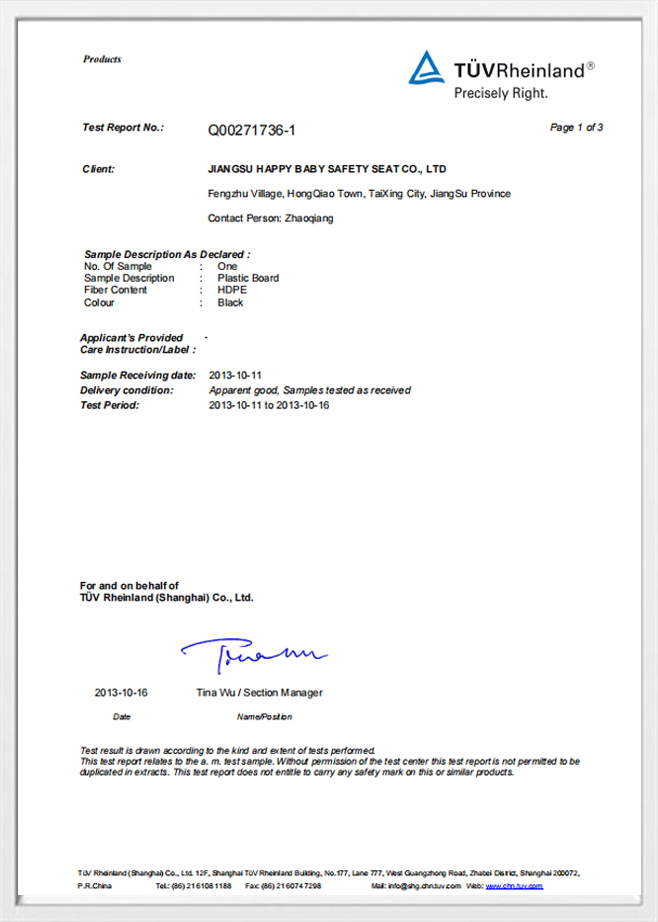
Material and Flammability Checks
Foam, fabric and plastic components are checked against flammability and material-safety requirements applicable to child car seats before production release.
D
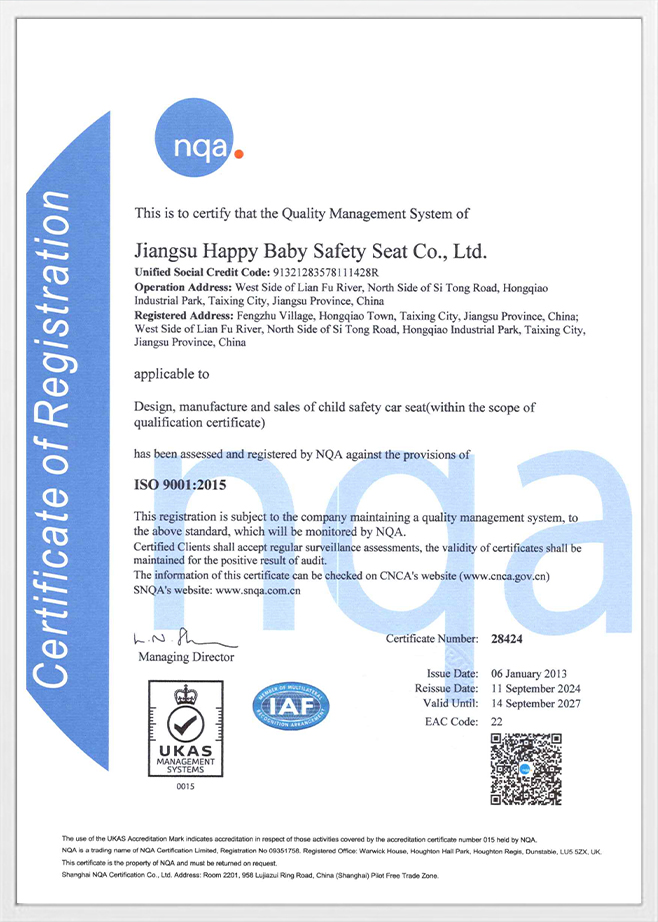
ISO 9001 Production System
Manufacturing runs under a certified quality-management system covering design control, incoming material checks and finished-unit inspection.
E
Batch Traceability
Production batches are recorded so that any quality issue identified after shipment can be traced back to a specific run rather than the full product line.
F
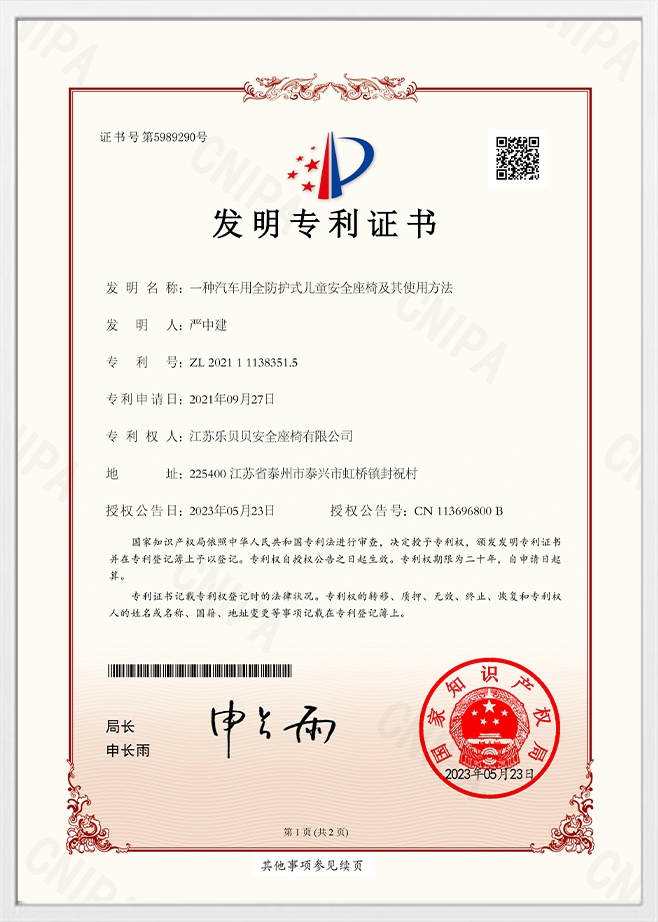
Patent-Protected Mechanism Design
Key mechanical elements of the recline and folding system are covered by registered invention patents rather than being an unprotected, easily copied design.
Frequently Asked
Questions Buyers and Distributors Usually Ask
What is the actual difference between i-Size (R129) and the older R44 standard?
R129 classifies seats by the child's height instead of weight, requires a mandatory side-impact test that R44 did not require, and is built around ISOFIX installation rather than depending primarily on the vehicle seatbelt. A seat carrying the i-Size mark has been tested against a broader crash scenario than an equivalent older R44 seat.
Is this seat rearward-facing or forward-facing?
The HB337 is a forward-facing seat for the 76–150cm height range. Rearward-facing use is generally recommended for younger, shorter children in a separate infant or toddler seat category before transitioning to a forward-facing seat like this one.
Do I still need the vehicle seatbelt if the seat uses ISOFIX?
The ISOFIX connectors secure the seat itself to the vehicle body; the integral 5-point harness, not the vehicle seatbelt, is what secures the child within the seat. Both systems work together rather than replacing one another.
How do I know which recline position to use?
As a general guide, shorter children toward the lower end of the 76–150cm range typically use a more reclined position, while taller children closer to 150cm are usually more comfortable upright; the seat's own instruction manual gives the specific position recommended for each height band.
Can the fabric cover be removed and washed?
Fabric composition and washing instructions can be configured for OEM and ODM orders; for a specific production run, the factory can confirm the exact fabric spec and recommended cleaning method included in the product's instruction manual.
What customization is available for distributors and private-label buyers?
Fabric colorway, printed branding, packaging artwork, instruction-manual language and accessory bundles can be adjusted without repeating the full R129 test cycle, since the certified shell, harness and ISOFIX connection remain unchanged across those customizations.
When should a child move from this seat to a booster?
The transition is guided by the seat's height limit and the child's maturity for sitting still in a booster, not by age alone — a child near 150cm who still fits comfortably within the harnessed seat's limits can generally continue using it rather than moving to a booster early.
Is a forward-facing seat safe to install in the front passenger seat?
This depends on the vehicle's front passenger airbag; many vehicle manufacturers advise against a forward-facing child seat in a front position with an active frontal airbag, so the vehicle's own manual should be checked before installing any forward-facing seat there.
Terminology
Plain-Language Definitions Used on This Page
A short reference for parents and buyers comparing specification sheets across different brands and standards.
01
I-Size / R129
The current European child-restraint regulation, classifying seats by child height and requiring both frontal and side-impact testing plus ISOFIX compatibility.
02
ISOFIX
A standardized pair of anchor points built into most modern vehicles, allowing a compatible car seat to click directly onto the car body instead of relying solely on the seatbelt.
03
5-Point Harness
A restraint system with straps at both shoulders, both hips and between the legs, meeting at a single buckle to spread crash force across the body.
04
Top Tether
A strap anchored to a fixed point behind the vehicle seat that limits forward pitch of the car seat during a frontal impact, used alongside ISOFIX on many designs.
05
Support Leg
A leg extending from the base of some car seats to the vehicle floor, reducing rotation of the seat during an impact in addition to the ISOFIX connectors.
06
OEM / ODM
Manufacturing arrangements where a factory produces a seat to a buyer's specification (OEM) or offers an existing design for a buyer to brand and adapt (ODM).
Manufacturing Background
A Factory Built Around One Product Category
A specification sheet describes a finished seat; it does not explain why a particular shell profile or harness routing was chosen over the alternatives that were tested and rejected along the way.
Design, mould-making, injection production, sewing and final assembly for the HB337 platform run under one roof rather than being split across separate subcontracted stages, which shortens the distance between an engineering observation on the test bench and a production-line change. A dedicated design, production, sales and quality-control team works from the same certified quality-management framework across the full product range, so a customization request for one market does not require re-establishing quality controls from scratch.
Registered invention patents on key mechanical elements of the range reflect engineering work carried out in-house rather than licensed from a third party, and the certificates covering both the company's quality system and individual product approvals are maintained and renewed as part of ongoing production, not treated as a one-time formality at launch. For a distributor or retailer evaluating a new supplier, that combination — in-house engineering, a single certified production site, and documentation kept current — tends to matter more over repeated ordering cycles than any single feature on a spec sheet.
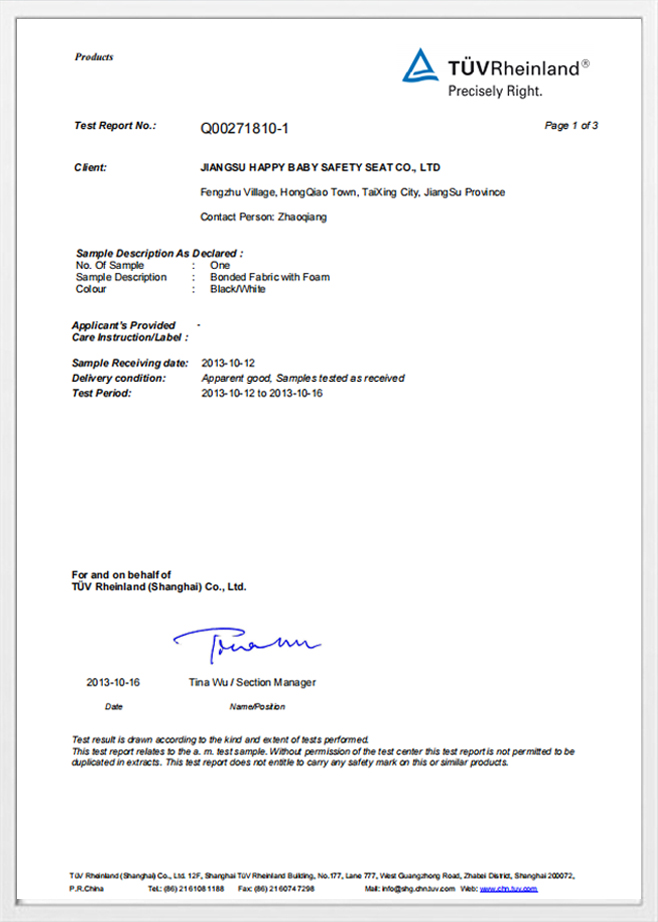
Request Full Certification Documents and Sample Availability
Share the target market, expected order volume and any fabric or branding requirements, and current certification documents, lead times and sample availability for the HB337 platform will be confirmed.
Typical response time for a technical or documentation request is within one working day.
Q: What products can you offer?
We are an enterprise engaged in the design, production, sales and service of child safety seats.
Q: How is the quality of your products ?
The company has a design, production, sales and quality control team, complete production equipment and testing equipment, and has passed the ISO 9001:2008 quality management system certification, thus ensuring the supply demands and quality guarantee of customers.
Q: How many employees does your company have?
Our company has about 200 employees.
Q: How long will it take for us to get a reply after we send you an inquiry?
We will reply to your inquiry within 12 hours on working days.
Have An Idea? Let'S Have A Chat Together!
We hope to be not only the manufacturer of child safety seats, but also the trusted guardians of families
The HB326 ISOFIX + support leg 360 Rotation Rearward/Forward facing baby car seat 40-150cm is equipped with ISOFIX interfaces and support legs, providing stable fixing effect inside the vehicle, reduc...
The HB331 ISOFIX + top tether 360 Rotation Rearward/Forward facing baby car seat 40-150cm is specially designed for children of different growth stages,meeting the new European R129/03 i-Size safety s...
The HB659 I-Size Belted baby car seat 76-150cm is a universal i-Size car seat, highly favored for its flexibility and practicality. It complies with the European UN R129/03 universal safety standard ...
The HB636 ISOFIX 360 rotation safety car seat Group 0+/1/2/3 is a versatile 360° rotating car seat that can accompany children from birth to 11 years old(weighing up to 36 kg). It complies with the Eu...
The HB338 ISOFIX + top tether 360 Rotation Rearward/Forward Facing I-Size Baby Car Seat 40-150cm is a child car seat that combines multiple functions, high safety, and ultimate convenience. This seat ...
The HB336 ISO FIX + support leg 360 Rotation Rearward/Forward facing baby car seat 40-150cm is equipped with ISOFIX interfaces and support legs, providing stable fixing effect inside the vehicle, redu...
JIANGSU HAPPY BABY SAFETY SEAT CO., LTD. specializes in we hope to be not only the China ISOFIX I-Size Foldable safety car seat 76-150cm Suppliers and Custom ISOFIX I-Size Foldable safety car seat 76-150cm Factory, but also the trusted guardians of families.
Child safety is not merely a set of standards or a certification, but a responsibility and commitment. The birth of every chair is an understanding of the family and a reverence for life.
We hope to provide products that are safe, comfortable and design-oriented for families around the world through continuous research and development and innovation, so that parents' peace of mind can go hand in hand with children's smiles.
Picture this: you are at the airport gate with a boarding pass in one hand and a compact car-seat bag over your shoulder. The seat is light enough to carry, narrow enough to fit t...
Imagine this: you have booked a family flight to Lisbon, the accommodation is sorted and the packing list is almost complete. Then the question you have been avoiding surfaces — w...
The Forward Facing Dilemma: Safety vs. Convenience
For parents and caregivers, the transition from rear-facing to a Forward facing baby car seat is a milestone fraught with con...
What Is an Infant Car Seat and How Is It Different from Other Seats?
Picture the bucket-shaped seat you clip into a base in the back seat, lift by its carry handle, and click onto...
Yes, the 2-Hour Car Seat Rule Is Real—Here's What It Means
You are planning a long drive, your baby is three months old, and someone has warned you about a "two-hour car seat rule...

 English
 中文简体
中文简体