
 English
 中文简体
 Home / News / Industry News / Is It Okay to Let a 4-Month-Old Sleep in a Car Seat? A Practical Safety Guide

Industry News
Is It Okay to Let a 4-Month-Old Sleep in a Car Seat? A Practical Safety Guide
2026-10-30
Content
- 1 Yes, but only for travel: what the 2-hour rule really means
- 2 Why a 4-month-old is still at risk: anatomy and posture
- 3 What actually happens to the airway in a semi-reclined position
- 4 Sleeping in the car vs. sleeping outside the car
- 5 How car seat design determines sleep safety
- 6 What to do when your 4-month-old falls asleep on a journey
- 7 Warning signs that tell you to take the baby out of the seat
- 8 What to look for in a car seat for a 4-month-old
- 9 Frequently Asked Questions
- 9.1 Can my 4-month-old sleep in a car seat overnight?
- 9.2 How long can a 4-month-old stay in a car seat on a road trip?
- 9.3 Is it okay to use a car seat as a portable bed at a restaurant or in a friend's home?
- 9.4 Why does my 4-month-old sleep better in the car seat than in the crib?
- 9.5 What is the difference in car-seat safety between a 4-month-old and a 6-month-old?
- 9.6 Should I wake my baby when we reach our destination?
- 9.7 Can I use a car seat on an airplane and let my baby sleep in it?
Your four-month-old can sleep in a car seat while the car is moving. That is the short answer, and it is the answer you will get from most pediatric safety specialists and from any seat maker that has spent years testing seats to the ECE R129 and ECE R44 standards. What the same specialists will add is an important boundary: a car seat is a travel device, not a sleep environment. This article explains what the medical evidence says about a 4-month-old sleeping in a car seat, why the 2-hour rule exists, and what to look for in a seat when you have a baby at this age.
Yes, but only for travel: what the 2-hour rule really means
Pediatric bodies, including the American Academy of Pediatrics and national transport safety agencies in Europe, all point to one practical benchmark: an infant under one year should spend no more than two consecutive hours in any sitting device, including a car seat, without a break. This is known as the 2-hour rule. It is not a legal limit, and it is not printed on every seat box, but it is the number pediatricians and injury prevention specialists consistently use when a parent asks, "How long is too long?"
The 2-hour rule comes from clinical research on oxygen saturation and infant positioning. When an infant sits at the semi-reclined angle typical of a car seat, gravity acts on the heavy head and small torso. Over time, the neck muscles fatigue, the head tilts forward, and the upper airway narrows. In a well-known study from the early 2000s, researchers placed healthy, low-risk infants in car seats and monitored oxygen saturation, heart rate, and respiratory effort. A measurable percentage of infants showed a drop in oxygen saturation after 30 to 60 minutes in the seat. By two hours, the cumulative effect — shallower breathing, reduced oxygen intake, less body movement — becomes significant enough that the medical community recommends a break.
For a 4-month-old specifically, the 2-hour rule is the ceiling, not a suggestion. At this age, head control is better than a newborn's but far from complete. When a 4-month-old falls into active sleep — which occupies roughly 50 percent of total sleep time at this age — muscle tone drops, and the neck has little active strength to keep the head off the chest. The baby may look peaceful, but the posture is doing part of the respiratory work.
0 to 60 minutes
Low-risk window for a healthy 4-month-old. Keep monitoring breathing, skin color, and head position through the mirror.
60 to 90 minutes
Some infants show measurable oxygen saturation changes after the first hour. The angle is still acceptable, but plan the next break.
90 to 120 minutes
Head slump becomes increasingly likely as sleep deepens. Finish the commute if necessary, but stop as soon as it is safe.
Beyond 120 minutes
Consecutive sleep beyond two hours is not recommended. Prolonged semi-upright positioning compresses the airway and raises overheating risk.
For a more detailed explanation of how the 2-hour limit was derived and when exceptions are reasonable, see our guide on the 2-hour car seat rule.
Why a 4-month-old is still at risk: anatomy and posture
A 4-month-old infant looks dramatically different from a newborn. Double the weight, better head control, social smiles, longer wake windows. But the anatomy that matters for car-seat safety has not changed as much as the visual milestones suggest.
The infant head is disproportionately large relative to the body. At four months, the head represents roughly 20 to 25 percent of total body weight, compared with about 6 to 8 percent in an adult. The cervical spine and neck muscles support this heavy mass, but in a 4-month-old those muscles are still developing. Most 4-month-olds can raise their heads to a 45-degree angle while lying on the stomach and can keep the head steady when supported in a sitting position, but they cannot independently maintain a neutral neck posture for extended periods, especially when transitioning from light sleep into deep active sleep.
Positional asphyxiation is the mechanism behind most car-seat sleep incidents. It occurs when a posture, rather than an object, blocks the upper airway. In an infant car seat, the chain of events is predictable: the head rolls forward or to one side, the chin presses toward the chest or the clavicle, the soft tissues of the pharynx collapse inward, and the airway narrows. Because infants have smaller airway diameters than older children, even a fractional reduction in cross-section has a significant effect on airflow.
| Age range | Head control when awake | Neck muscle tone during sleep | Recommended continuous limit |
|---|---|---|---|
| Newborn, 0 to 2 months | Very limited; cannot lift head | Almost no active tone | 60 minutes or less |
| 4 months | Raises head at 45 degrees; some tracking | Partial tone; relaxes deeply in active sleep | 90 to 120 minutes |
| 6 to 8 months | Sits with support; rolls over | Better tone, still vulnerable in deep sleep | 120 minutes with a break |
| 12 months and older | Sits independently; strong neck | Lower risk, but not zero | 120 minutes with a break |
A crucial detail: 4-month-olds can breathe through a compromised airway for surprisingly long periods without appearing distressed. Oxygen saturation can fall gradually, and a sleeping baby who is experiencing mild respiratory obstruction will often simply continue sleeping. This is why visual signs such as laboured breathing, snoring, and pauses are so important for a parent to recognize.
What actually happens to the airway in a semi-reclined position
The car seat shell holds a young infant at roughly 30 to 45 degrees from vertical, depending on how the seat is installed and adjusted. At this angle, a wide-awake baby with good head control sits with a neutral neck position. But when sleep comes, the head is supported by the seat shell rather than by the neck muscles. If the shell curves correctly behind the head and shoulders, the baby stays relatively well aligned. If the seat is too upright, if the vehicle seat cushion tips the base of the car seat forward, or if the baby slides slightly because of a loose harness, the head loses that support.
The most dangerous position is chin-to-chest. When the chin presses on the sternum, the pharyngeal airway — the muscular tube behind the tongue and soft palate — can close off almost completely. Imaging studies have documented that flexing an infant neck by 30 degrees or more reduces the cross-sectional area of the upper airway by up to 50 percent. At greater flexion, the airway can collapse entirely with minimal muscle effort.
Three common scenarios place a 4-month-old at unnecessary risk:
- The seat is installed more upright than the manufacturer's specification. Some parents intentionally set a rear-facing seat at a steeper angle because they worry about the head falling sideways. Others simply miss the level indicator's green zone. In a seat installed at 50 to 60 degrees, a sleeping 4-month-old has no chance of maintaining a neutral airway throughout the whole nap.
- The infant insert has already been removed. Most inserts are designed to remain in the seat until the baby reaches a specific weight, commonly 9 to 11 kg, or until the head is within 1 cm of the top of the insert. Removing it early allows the baby to sink deeper into the shell, which increases the C-curve of the spine and shortens the distance between chin and chest.
- The harness is too loose or the shoulder straps are above the shoulders. A loose harness allows the pelvis to slide forward under the lap strap during sleep, the torso to shift downward, and the head to fall backward against the seat. This rearward head position is as dangerous as forward flexion because it also restricts the airway.
Why does my baby look perfectly comfortable? Infants do not sense and respond to a partial airway obstruction the same way adults do. They may continue sleeping with reduced oxygen saturation for several minutes, which is why a peaceful appearance is not the only indicator of car-seat safety. If you see a 4-month-old's head sharply flexed forward, gently reposition the head even if the baby does not wake.
Sleeping in the car vs. sleeping outside the car
The same car seat is not equally safe for sleep in all contexts. A 4-month-old sleeping while the vehicle moves at highway speed is in a completely different situation from the same baby sleeping in the same seat on a café floor.
Inside a moving vehicle, the seat rests against the vehicle seatback, which maintains the recline angle. The harness is tight, the seat is secured by the seatbelt or ISOFIX anchors, and the baby is restrained in a stable, predictable position. The motion of the car tends to keep babies in lighter phases of sleep, during which airway reflexes remain partially active. You, as the driver or front passenger, can regularly check the baby in the rear-view mirror. The relevant comparison inside the car is between a car seat and an adult's arms, and an infant should always ride in a certified, correctly installed car seat while the vehicle is moving.
Outside the vehicle, the seat becomes a carrier. Placing the carrier on the ground or on a table changes the geometry. Most infant carriers, when placed on a flat surface, have a built-in recline of about 40 to 50 degrees — an acceptable angle for short waking periods, but not a tested sleep environment. The seat is no longer locked into the vehicle seatback. On a soft surface such as a bed or sofa, the base can tilt unexpectedly. And the seat is not a bassinet; it was never designed to support the head and spine in a fixed position for an extended nap.
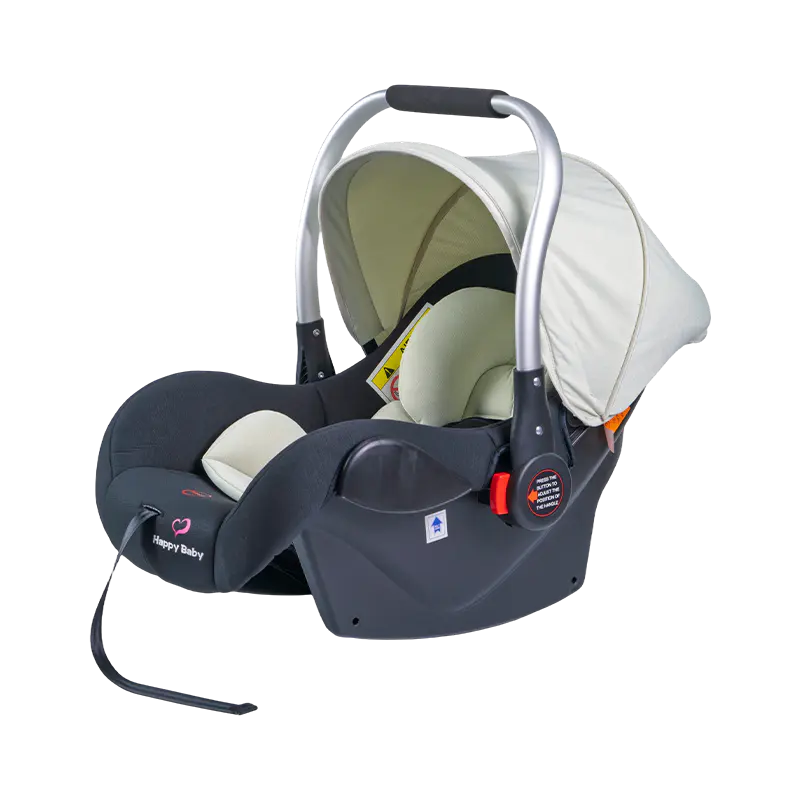
 Aluminum Handle Infant Carrier Car Seat for NewbornsThis Group 0+ rear-facing carrier suits newborns to 13 kg, with airflow design and a 3-point harness. Useful for short transfers, but not for extended sleep outside the vehicle.View Product →
An infant carrier with an aluminium handle, like the one shown in our product line, is a useful tool for moving a sleeping baby from the car to a stroller. But the carrier should remain on the car seat base or on a compatible stroller frame, not on the floor of a playgroup or next to a restaurant table. If the journey has ended and the baby is still asleep, take the baby out as soon as you are stationary. Gently transfer to a carrier, stroller, or flat crib. If waking the baby is inevitable, a short awakening is a small price to pay for avoiding prolonged time in a semi-upright position outside the vehicle.
How car seat design determines sleep safety
Parents often ask whether some car seats are better for sleeping. From a design perspective, the answer is clearly yes. A car seat's geometry, padding, and adjustment range all affect how a 4-month-old's body is positioned when the muscles relax.
Recline geometry
The single most important design element for sleep is the recline system. A seat that offers multiple rear-facing recline positions, from a more upright everyday setting to a fully reclined rest setting, gives you the flexibility to install the seat at the correct angle in different vehicles. The correct angle is whichever position keeps the level indicator in the approved range and allows the baby's head to rest naturally against the seat back without falling forward. In the i-Size standard (ECE R129), the recline angle is part of the dynamic safety requirements, which means certified seats are tested with the exact angle settings the manufacturer specifies.
Infant insert and head support
A good infant insert does more than add softness. It raises the baby's pelvis and torso, shortens the depth of the shell, and positions the head in the narrower part of the seat's side wings. This reduces the C-curve of the infant spine and keeps the neck neutral. At 4 months, if the seat still has an insert and the baby fits within its height and weight limits, leaving it installed is strongly recommended. Removing it early is one of the leading causes of head slump, because it allows the baby to settle into a deeper, more curved position.
Harness tension and pelvic position
A five-point harness with a front adjuster, rather than a design that requires rethreading from the rear, makes it more likely that parents will tighten the harness correctly. The harness holds the torso against the shell and prevents pelvic slide, which is the direct precursor to chin-to-chest posture during sleep. If the harness is loose because it was fastened over thick clothing, the baby's pelvis slides forward, the lumbar spine flexes, and the head gradually tips toward the knees.
 i-Size Newborn Carrier with Side Wing ProtectionAn UN R129/03 certified carrier for infants 40-87 cm, featuring side wings, a 3-point harness with 7 positions, and a removable sunshade. Ideal for safe stroller or rocker use.View Product →
Side impact protection and head wings
Side wings that wrap around the head serve two purposes: in a crash, they absorb energy and limit head excursion; during sleep, they reduce lateral head roll. A 4-month-old who falls asleep with the head supported by the side wing is less likely to develop the sideways head drop that narrows the airway.
| Feature | Primary crash protection function | Sleep safety benefit |
|---|---|---|
| Multiple rear-facing recline positions | Maintains torso angle during frontal impact | Creates neutral neck posture for sleeping infants |
| Infant insert / newborn cushion | Positions the pelvis to prevent sliding under the harness | Supports the head and reduces the spine C-curve |
| Five-point harness with front adjuster | Keeps the child contained in a collision | Blocks pelvic slide and torso slump during sleep |
| Side impact protection wings | Absorbs side collision energy | Restricts lateral head roll during sleep |
What to do when your 4-month-old falls asleep on a journey
It happens to every parent. You plan the drive around nap time hoping the baby will sleep, or you plan the drive away from nap time and the baby falls asleep anyway. The response is the same in both situations.
- Do not adjust anything while the vehicle is moving. Reaching backward to reposition the head, tighten the harness, or fix a blanket shifts your attention away from the road and is a genuine safety risk.
- Check the harness position through the mirror. The chest clip should sit at armpit level. If there is excessive strap slack at the shoulder, wait until the next safe stop to re-tension it.
- Watch the breathing. Look for regular chest rise, no snoring, and no pauses longer than ten seconds. If the breathing changes, find the first legal, safe place to stop and reposition or remove the baby.
- If the head has dropped forward, that is the signal to end the nap session. Stop, go to the back seat, gently adjust the recline to a more reclined position if the model allows it, or reposition the head. If the baby seems congested or continues to sleep heavily, take her out of the seat.
- When you reach the destination, transfer the baby to a flat, firm surface even if it means waking her. The extra 20 minutes of sleep in the car seat does not outweigh the benefit of an open, unobstructed airway on a flat surface.
Do before you drive
Install the seat at the angle shown by the built-in level marker. Leave the infant insert in place if the baby still fits. Tighten the harness until no slack remains over the shoulders. Keep the cabin at a comfortable temperature so thick layers are unnecessary.
Do not overdo it
Avoid aftermarket head supports, heavy blankets, or unapproved padding. Never remove the baby from the seat while the vehicle is moving. Do not leave the seat in direct sunlight with a sleeping baby inside. Keep every session under two consecutive hours.
Most European seats with i-Size certification include a visible guide showing whether the insert should still be used. If you are unsure, check the manual or the label printed directly on the insert.
Warning signs that tell you to take the baby out of the seat
Knowing when to interrupt a nap is just as important as knowing the rules. These signs indicate that the car-seat environment is not safe for a 4-month-old at that moment, and the baby should come out of the seat:
- Snoring or noisy breathing that the baby does not produce when sleeping on a flat surface
- Breathing pauses longer than 10 seconds, or a clearly irregular breathing pattern
- Visible nostril flaring or chest retractions, where the skin pulls in between the ribs
- Blue or grey lips, or pale nail beds
- The head resting tightly on the chest, chin pressed against the collarbone
- A sweaty or hot feeling to the skin, which may indicate air hunger and overheating
If any of these signals appear, stop the car, remove the baby from the seat, place the baby upright or on a flat surface, and observe closely until breathing returns to normal. In most cases, repositioning restores regular respiration within moments. If the baby does not recover quickly with repositioning, seek emergency medical help immediately.
The risk of car-seat sleeping is not only about absolute time. It is about the interaction between time, position, and supervision. The same 4-month-old who can safely sleep for 90 minutes on a road trip with an adult in the back seat may be at risk during a short 20-minute nap in a carrier placed in a shopping cart, simply because nobody is looking directly at the baby. For a full overview of age limits and height requirements, our detailed article on infant car seat age and height safety limits covers the complete picture.
What to look for in a car seat for a 4-month-old
If you are choosing a seat specifically for a child around four months old, with the expectation that it will be used for daily school runs and occasional long trips, evaluate these criteria before making a decision:
- Recline range. Look for a seat with at least three rear-facing positions. The more positions available, the easier it is to match the seat angle to the slope of your car's back seat. A seat that allows a deeper recline for sleep and a more upright angle for waking periods gives you the best of both.
- Infant insert design. The insert should have a firm structure, not just a soft pad. It should elevate the pelvis and torso enough that the baby's head rests into the side wings rather than slumping sideways over them.
- 360-degree rotation. Not a safety requirement, but a strong usability feature. A rotating seat allows you to turn the baby toward the door when you stop, check the sleeping position, re-tighten the harness, and rotate it back without unclipping and reinstalling the seat. For sleep monitoring on long drives, 360-degree rotation is one of the most practical features available.
- Harness slot adjustability. For rear-facing use, the harness shoulder straps should be at or slightly below shoulder level. A seat that lets you adjust strap height without pulling the entire harness out through the shell reduces the chance of installation mistakes.
- Side impact protection. While side impact test protocols are not yet as harmonized as frontal tests, the presence of deep, energy-absorbing side wings improves crash performance and provides a better surface for the sleeping head to rest against.
The i-Size seats in our current production line, such as the ISOFIX 360-degree rotation model with a support leg, combine all of these features in a single design. The support leg reduces forward rotation in a frontal impact and helps maintain the recline angle even when the seat is installed in a vehicle with softer seat cushions. For a 4-month-old, using the seat in a fully reclined rear-facing position and then rotating it for access is the closest practical compromise between safety and convenience.
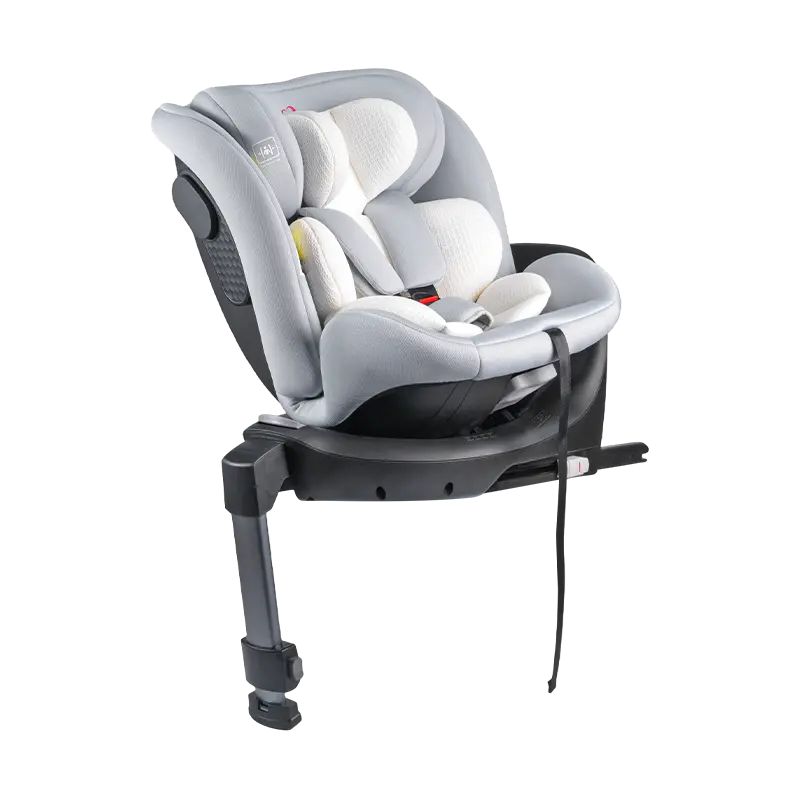 ISOFIX 360-Degree Rotating Car Seat with Support LegThis R129/03 i-Size seat fits 40-150 cm, offers 360° rotation and rear/forward facing modes. The support leg enhances stability and recline for safer sleep during travel.View Product →
Newborn
Up to 60 min
4 months
90 to 120 min
6 to 8 months
Up to 120 min
12+ months
Up to 120 min
Chart 1. Recommended maximum consecutive time in a car seat by age, based on pediatric safety guidelines. Breaks outside the seat reset the clock.
Frequently Asked Questions
Can my 4-month-old sleep in a car seat overnight?
No. Overnight sleep in a car seat is not safe and is not recommended for any infant. The semi-upright angle, the limited head movement, and the risk of silent airway obstruction make a firm, flat crib mattress the only safe overnight sleep surface. If you are travelling and the baby falls asleep, transfer her to a bassinet, co-sleeper, or travel cot as soon as you arrive.
How long can a 4-month-old stay in a car seat on a road trip?
The maximum continuous time is two hours. In practice, stopping every 90 minutes is a good rhythm. Take the baby out, allow her to lie flat or move freely on a change mat, offer a feed if needed, and then continue. The two hours are consecutive, not cumulative, so a 20-minute car ride followed by a 2-hour nap in the seat at grandma's house is still excessive if added to the morning commute.
Is it okay to use a car seat as a portable bed at a restaurant or in a friend's home?
Only for very short periods, ideally 30 minutes or less. The same seat that is safe in a moving car should not become a 90-minute nap spot on the floor of a café. If you need somewhere to put a sleeping baby outside the car, a lightweight travel bassinet is a better investment and a much safer sleep surface.
Why does my 4-month-old sleep better in the car seat than in the crib?
The car seat environment includes motion, vibration, and the constant hum of the engine — three natural soothing factors. That does not mean the position itself is safe for extended sleep. Babies also sleep well in swings and prams, but neither is a recommended sleeping surface for long naps. The challenge is to give the baby the benefit of the calming car ride without allowing the car seat to become the default sleep location.
What is the difference in car-seat safety between a 4-month-old and a 6-month-old?
A 6-month-old has better neck extension strength and more control during sleep transitions, so the risk of airway obstruction is lower. However, the 2-hour rule still applies until the first birthday. The head-to-body ratio and the semi-upright angle itself do not change enough at six months to justify longer continuous sessions in the seat.
Should I wake my baby when we reach our destination?
If the journey has ended and the baby has already been in the seat for more than 60 minutes, yes, gently wake and transfer. If the journey was very short, under 20 minutes, a transfer to a stroller without waking is acceptable. The priority is to avoid a long accumulated time in the semi-upright position. When in doubt, a flat sleep surface is always the better option.
Can I use a car seat on an airplane and let my baby sleep in it?
Most road car seats are not certified for aircraft use unless they carry an explicit aviation certification label. On an aircraft, the seat sits in a different position and is not anchored the same way as in a car. Check the label. If it does not clearly state aircraft certification, keep the baby in your arms during the flight and use the car seat only when you reach your destination and reinstall it in the vehicle.
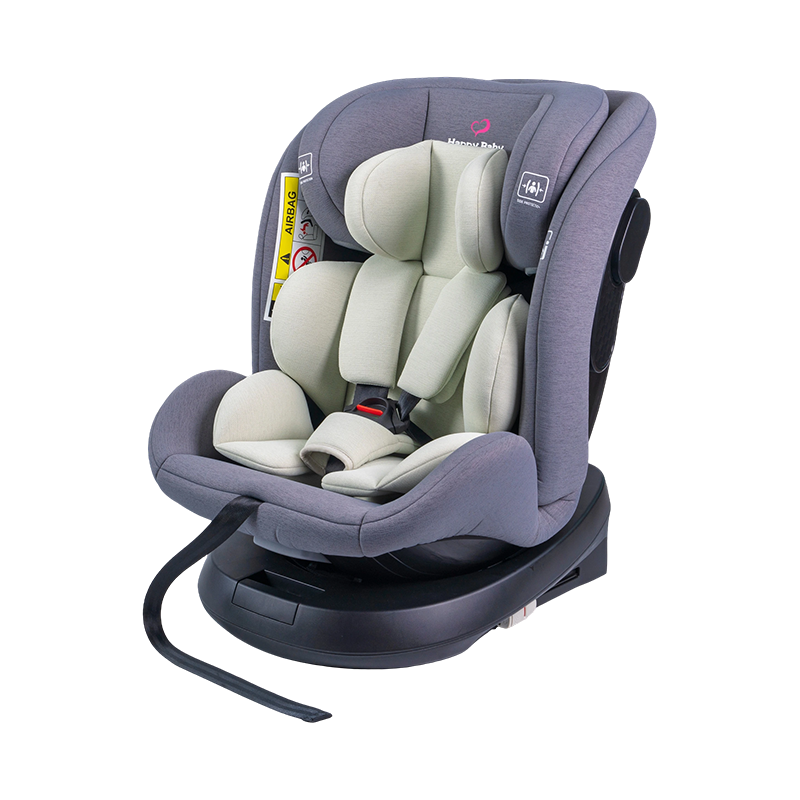
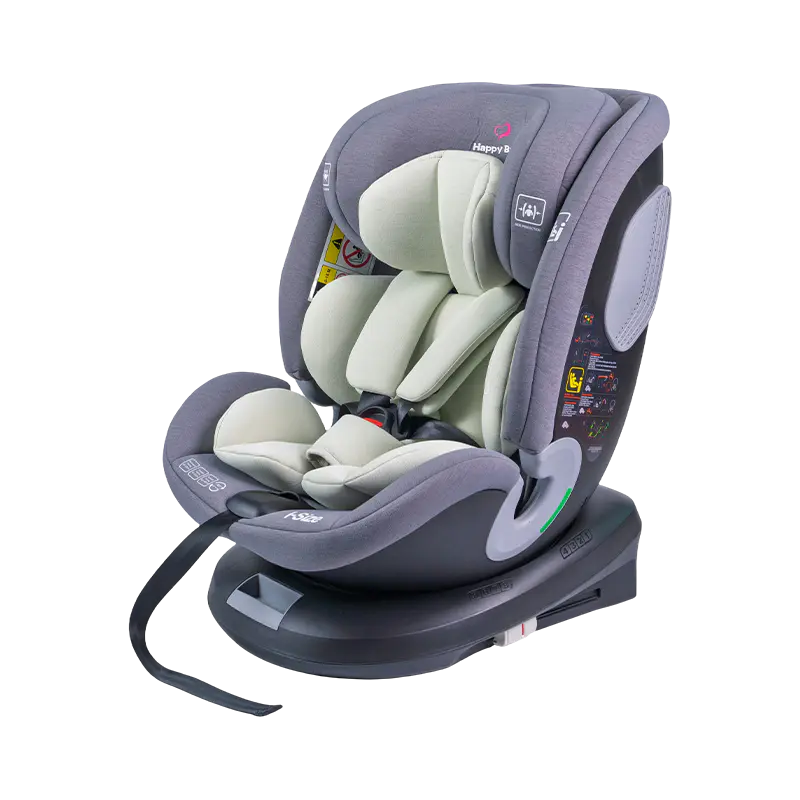
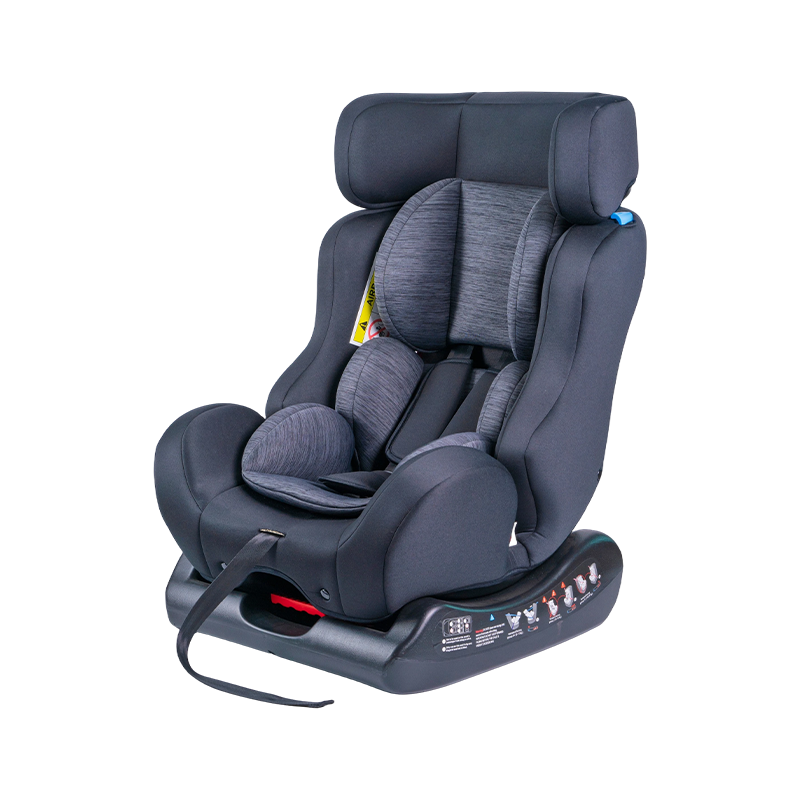

For the safety of babies' travel, we are committed to being a reliable partner for babies and families, and to becoming an expert in children's car safety seats. This is our eternal pursuit.
Contact Us
For exclusive deals and latest offers, sign up by entering your email address below.
CONTACT INFORMATION
-
Address: North of Sitong Road and west of Lianfu Port, Hongqiao Industrial Park, Taixing City, Jiangsu Province
-
Phone: +86 15996087029
-
E-mail: [email protected]
Copyright © JIANGSU HAPPY BABY SAFETY SEAT CO., LTD. All Rights Reserved.
Wholesale Child Travel Safety Seat Factory