
 English
 中文简体
中文简体 Home / News / Industry News / How Long Can a 3-Month-Old Baby Safely Stay in a Car Seat? A Parent's Guide
Industry News
How Long Can a 3-Month-Old Baby Safely Stay in a Car Seat? A Parent's Guide
2026-10-09
Content
- 1 The short answer for a three-month-old
- 2 Why two hours became the number
- 3 How to count the two hours without fooling yourself
- 4 Warning signs that a three-month-old needs out of the seat now
- 5 Planning a long journey with a three-month-old
- 6 Which seat features matter most at three months
- 7 Choosing something that still fits at twelve months
- 8 What gets checked before a seat leaves our production line
- 9 Frequently asked questions about car seat time at three months
- 9.1 Can a three-month-old sleep overnight in a car seat?
- 9.2 My baby is happy and awake in the seat. Does the two-hour limit still apply?
- 9.3 Does a nap in the carrier at home count towards the two hours?
- 9.4 What if we are stuck in traffic and cannot stop?
- 9.5 Two thirty-minute trips a day, with hours at home in between. Is that a problem?
- 9.6 Do lie-flat car cots change the advice?
- 9.7 When does the two-hour limit stop applying?
- 9.8 Would a bigger, more padded seat allow longer in the seat?
A four-hour drive to see grandparents, a three-month-old asleep in the infant carrier, and a question that surfaces somewhere around the second hour: are we doing harm by staying on the road? Here is the direct answer we give to parents who ask us, as people who build these seats for a living: a healthy three-month-old should not spend more than two hours at a time in a car seat. After those two hours, the seat has to stop being a seat for a while, and the baby needs to lie flat on their back, out of the harness and out of the shell.
That is the whole answer in one line. What follows is the part that actually changes how you plan a journey: where the two-hour figure comes from, why three months is still inside the risk window, how the minutes quietly pile up (most parents undercount by half an hour or more in a single day), what a realistic break schedule looks like, what the warning signs are, and which seat features genuinely matter for a baby at this stage rather than just sounding good on a specification sheet.
The short answer for a three-month-old
Two hours maximum in one continuous stretch, followed by a break of at least twenty to thirty minutes lying flat, out of the seat. Repeat that pattern for as long as the journey lasts. A baby who has just turned three months is usually around 58 to 62 centimetres long and somewhere between 5.5 and 6.5 kilograms, which means most height-based infant seats still fit them with room to spare. It also means their neck muscles are still catching up with the weight of their head, and that is the core of the issue.
The limit is not about crash protection. A correctly installed, correctly used car seat is by far the safest place for a baby in a moving vehicle, without exception. The two hours is about breathing and posture while the vehicle is moving or while the baby is parked in the shell with the harness closed.
| Age or stage | Maximum continuous time in the seat | Minimum break out of the seat | Main reason for the limit |
|---|---|---|---|
| Newborn to 4 weeks, including babies born early | 30 to 60 minutes, split the journey where you can | 30 minutes lying flat | Weakest head, neck and breathing control of any stage; studies of newborns in car seats show the highest rate of small oxygen dips in this group |
| 1 to 3 months | Up to 2 hours | 30 minutes flat on the back | Head still heavy relative to neck strength, and a sleeping baby cannot reposition a chin that has dropped towards the chest |
| 3 to 6 months | Up to 2 hours | 20 to 30 minutes | Same ceiling; longer sleep periods in a semi-upright seat keep the airway in a position the baby cannot correct |
| 6 to 12 months | Up to 2 hours, then a break | 15 to 20 minutes | Better head control, but a sleeping baby still slumps forward more easily than an awake one |
| Over 12 months | 2 to 3 hours with regular breaks | 15 minutes | Able to move the head freely, but an upright sleeping position is still not a substitute for a flat bed |
Nothing in the table is a legal requirement. It is a practical ceiling assembled from infant breathing research, hospital discharge advice given to new parents, and long-standing road safety guidance that recommends keeping a child rear-facing for as long as the seat allows.
Why two hours became the number
There is no study that proves two hours is the exact point where risk begins, and any source claiming otherwise is overselling its evidence. What exists is a pattern across several decades of infant observation: when a newborn or young infant is placed in a semi-upright seat with the harness snug, a proportion of them show small changes that are visible on monitoring equipment. Oxygen saturation can dip slightly, and carbon dioxide levels around the face can rise. In healthy term babies these changes are usually mild and short-lived. In babies born early, in babies with low birth weight, and in babies with existing breathing or reflux problems, the changes are more likely and can be more pronounced.
The professional response to that pattern was not to stop using car seats, because the alternative in a moving car is far more dangerous. The response was to limit exposure: keep journeys short for very young babies, take regular breaks, never leave a sleeping baby in the seat unattended, and move the baby to a flat surface as soon as the journey allows. Two hours is the practical version of that advice that most hospitals and parenting resources settled on, and it matches the length of a typical nap, which makes it easy to remember.
Why three months is still inside the risk window
By three months, most babies can hold their head up briefly during tummy time and track a moving face, which feels like a big milestone. It is not the same as being able to keep an airway open while asleep in a reclined shell. An infant of this age still has a proportionally large head, a short neck, and soft, flexible airways. If the head tips forward, the chin can press towards the chest and narrow the passage the baby breathes through. A baby who is deeply asleep will not wake up to fix that. The harness helps with crash forces; it does nothing for a tucked chin.
What the two hours is not
It is not a crash-safety limit, and it does not mean the seat becomes unsafe after two hours in the way a damaged part becomes unsafe. It is not a licence to leave a baby in the seat for naps at home, in a cafe, or on the floor of a living room while you unpack shopping. And it is not a rule that resets just because the car has stopped moving. The position, not the motion, is the thing being managed.
How to count the two hours without fooling yourself
The most common mistake we see in questions from parents is counting only the time the wheels are turning. A seat is a seat wherever it is standing. The clock starts when the baby goes into the shell and the harness is closed, and it stops when the baby comes out and lies flat. That single change in how you count usually shortens a day considerably.
Counts towards the two hours
- Every minute in the car with the harness fastened, moving or stationary
- A carrier clicked into a stroller frame during a shopping trip
- A carrier resting on a cafe floor or in a restaurant while you eat
- A carrier on the floor at home while you carry in bags
- Time on a train, coach or plane with the baby strapped into the carrier
Does not count
- Time out of the seat, lying flat on a firm surface
- Time in your arms, held upright against your shoulder
- Feeding and winding once the baby is out of the harness
- Nappy changes on a flat mat
- Floor play on a blanket with free head movement
When the clock restarts
- After a break of roughly 20 to 30 minutes fully out of the shell
- After the baby has been able to stretch, turn the head freely and breathe without restriction
- A five-minute pause in a layby does not restart it; the baby has to come out and lie flat
An ordinary day that adds up to more than two hours
Below is a realistic example of a day that feels short but stacks up quickly. The point is not that any single item is dangerous. The point is that the total is what you are managing, and the total is easy to lose track of.
Example only: one low-mileage day still reaches 2 hours 35 minutes in the seat
Morning nursery run 35 min
Carrier clicked into the trolley 25 min
Lunch stop with baby still strapped in 30 min
Return journey home 40 min
Nap in the carrier in the hallway 25 min
Running total: 155 minutes, with only one 40-minute break between them.
The stroller trap
Travel systems are convenient and they are also the single biggest reason babies exceed the recommended time without anyone noticing. The carrier never looks like a car seat once it is on a stroller frame, so it stops being counted. Treat the carrier on the frame as the same object it was ten minutes earlier in the car. If the plan is a two-hour shopping trip, plan for the baby to spend part of it lying flat in a pram carrycot or in your arms instead.
Warning signs that a three-month-old needs out of the seat now
Healthy term babies on ordinary journeys rarely show problems. When something does go wrong, the signs tend to appear in the position of the head and the sound of the breathing. Pull over somewhere safe and take the baby out if you see any of the following.
- The head has slumped forward so the chin is resting near or on the chest and cannot be corrected easily
- Breathing sounds noisy, rattly, grunting or unusually slow
- The baby looks pale, grey or mottled rather than a healthy pink
- The baby feels clammy or unusually hot, or is sweating around the head and neck in a cool car
- The baby is floppy when you lift an arm, or unusually difficult to rouse when touched
- Repeated, distressed crying that does not settle with the usual comfort, feeding or a clean nappy
- One shoulder strap is riding up the neck or the harness has slipped loose during the journey
If any of these appear, the sequence is straightforward:
- Stop somewhere safe: a service area, car park, layby or quiet side road. Do not stop on a motorway hard shoulder unless it is a genuine emergency.
- Take the baby out of the harness and out of the shell, and lie them flat, face up, on a firm surface or across your lap.
- Check the colour, breathing and responsiveness, and loosen anything tight around the neck or chest.
- Wait at least twenty to thirty minutes before continuing, and only continue if the baby is back to normal.
- If breathing stays abnormal, or the baby is difficult to wake, get medical help rather than continuing the journey.
Planning a long journey with a three-month-old
Do the arithmetic before you leave
A five-hour drive does not become a five-hour drive with a three-month-old. Using a two-hour ceiling and a thirty-minute break, it becomes roughly six and a half hours on the road, and that is before feeding stops and nappy changes. Build the schedule backwards: two hours driving, thirty minutes flat, two hours driving, thirty minutes flat, one hour driving. Departing an hour earlier is a far better trade than pushing through the third hour in a single stretch.
Leave after a feed, not during one
Feeding in the seat is awkward and often ends with the baby asleep in exactly the semi-upright position you are trying to limit. Feed at home, wind properly, change the nappy, then put the baby in the seat as you are ready to pull away. The same applies at breaks: feed, wind, change, and only then strap the baby back in for the next stretch.
Set the recline and the harness before you move
Most seats designed for this age group offer a deeper recline position for smaller children, and the manual will state which setting is correct for the baby's height or weight. Use it. Then adjust the harness so it sits snug across the shoulders and hips, without twists and without two fingers of slack. A harness that is loose enough to be comfortable in a thick coat is too loose to hold a sleeping baby in the right posture.
Dress for the car, not for the street
Padded coats, snowsuits and thick blankets between the baby and the harness all create space that compresses in a collision. A thin layer plus a blanket over the harness is warmer and safer. Cars also heat up faster than people expect, and an overheated baby sleeps more deeply and wakes less readily, which is precisely the state you want to avoid in a reclined seat.
Which seat features matter most at three months
Height-based versus group-based seats
Height-based seats, sold under the i-Size framework, are chosen by the baby's length rather than by weight. For a three-month-old around 60 centimetres, a seat rated from 40 to 105 centimetres gives close to two years of rear-facing use before any change is needed. Group-based seats are chosen by weight and are usually described in stages such as Group 0+ or Group 1. The practical difference for parents is that height-based seats remove the guesswork about when to move up a stage, because the baby's length decides it.
Recline range
A seat that only offers one upright position is not ideal for a three-month-old. Look for a shell that can be adjusted to a noticeably flatter angle for smaller babies, with clear markings in the manual showing which position matches which height range. A seat that has to be over-reclined to fit the car, or that sits too upright because the vehicle seat is heavily contoured, is a poor match regardless of what the box claims.
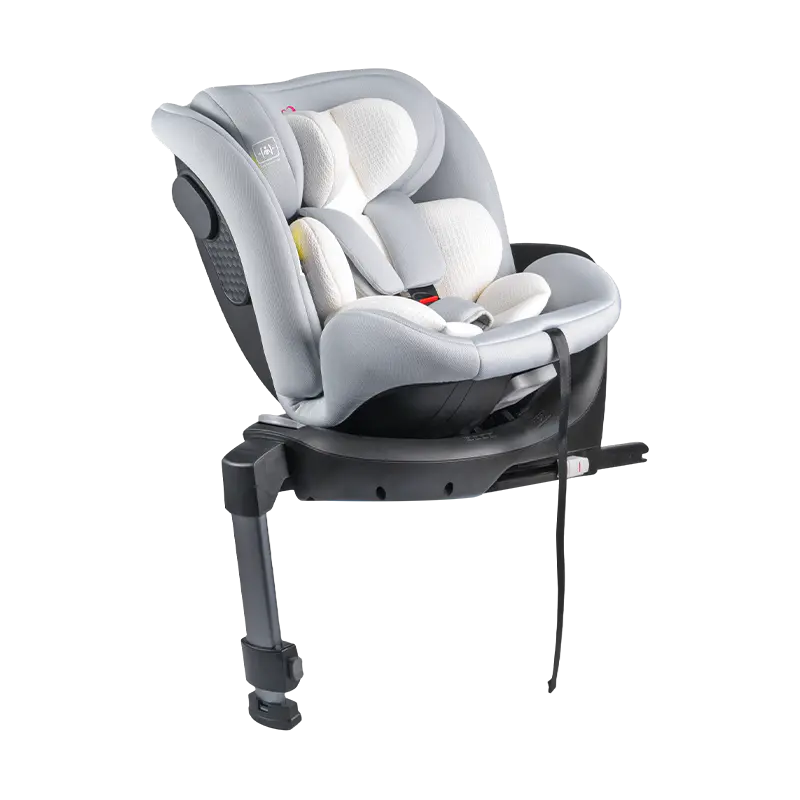 HB326 ISOFIX + support leg 360 Rotation Rearward/Forward facing baby car seat 40-150cmThe HB326 ISOFIX + support leg 360 Rotation Rearward/Forward facing baby car seat 40-150cm is equipped with ISOFIX interfaces and support legs, providing stable fixing...View Product →
Newborn inserts and head huggers
Many babies outgrow the removable newborn insert somewhere between eight and sixteen weeks. Around three months, this is the detail most parents miss. Padding that is meant to be removed but is left in place pushes the shoulders forward and tilts the head down, working directly against the posture you are trying to protect. Check the manual, measure the baby, and remove the insert at the point the manufacturer specifies rather than keeping it in for comfort.
Harness routing and shoulder height
On a rear-facing seat, the harness straps should come from slightly below shoulder level and sit flat, with the buckle low on the hips rather than across the soft part of the belly. As the baby grows, the shoulder slots move up a stage, and at three months that adjustment is often due. It is a two-minute job that changes the fit noticeably.
 HB819 I-Size infant Newborn Baby carrier car seatHB819 is a multifunctional i-Size safety carrier designed specifically for newborns and infants. This product strictly complies with the latest European safety standar...View Product →
Choosing something that still fits at twelve months
The practical question behind the two-hour rule is not only how long a baby can stay in a seat today, but whether the seat you buy now will still be the right shape in a year. Two features tend to matter most over that period. The first is a shell that can be reclined in stages, because the angle that suits a three-month-old is not the angle that suits a one-year-old who wants to look out of the window. The second is a harness that adjusts without rethreading the whole back of the seat, since the shoulder positions change every few months in the first year.
For babies who are still in an infant carrier, the carrier plus a separate seat later is a perfectly sound route. For parents who would rather buy once, a convertible seat rated from 40 to 105 centimetres and installed rear-facing covers the whole period from birth through the toddler stage without a change of product. Either way, the seat must remain rear-facing well past the first birthday, and the harness must be adjusted as the baby grows. If you are weighing up which of these two routes suits your car and your routine, this step-by-step guide to choosing the right baby car seat walks through the practical checks in order.
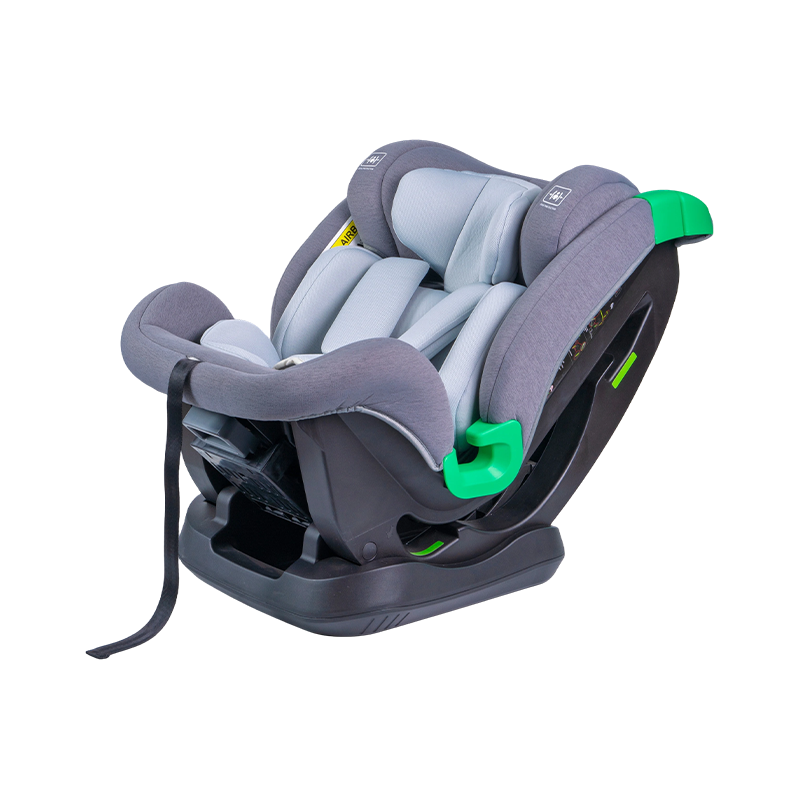 HB916Pro I-Size Belted baby car seat 40-105cmHB916Pro I-Size Belted baby car seat 40-105cm is a rear-facing car seat designed for newborns and toddlers, providing the highest level of protection for children who ...View Product →
What gets checked before a seat leaves our production line
Parents often ask what separates a seat that survives a three-month-old's daily routine from one that develops rattles and slack harnesses within a season. In our own plant in Taixing, around 40,000 square metres of standardised workshop house three assembly lines and more than ten blow-moulding and injection-moulding machines, and the process runs through seven defined steps: cover design, layout, cutting, sewing, moulded components, assembly and finished-goods inspection. Fabric panels are cut together from the same roll so that covers on the same production batch match. Shells are moulded in-house rather than bought in, which is what allows the recline geometry to be tuned to a specific height range instead of approximated.
Because the products are developed against the European ECE R44 and ECE R129 standards, plus China's GB and CCC requirements, with an ISO 9001 quality system behind them, a finished seat is not signed off on appearance alone. Harness routing, buckle release force, recline stops and the fit of the newborn insert are all part of the release check, and every batch is traceable back to the mould and the fabric roll it came from. You can see more about how the process works on our company homepage.
Frequently asked questions about car seat time at three months
Can a three-month-old sleep overnight in a car seat?
No. A car seat is a travel device, not a bed. Overnight sleep belongs on a firm, flat mattress with the baby on their back, with no harness and no reclined shell. If you arrive somewhere late, move the baby to a proper sleep surface even if that means they wake briefly.
My baby is happy and awake in the seat. Does the two-hour limit still apply?
Yes. The limit is about posture and breathing, and an awake baby can still slump forward when tired. An alert, cheerful baby is a good sign, not an exemption.
Does a nap in the carrier at home count towards the two hours?
It does. The shell holds the baby in the same semi-upright position whether it is on a car seat base or on the kitchen floor. If you need somewhere to put the baby down at home, a flat cot or a play mat is the better choice.
What if we are stuck in traffic and cannot stop?
Keep the baby monitored, and stop at the next safe place rather than the next destination. If the head drops forward or breathing changes, treat it as an emergency and find a safe stopping point as soon as you possibly can. Longer journeys are the reason the break schedule exists in the first place.
Two thirty-minute trips a day, with hours at home in between. Is that a problem?
No. Short journeys separated by long periods out of the seat are exactly how the limit is meant to work. It is the continuous stretch and the daily total that matter, not the number of individual trips.
Do lie-flat car cots change the advice?
Carrycots approved for use in the car keep a baby closer to horizontal, which is gentler on the airway than a semi-upright shell, and they are a reasonable option for newborns and very young babies. They are still a car seat, so a baby should not be left in one for hours on arrival, and any specific time guidance in the manual takes priority over general advice.
When does the two-hour limit stop applying?
There is no single day when it disappears. Once a child can sit up unassisted and is comfortably past twelve months, longer periods become more tolerable, but a sleeping child still slumps in an upright seat. Most families simply keep the habit of a break every two hours, which works just as well with a four-year-old as with a three-month-old.
Would a bigger, more padded seat allow longer in the seat?
No. Extra padding does not change the airway geometry and does not remove the need for breaks. Larger seats are about fit as the child grows, not about extending the time a baby can stay in one position.
What changes over the next three months is less about the rule and more about the fit. Somewhere between three and six months, most babies move up a harness shoulder slot, lose the newborn insert, and start to sit noticeably higher in the shell, and each of those moments is a good prompt to take the seat out of the car, check the manual once more, and re-measure the baby against the height range printed on the label. Those small checks, done two or three times a year, are what keep a seat working the way it did on the first day.
If you are unsure whether a specific seat fits a three-month-old properly, or you want to know which recline setting matches your baby's current length, send us the height, weight and the model you are considering. We build these seats, we test them, and we would rather answer a fit question before a long journey than after one.
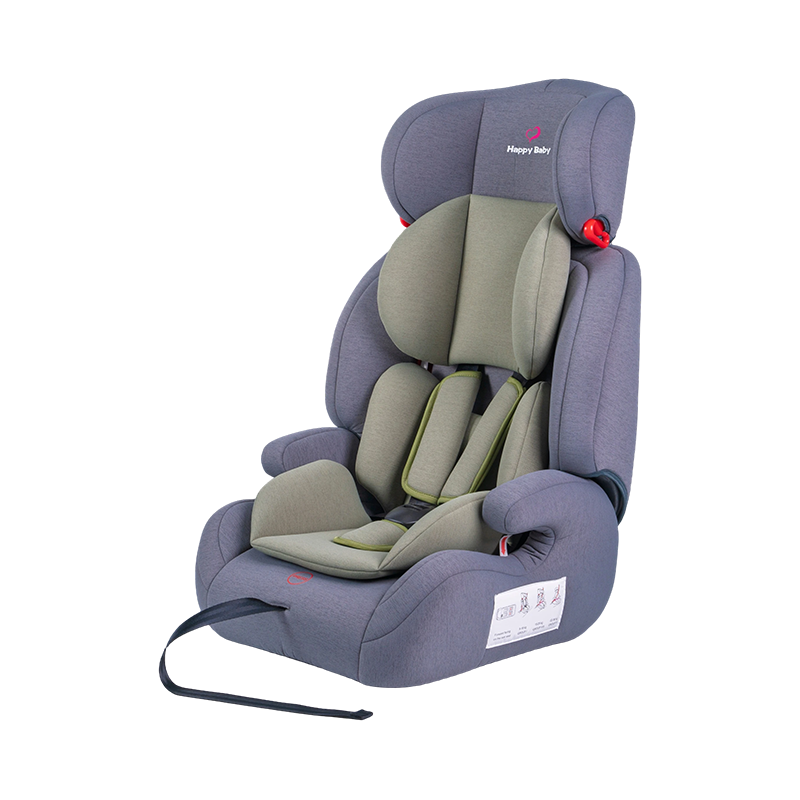
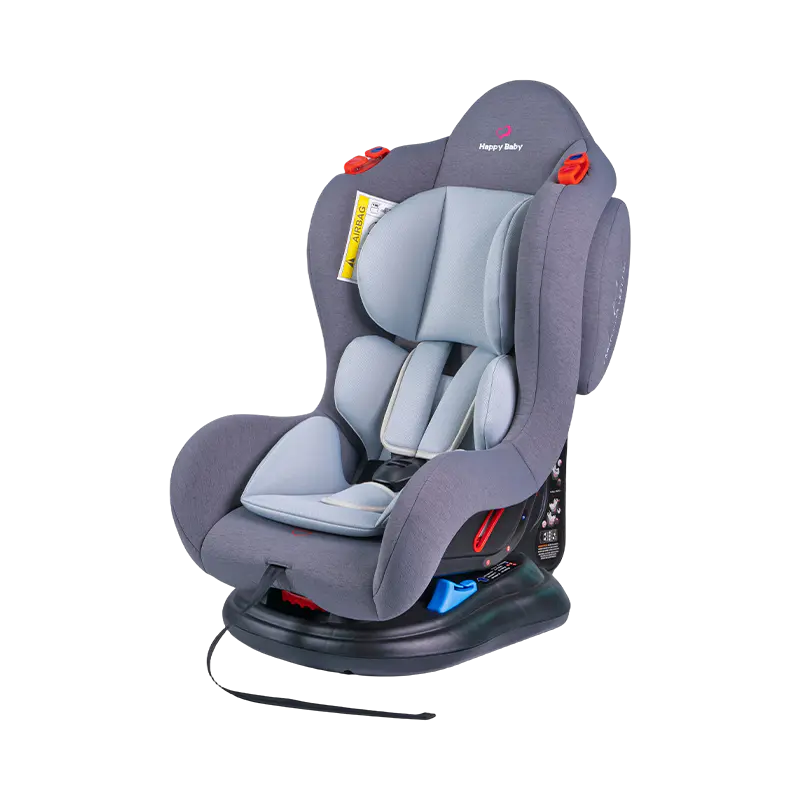

For the safety of babies' travel, we are committed to being a reliable partner for babies and families, and to becoming an expert in children's car safety seats. This is our eternal pursuit.
Contact Us
For exclusive deals and latest offers, sign up by entering your email address below.
CONTACT INFORMATION
-
Address: North of Sitong Road and west of Lianfu Port, Hongqiao Industrial Park, Taixing City, Jiangsu Province
-
Phone: +86 15996087029
-
E-mail: [email protected]
Copyright © JIANGSU HAPPY BABY SAFETY SEAT CO., LTD. All Rights Reserved.
Wholesale Child Travel Safety Seat Factory