
 English
 中文简体
 Home / News / Industry News / From What Age Should a Baby Be in a Car Seat? A Parent's Guide to Every Stage

Industry News
From What Age Should a Baby Be in a Car Seat? A Parent's Guide to Every Stage
2026-10-23
Content
- 1 From the First Ride Home: A Baby Should Be in a Car Seat at Birth
- 2 Age Is Only One Part of the Equation: Height and Weight Decide the Seat
- 3 Rear-Facing Is Not a Newborn-Only Position: Keep It for as Long as Possible
- 4 When Can a Baby Face Forward in a Car Seat?
- 5 The Booster Stage: Why Age Is Less Important Than Height and Seat Belt Fit
- 6 How ISOFIX and Seat Belt Installation Affect Age Choices
- 7 What a Manufacturer Does to Make an Age-Safe Seat
- 8 Common Age-Related Car Seat Errors That Parents Should Avoid
- 9 Frequently Asked Questions About Baby Car Seat Ages
From the First Ride Home: A Baby Should Be in a Car Seat at Birth
A baby should be placed in a correctly chosen car seat from the moment they leave the hospital. There is no lower age limit that makes a car seat optional. The seat only needs to match the baby’s height, weight, and developmental needs. In most car journeys, the safest place for a newborn is a rear-facing infant carrier or an i-Size seat approved for babies from 40 cm or about 2.5 kg.
Newborn babies have heavy heads relative to their bodies, and their neck muscles are not developed enough to control their heads during sudden braking or a collision. Even at speeds below 30 km/h, an unrestrained baby can be thrown against seats, windows, or other passengers. A parent’s arms cannot provide protection. Studies used to argue that adults could hold a baby in a crash if they braced hard; crash tests show that the force simply passes through the adult to the child. Therefore, the correct answer to “What age should a baby be in a car seat?” is that the use of a car seat starts immediately at birth and continues until the child no longer needs any restraint.
For the first weeks, a dedicated infant carrier is usually the most practical choice. It remains rear-facing, it is lightweight, and it clicks into a base or is secured with the vehicle seat belt. Many parents prefer an infant carrier because it allows them to move a sleeping baby out of the car without waking the child. The manufacturer’s height and weight limits must be checked before every ride, because a baby who has outgrown the carrier needs to transfer to a larger rear-facing seat, not to a forward-facing one.
 HB801AL Infant Carrier: ECE R44 Approved for Up to 13 kgThis lightweight rear-facing carrier meets European safety standards and is suitable from birth to 13 kg, making it a dependable first car seat for newborns.View Product →
A quality infant carrier designed and built by a manufacturer with strong production controls will meet one of the major European safety standards. For example, seats certified under ECE-R44 Group 0+ are approved for babies from birth to approximately 13 kg, while i-Size infant carriers are often approved from 40 to 105 cm in height. The age range written on the box is an estimate; the physical limits printed on the side of the seat are the real limits. If the baby reaches the height limit before their first birthday, the carrier is outgrown and the transition should happen immediately.
Age Is Only One Part of the Equation: Height and Weight Decide the Seat
Many parents ask if there is a single age that tells them which car seat to buy. In practice, age is a starting point, but height and weight are the technical factors that manufacturers use to define seat limits. A one-year-old can be 9 kg in one family and 12 kg in another; both may be healthy, yet they may need different seats.
Traditional ECE-R44 rules divide car seats into groups based on weight. Newer ECE-R129, known as i-Size, uses height because it is easier for parents to measure reliably. These two systems overlap, but they communicate the limits differently. The following table shows how the main Group ratings work under R44.
| R44 Group | Approximate Age | Weight Range | Orientation |
|---|---|---|---|
| Group 0 | Birth to about 9 months | Up to 10 kg | Rear-facing only |
| Group 0+ | Birth to about 15 months | Up to 13 kg | Rear-facing only |
| Group 1 | About 9 months to 4 years | 9 to 18 kg | Rear-facing or forward-facing |
| Group 2 | About 4 to 6 years | 15 to 25 kg | Forward-facing with booster |
| Group 3 | About 6 to 12 years | 22 to 36 kg | Booster seat or integrated booster |
Under ECE-R129, the system does not use weight groups. Instead, standards state a height range on every seat. An i-Size infant seat usually covers 40 to 75 cm or 40 to 105 cm. A larger i-Size rear-facing seat may cover 61 to 105 cm or 76 to 150 cm. An i-Size booster seat is approved for 100 to 150 cm or 125 to 150 cm. The age information on i-Size seats is approximate and exists only as a guide for comparison.
| i-Size Height Range | Approximate Age Range | Typical Seat Type |
|---|---|---|
| 40–75 cm | Birth to about 12 months | Infant carrier |
| 40–105 cm | Birth to about 4 years | Infant carrier or multi-stage seat |
| 76–150 cm | About 15 months to 12 years | Extended rear-facing / forward-facing seat |
| 100–150 cm | About 4 to 12 years | High-back booster |
| 125–150 cm | About 7 to 12 years | Backless booster |
A key difference between R44 and i-Size is that R129 requires rear-facing travel until at least 15 months of age. Many manufacturers design their i-Size seats to keep children rear-facing well beyond that age because the evidence for rear-facing protection is strong. When you buy a seat, always look at the physical printed label inside the shell. A toddler who weighs 16 kg and is 2 years old may still fit a rear-facing R129 seat up to 105 cm, and that is usually the safer choice.
Rear-Facing Is Not a Newborn-Only Position: Keep It for as Long as Possible
The single most important age-related decision is not the switch from an infant carrier to a larger seat; it is the decision to keep the child rear-facing when they move to that larger seat. A baby should remain rear-facing for at least 15 months under current European rules, but safety organisations in many countries recommend staying rear-facing until 2 years, 4 years, or until the child reaches the maximum height or weight limit of the seat. Because crash forces in a frontal impact are the strongest, a rear-facing seat spreads those forces along the shell and protects the head, neck, and spine.
The biomechanical reason is simple: a child’s spine is not fully ossified, and the spinal cord has more room to move inside the vertebrae than an adult’s. In a forward-facing crash, the harness holds the body while the head continues forward. This movement can cause severe neck and spinal injuries. In a rear-facing seat, the whole torso, head, and neck are supported by the seat shell, which absorbs and redirects much of the force. For an advanced explanation of this effect, parents can read this biomechanical analysis of rear-facing car seats.
Illustrative neck force comparison in a frontal impact
The values are a simplified representation of relative crash forces; actual results depend on crash speed, seat model, and restraint use.
Practical guidance for parents: do not turn a child forward-facing just because they pass their first birthday. Check the height and weight limit on the rear-facing seat label first. Many convertible seats and 360-degree rotation seats allow rear-facing travel up to 105 cm or 18 kg. A child who reaches 105 cm at age three or four can comfortably stay rear-facing with their legs crossed or resting on the seat back, which is safe and common in European countries where extended rear-facing is widely recommended.
If you plan to buy a seat that will serve several stages, choose a model with a clear height indicator on the seat shell. When the head restraint is no longer below the child’s ears, or when the shoulders are above the highest harness slot, the seat limit has been reached. At that point, the next seat should still be rear-facing unless the rear-facing limit has also been reached.
When Can a Baby Face Forward in a Car Seat?
A baby can legally face forward in an R129 seat only after they have reached 15 months of age. In R44 Group 1 seats weighing 9 to 18 kg, a forward-facing installation is often permitted from approximately 9 months, but that does not mean it is the safest option. The safest practice is to delay forward-facing until the maximum rear-facing limit of the seat has been reached.
Parents often ask whether their child is ready for a forward-facing seat because the child’s legs are too long or because the child complains about the position. Long legs are not a reason to face forward. A rear-facing child will naturally bend their legs, and this does not cause hip or knee damage. Car seat manufacturers design seat shells with this posture in mind. A child outgrows a rear-facing seat only when the top of the head is above the seat shell or the weight limit is exceeded.
Signs that a seat is outgrown during rear-facing use include:
- The top of the child’s head reaches above the top of the seat shell.
- The harness straps are below the child’s shoulders.
- The child exceeds the maximum weight stated on the label.
- The harness cannot be tightened to the same level as when the seat was new.
When moving to a forward-facing position, choose a seat with an adjustable headrest and reinforced side impact protection. The harness must still be a five-point harness, because an adult seat belt is not designed for the proportions of a young child’s pelvis. A forward-facing seat must be attached to the car according to the manufacturer’s instructions, whether that is with ISOFIX or the vehicle seat belt. The seat belt path must be tight, and the harness chest clip should sit at armpit level. Many modern 360-degree rotation seats make this transition easier because the seat can be turned to both rear-facing and forward-facing positions without uninstalling the base. The 360-degree function is helpful in delivering this stage correctly, and it reduces the temptation to switch a child to a forward-facing position before the child is tall enough.
 HB331 360-Degree Rotating Seat: Rear- or Forward-Facing for 40-150 cmWith ISOFIX and top tether, this R129-certified seat offers easy rotation and a five-point harness, ideal for extended rear-facing and smooth transition to forward-facing.View Product →
Parents who are shopping for a seat to cover the forward-facing years should also consider how long the seat can be used in the forward-facing configuration. Some R129 seats cover 76 to 150 cm, which allows the same seat to serve from roughly 15 months to around age twelve. This does not mean the seat works for every child in that range; it means the seat has an adjustable headrest and harness system that grows with the child. Before installing a forward-facing seat, confirm that the vehicle has a top tether anchor if the seat uses a top tether, or that the rigid ISOFIX arms can be properly locked in the vehicle.
The Booster Stage: Why Age Is Less Important Than Height and Seat Belt Fit
The next age-related milestone is the move to a booster seat. A child who has outgrown a forward-facing five-point harness seat can use a booster seat, but the child must be mature enough to sit still for the whole journey. In general, children between 100 cm and 150 cm should use a booster or high-back booster. Under R129, boosters are commonly approved from 100 cm, which varies with the child’s growth pattern and is often around four years of age. Under R44, Group 2 starts at 15 kg and Group 3 starts at 22 kg, which means many children will be between four and six years old before a booster fits correctly.
The purpose of a booster is to raise the child so that the adult seat belt sits across the correct parts of the body. The lap belt must lie over the upper thighs, not across the soft abdomen. The shoulder belt must cross the centre of the shoulder, not touch the neck or fall off the shoulder. When the seat belt no longer meets these conditions, the child is ready to use the adult seat belt without a booster. This usually happens when the child is about 145 cm tall, often between 8 and 12 years old. Using a booster until the 145 cm mark remains a wise guideline because the adult belt is designed for an adult body shape.
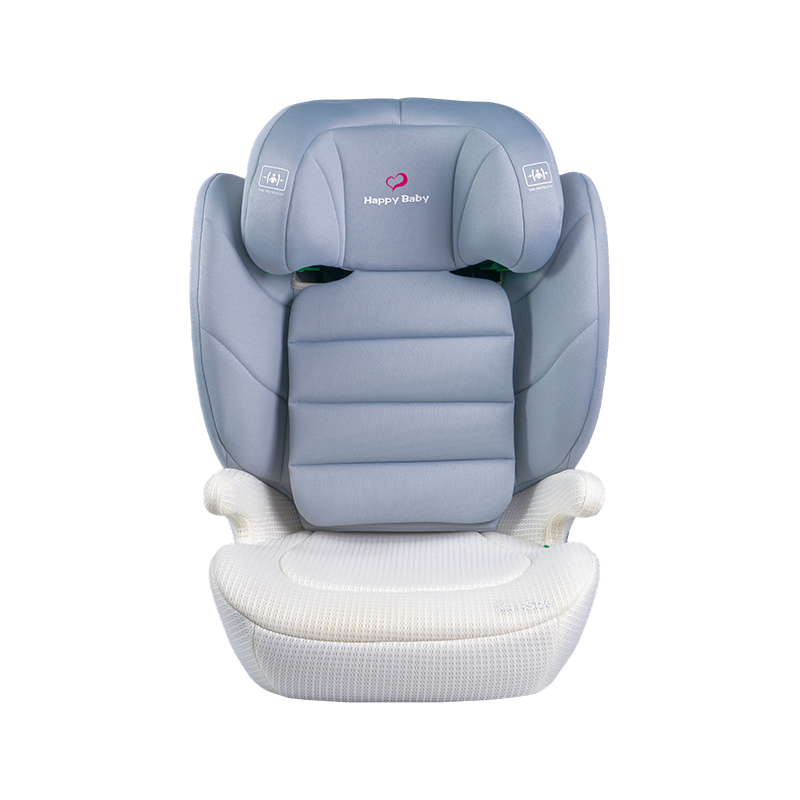 HB629 High-Back Booster with ISOFIX: R129 Certified for 100-150 cmThis high-back booster provides essential head and torso protection, features multiple headrest adjustments, and ensures proper seat belt fit for older children.View Product →
High-back boosters provide side impact protection for the head, neck, and torso. They are especially useful in cars without whiplash protection or head restraints in the rear seats. Backless boosters are lighter and easier to move between cars, but they offer no support for the child’s head and therefore require a vehicle head restraint behind the child. A high-back booster should be chosen if the child is not yet tall enough that their ears are level with the top of the vehicle seat back.
One common mistake is to move a child to a booster too early because the shoulder belt no longer sits on the chest in the five-point harness. That is the wrong way to decide. The correct order is: infant carrier, rear-facing seat, forward-facing harness seat, high-back booster, and only then the adult seat belt. Parents should also avoid buying a used booster seat if the manufacturing date is old, if the shell has cracks, or if the original instruction manual is missing. A booster seat that has been in a severe crash should always be replaced, even if it looks undamaged.
Newborn to about 1 year
Use an infant carrier or i-Size carrier from 40 cm. Keep it rear-facing and never place a baby in a front seat with an active airbag.
1 to 4 years
Move to a larger rear-facing seat if possible. Under R129, the minimum rear-facing window is 15 months, but longer is safer.
4 to 8 years
Keep the five-point harness until it is outgrown, then switch to a high-back booster with correct belt guidance.
8 to 12 years
Use a booster until 145 cm. The child should be able to sit correctly for the whole trip without leaning out of the belt.
How ISOFIX and Seat Belt Installation Affect Age Choices
Many parents believe that an ISOFIX seat is automatically safer than a belt-installed seat. In fact, both can be equally safe if they are installed correctly. The bigger factor is installation error. The ISOFIX system uses rigid anchor points attached to the car chassis, which lowers the chance of wrong installation. A belt-installed seat must be tightened carefully until the seat moves less than 2.5 cm at the belt path. Under R129, manufacturers frequently label their i-Size seats as ISOFIX-only, while R44 seats may offer both installation methods.
The table below compares the two installation methods so parents can decide what matches their vehicle and their planned use.
| Consideration | ISOFIX Installation | Seat Belt Installation |
|---|---|---|
| Error rate | Lower because the connection is mechanical | Higher if the belt is twisted, loose, or in the wrong path |
| Compatibility | Only works in vehicles with ISOFIX anchor points | Works in nearly every vehicle |
| Transfer between cars | Requires a new click-in base or dedicated anchor set | Seat can be moved if the belt can route correctly |
| 360-degree rotation | Commonly used because the base stays fixed | Less common; belt paths can restrict rotation |
| Weight of the seat | Often heavier due to metal ISOFIX arms | Usually lighter and easier to carry |
Age and height limits are not changed by the installation method. A rear-facing i-Size seat with ISOFIX and a top tether still has the same 40-to-105 cm range as a belt-installed version of the same model. The seat’s orientation, harness, and shell design determine the age range. However, 360-degree rotation seats are more popular now because they help parents keep children rear-facing for longer from a practical standpoint. Without rotation, a parent may physically struggle to lift a toddler into a rear-facing seat, especially in a narrow parking space or small car. With rotation, the seat turns toward the door, the child is placed into the seat, and the seat turns back to the rear-facing position. This convenience removes a common excuse for early forward-facing.
Another installation-related point is the top tether. A forward-facing seat with ISOFIX should always use the top tether if the manufacturer provides one. The top tether reduces the forward movement of the seat in a crash. For rear-facing seats with a support leg, the leg must be firmly connected to the car floor. Some parents skip the support leg because they are in a hurry, but an unextended support leg removes one of the main energy-absorbing elements of the seat. In every case, read the seat manual and the car manual together, and if the seat cannot be installed tightly, seek a seat that matches the vehicle.
What a Manufacturer Does to Make an Age-Safe Seat
Understanding age guidelines is not only about knowing when to switch a seat; it is also about trusting the engineering behind the seat. A responsible manufacturer designs every product around a clear height or weight range and tests the seat against the forces expected in that range. For example, carbon fiber reinforced plastic is sometimes used in high-end seats, but for most models, manufacturers use blow-moulded or injection-moulded polypropylene shells that absorb crash energy through controlled deformation. The shell must be stiff enough to stay intact, yet flexible enough to spread the force over time.
Production quality also matters for age safety. If the harness straps are not sewn with the right thread tension, if the adjuster plate is too thin, or if the side-impact wings are not assembled correctly, a child can slip out of the seat even when the child’s weight is within the legal limits. A factory that carries out complete production testing and keeps records of each batch reduces the risk of these defects. Goods are checked at multiple stages from fabric cutting to injection-moulding and final assembly.
From a manufacturer’s perspective, the age label on a car seat is a legal claim. A seat approved under ECE-R129 for 76 to 150 cm has passed tests with dummies covering the same height range. Those dummies include sensors for chest acceleration, head movement, and pelvic pressure. The same fundamental tests apply to a low-cost seat and a premium seat, which is why certification marks matter more than marketing words. A seat with a valid ECE mark can be considered trustworthy, while an unmarked seat is a serious risk. When parents buy from a direct manufacturer, they should ask to see the certification list or the approval number printed on the orange label that is permanently attached to the seat shell.
Design teams also consider how seat fabrics behave under hot and humid conditions, because a child’s skin is sensitive and sweat can affect comfort. Ventilated fabrics, washable covers, and softer shoulder pads do not change the age rating, but they encourage the child to sit in the seat without complaining. A child who is comfortable is a child who will stay seated properly, and that is an important part of safety across all ages. For this reason, seat manufacturers treat age safety as a system that includes shell, harness, base, and cover fabric rather than a single element.
Buyers should also be cautious about car seats that claim to cover several age stages at a low price. A seat covering 0 to 12 years needs more adjustments than a single-stage seat, and not every component can grow with the child equally well. Some multi-stage seats function well in every position, but parents must read the manual carefully and remove the harness inserts at the correct age. The fitting of the headrest, harness strap height, and crotch buckle position need to be updated as the child grows. A so-called “all-age” seat is safe only if every adjustment is operated correctly by the parent.
Common Age-Related Car Seat Errors That Parents Should Avoid
Even with the right seat and the right age range, mistakes happen during everyday use. Some of these errors are small, while others can be life-threatening. Below are the most common age-related mistakes found in roadside checks and the correct practice for each.
| Mistake | Why It Happens | Correct Practice |
|---|---|---|
| Turning to forward-facing too soon | Pressure from the child, R44 Group 1 allows forward-facing from 9 kg | Keep rear-facing until the seat height or weight limit is reached |
| Moving to a booster before the harness is outgrown | Parents think the child looks too big | Stay in the five-point harness until the harness limit |
| Using a second-hand seat of unknown history | Budget concerns | Choose a new seat with certification and known manufacturing date |
| Not removing bulky winter clothing before tightening the harness | Concern that the child is cold | Tighten the harness over the chest, with straps snug enough that no fold can be pinched |
| Placing a rear-facing baby in the front seat with an active airbag | Single-parent driving or no rear seat space | Never place a rear-facing seat in front of an active airbag |
Another important error is choosing a seat based only on the fastest-growing age group. For example, many parents select a Group 1-2-3 seat because it appears to last longer, but a newborn requires a rear-facing-only seat or an i-Size seat with a newborn insert. If the seat is bought too early for the child’s height, the harness slots may lie above the child’s shoulders, which is not safe. It is better to buy a seat that exactly fits the child now and buy a new seat when the child grows than to force a child into a seat that is close to but not within the stated limits.
Parents also frequently misunderstand the meaning of “approved from birth.” This phrase does not mean the newborn can ride for unlimited time. An infant car seat should not be used as a general sleeping place outside the car, and long periods of time in a semi-reclined position can strain breathing for premature babies. A car journey is necessary, so the seat is essential, but babies should not be left asleep in the seat for hours after the journey ends. This is a health and comfort point that affects age safety, especially for small babies.
Frequently Asked Questions About Baby Car Seat Ages
What age should a baby be in a car seat?
A baby should be in a car seat from birth. The only requirement is that the car seat is appropriate for the baby’s size. This means using a rear-facing infant carrier or an i-Size seat approved for the baby’s height from 40 cm or for a weight of at least 2.5 kg.
Can a 2-month-old baby sit in a car seat?
Yes. A 2-month-old should travel in a rear-facing infant carrier or i-Size seat. The seat must be installed at the recommended recline angle so that the baby’s head does not flop forward. Remove any aftermarket head pads that were not sold with the seat because they can loosen the harness and obstruct the airway.
When can a baby face forward in a car seat?
Under the ECE-R129 i-Size rule, rear-facing is mandatory until at least 15 months. Many experts recommend delaying forward-facing until around age 2 or longer, until the child reaches the maximum height or weight of the rear-facing seat. Under R44, forward-facing can be allowed earlier, but early forward-facing is not recommended.
What age can a child switch to a booster seat?
A child can switch to a booster seat after they have outgrown the forward-facing harness seat. In practice, this is usually around 100 cm in height and roughly 18 kg, which often corresponds to around four years of age. The child must be able to sit still for the whole trip. If the child cannot do this, a five-point harness seat should continue to be used.
When can a child stop using a booster seat?
A child can stop using a booster when the adult seat belt fits correctly without any help. The lap belt must sit on the upper thighs, not on the stomach. The shoulder belt must cross the middle of the shoulder, not the neck or the arm. This normally happens at a height of about 145 cm and is rarely before age 8.
How long can a baby stay in an infant car seat?
The length of time inside the car should be kept as short as practical, especially for newborns. The infant seat is safe during travel, but it should not be used as a cot. For a newborn, take a break every 30 to 60 minutes on long journeys, unless the baby is sleeping and the ride is about to end. For more age details, see the complete baby car seat ages guide from newborn to booster.
From birth to the final booster phase, the answer to the age question is found in the child’s body, not in a calendar. A baby should always be in a car seat during travel, and the safest path is: infant carrier, extended rear-facing seat, forward-facing harness seat, high-back booster, and then the adult seat belt once the belt fits properly. Checking the labels, tracking height and weight, and reading the manual will keep every stage correct.
For parents who are choosing a seat, look for clear certification to ECE-R129 or ECE-R44, a solid return policy, and a manufacturer that explains its testing process openly. A good car seat is not chosen by age alone; it is chosen by measuring the child, checking the vehicle, and understanding the strength of the standard behind the product.
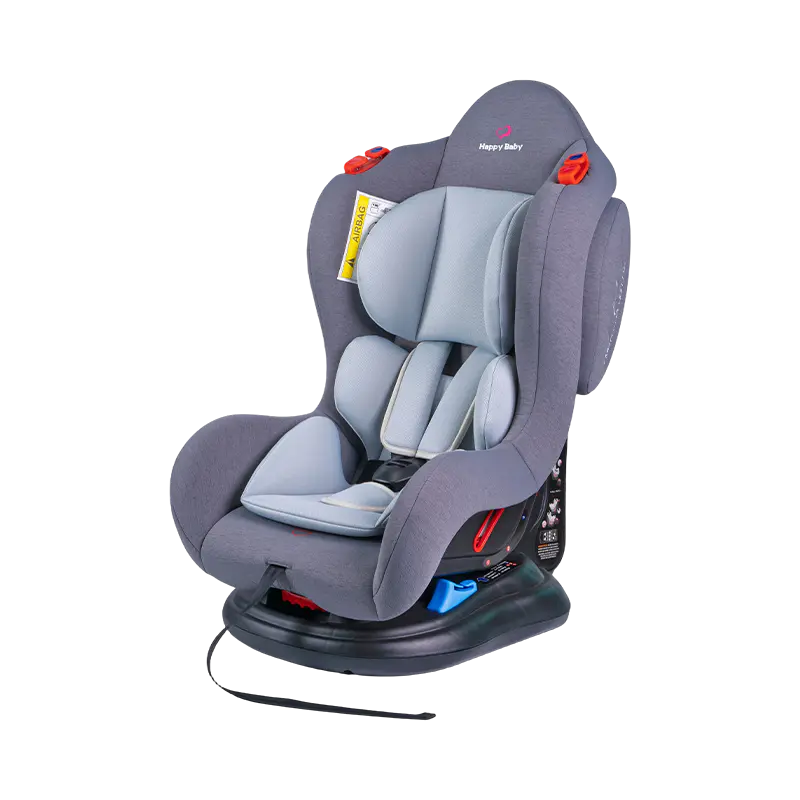
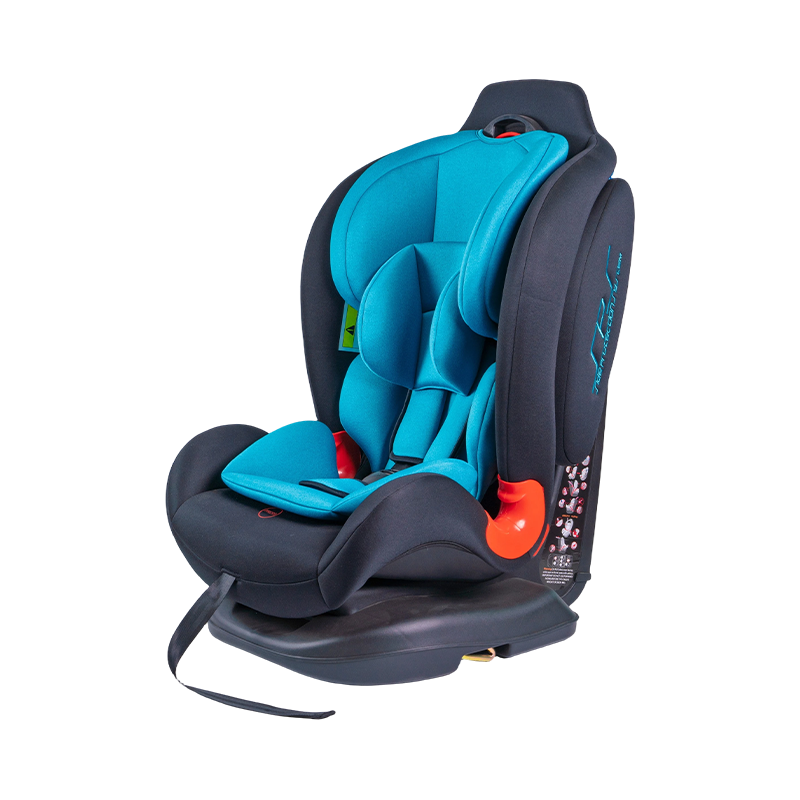
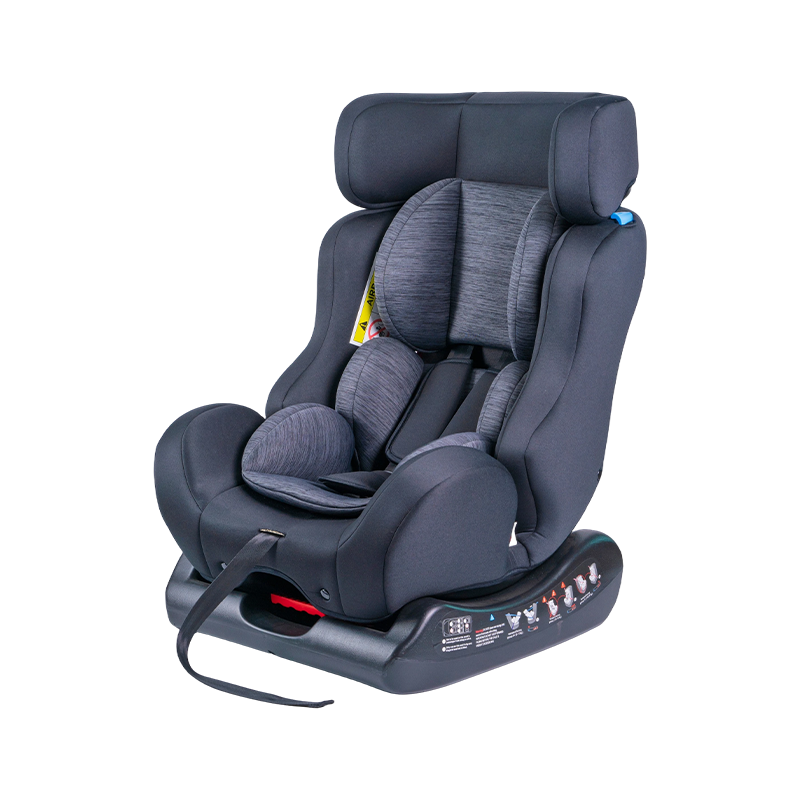

For the safety of babies' travel, we are committed to being a reliable partner for babies and families, and to becoming an expert in children's car safety seats. This is our eternal pursuit.
Contact Us
For exclusive deals and latest offers, sign up by entering your email address below.
CONTACT INFORMATION
-
Address: North of Sitong Road and west of Lianfu Port, Hongqiao Industrial Park, Taixing City, Jiangsu Province
-
Phone: +86 15996087029
-
E-mail: [email protected]
Copyright © JIANGSU HAPPY BABY SAFETY SEAT CO., LTD. All Rights Reserved.
Wholesale Child Travel Safety Seat Factory