
 English
 中文简体
中文简体 Home / News / Industry News / Is It Safe to Keep a 4-Month-Old Baby in a Car Seat? Safety Facts and Limits
Industry News
Is It Safe to Keep a 4-Month-Old Baby in a Car Seat? Safety Facts and Limits
2026-10-16
Content
- 1 Is It Safe to Keep a 4-Month-Old Baby in a Car Seat?
- 2 Why the Two-Hour Rule Exists in the First Place
- 3 What Changes at Four Months
- 4 The Real Risks, Ranked
- 5 The Eight-Point Check You Can Do in Two Minutes
- 6 Recline Angles and Installation Methods in Numbers
- 7 Planning a Long Drive With a 4-Month-Old
- 8 Warning Signs That Mean Stop the Car
- 9 Car Seat Sleep vs Safe Sleep: Keeping the Two Separate
- 10 Which Seat Type Suits a 4-Month-Old Best?
- 11 Comfort Engineering: What Actually Makes a Difference
- 12 How a Car Seat Is Actually Validated
- 13 Seven Mistakes That Show Up Again and Again
- 14 What to Verify Before You Buy
- 15 Care, Cleaning, and When to Retire a Seat
- 16 Frequently Asked Questions
- 16.1 Can a 4-month-old stay in a car seat for four hours?
- 16.2 Is it safe for a 4-month-old to sleep in a car seat while driving?
- 16.3 What is the safest position for a 4-month-old in a car?
- 16.4 Does my 4-month-old still fit an infant carrier?
- 16.5 Can I leave my baby in the car seat when we get home if they are asleep?
- 16.6 How tight should the harness be on a 4-month-old?
- 16.7 Can I put a thick coat on my baby in the car seat?
- 16.8 Should I buy a rotating ISOFIX seat for a 4-month-old?
- 16.9 Can a car seat go on top of a shopping trolley?
- 16.10 How long can a 4-month-old be in a car seat on a plane or train?
- 16.11 When should I move my baby to a forward-facing seat?
Is It Safe to Keep a 4-Month-Old Baby in a Car Seat?
A 4-month-old can travel in a car seat safely, and in most countries the law expects it. The part that catches families out is not crash protection. It is time. The same seat that protects a baby in a 50 km/h impact becomes a risk factor when that baby is left in it hour after hour in a semi-upright position, chin drifting towards the chest, asleep and unmonitored.
The working answer used by infant safety organisations and car seat engineers fits in one sentence: rear-facing, correctly installed, and no more than roughly two hours in a single stretch. On long journeys, plan a real break every 45 to 90 minutes, take the baby out of the seat, let them lie flat, and never leave a sleeping baby in the seat once you have arrived.
2 hoursmaximum continuous time in one stretch for babies under six months
15 monthsminimum rear-facing period required under ECE R129 (i-Size)
45-90 minrecommended break interval when driving long distance
Under 2.5 cmmovement allowed at the belt path on a correctly installed seat
Everything below explains those four numbers in practical terms: why the two-hour limit exists, what a 4-month-old body does differently from a newborn, how to verify the seat is set up correctly right now, and which seat designs make long journeys easier on a small spine and airway.
Why the Two-Hour Rule Exists in the First Place
A newborn baby's head is disproportionately heavy. Approximate figures used in paediatric teaching put the head at around a quarter of total body mass at birth, falling gradually through the first two years. That mass sits on a neck whose muscles are still developing. When a baby is positioned semi-upright and then falls asleep, muscle tone drops, gravity pulls the head forward, and the chin can settle towards the chest.
A chin-to-chest position narrows the airway. In a car seat, the baby's own weight also flexes the spine slightly forward, and there is no flat surface to redistribute that pressure. This is the origin of the two-hour guidance: it is not about the seat being badly designed, it is about a posture being sustained long enough for the effects to accumulate.
Head mass as a share of total body mass (approximate, illustrative)
The second mechanism is oxygen saturation. Research into newborns travelling in car seats has recorded small but measurable dips in blood oxygen and increases in brief breathing pauses during longer periods in the seat, especially when the seat angle is too upright or the baby's head slumps sideways. A healthy 4-month-old is generally more robust than a newborn, which is why many clinicians relax slightly as the months pass, but the underlying mechanics do not disappear at four months.
The third mechanism is sleep. Babies fall asleep in car seats because motion and enclosure soothe them, and a sleeping baby is a baby nobody wants to wake. The difficulty is that a semi-upright seat was never designed to be a bed. Infant safety guidance is consistent on this point: babies should not sleep in a car seat for long periods, and once the journey ends they should be moved to a flat, clear sleep space.
One clarification worth holding onto. The two-hour figure describes a single continuous stretch, not the total for a day. A family can drive six hours with a 4-month-old, provided the baby comes out of the seat regularly, lies flat, feeds properly, and goes back in only when the car is moving again. That is a very different risk profile from six hours straight. Our breakdown of the two-hour car seat rule covers the age thresholds where the guidance loosens.
What Changes at Four Months
Four months is a transition point rather than a clean break. Head control is improving quickly, but it is not yet reliable during sleep, and the neck still relies on the seat shell and the harness for support rather than on its own muscles. In practical terms, this is still firmly rear-facing territory.
| Measure | Typical range at 4 months | What it means for the seat |
|---|---|---|
| Weight | 5.8 - 7.5 kg | Well inside the rear-facing limit of every current i-Size seat; an infant carrier rated to 13 kg still has room. |
| Length | 59 - 66 cm | Rear-facing under R129 until at least 76 cm or 15 months; most seats in this class cover 40-105 cm. |
| Head control | Steady when awake, unreliable in deep sleep | Keep the seat reclined within the manufacturer's angle range; do not switch to a more upright setting to "help" the baby sit up. |
| Shoulder height | Rising every few weeks | Check the harness slot monthly. For rear-facing, straps sit at or just below the shoulder line. |
| Time awake between naps | Roughly 1.5 - 2 hours | Lines up neatly with a 60-90 minute break rhythm on the road. |
Most parents at this stage are working with one of two seats: the infant carrier they bought before the birth, or a convertible seat that will carry the child to 105 cm or beyond. Both are legitimate. The infant carrier is easier to lift out and click onto a stroller frame, which makes short trips and quick breaks much simpler. The convertible seat usually offers a deeper recline and more shell around the head, which suits longer motorway journeys.
Where parents most often go wrong is in the harness. As the shoulders rise, the straps need to move up a slot, and the crotch strap may need to move to its outer position. A harness that is too low pulls the baby's shoulders down; one that is too high slides off. Neither is a comfort problem, both are a protection problem.
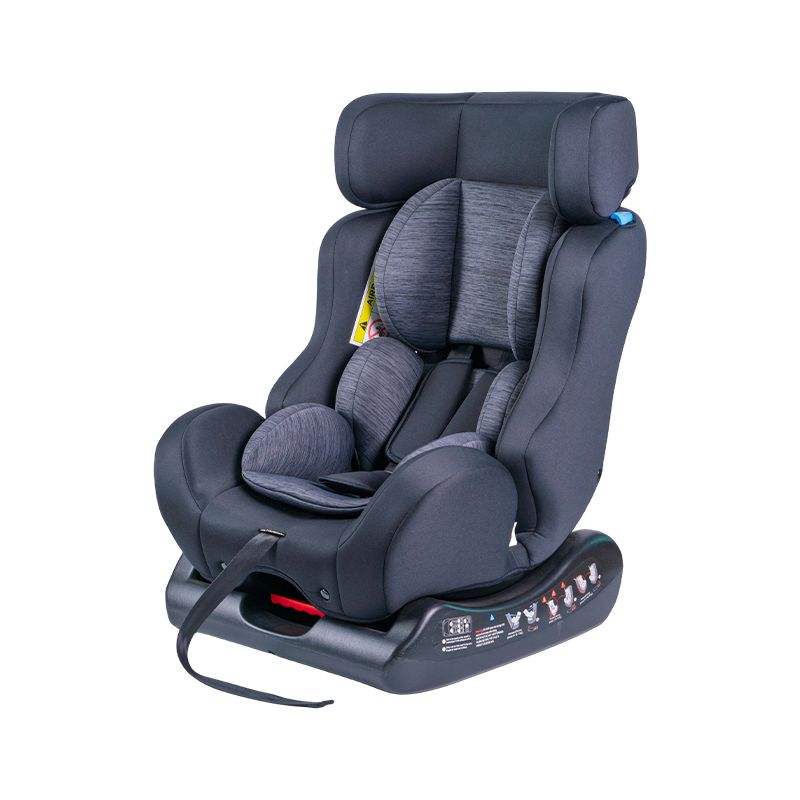
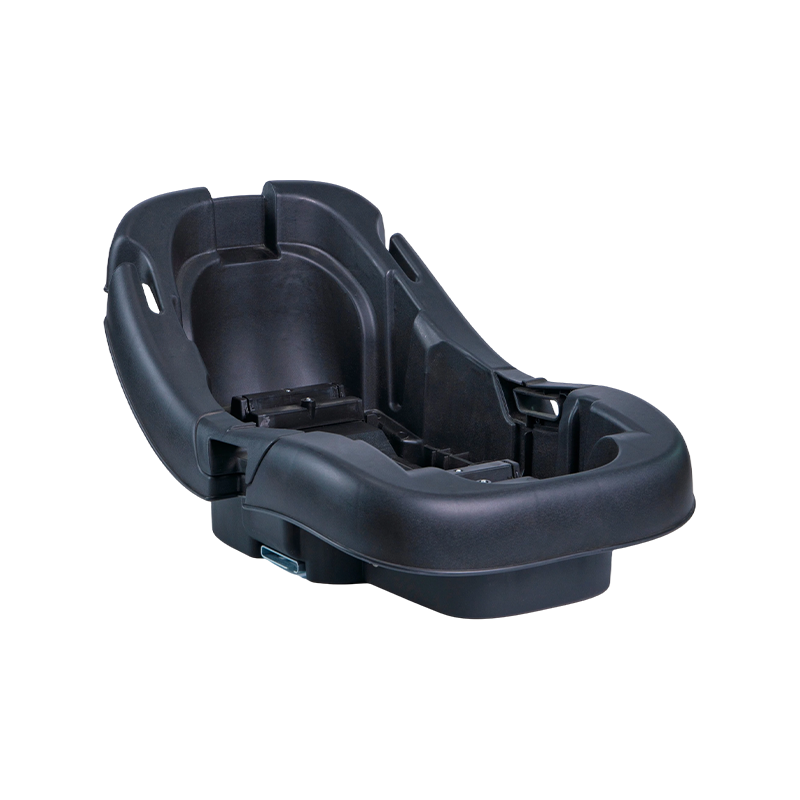 HB816 Group 0+ Infant Carrier Car SeatFor frequent short trips, a rear-facing carrier up to 13 kg with stroller/base compatibility and a carry handle that doubles as a rocker.View Product →
A dedicated infant carrier with a deep, well-padded shell is still a strong option at four months, particularly for families who make frequent short trips and want to carry the baby indoors without waking them.
The Real Risks, Ranked
When engineers and clinicians talk about car seat risk for a 4-month-old, they are usually ranking hazards in this order. The first one is quiet, which is what makes it dangerous.
- Positional asphyxia. Airway obstruction caused by posture, not by impact. It develops silently. A baby whose chin is pressed to the chest may make no sound at all, which is why the advice is to check visually and frequently rather than to listen.
- Head slump and chin-to-chest posture. Most likely when the seat is installed too upright for the baby's age, when the harness is loose enough to let the torso slide down, or when the baby is in a deep sleep.
- Extended sleep in a semi-upright seat. Long periods in that posture are associated with oxygen dips and with pressure on the back of a soft skull. The flat-head effect is cosmetic and correctable, but it is a signal that the baby has been in one position too long.
- Bulky clothing under the harness. A padded coat compresses in a crash, leaving the harness loose. The same applies to thick snowsuits and to blankets threaded under the straps. Thin layers plus a blanket over the top of the harness is the standard approach.
- Wrong recline angle. Too upright increases head slump. Too reclined in a crash can let the baby slide forward. Every seat has an angle indicator or a defined range, and it changes with the slope of your vehicle seat.
- Aftermarket inserts and strap covers. A head hugger or shoulder pad that did not come with the seat has not been tested with it, and thick pads under the harness change how the straps load in a crash.
- Using the seat as furniture. Seats placed on soft beds, on raised surfaces, on top of shopping trolleys, or used as an indoor lounger create fall and airway risks that have nothing to do with driving.
- Overheating. A rear-facing seat holds heat. Thick clothing plus a warm cabin plus a small baby is a combination that shows up as a flushed, sweaty, drowsy infant who is harder to monitor.
The Eight-Point Check You Can Do in Two Minutes
Before the next journey, run through this in order. It is the same sequence our own quality team uses when a seat comes off the assembly line, simplified for a driveway.
- Harness height. With the baby in the seat, look at where the straps leave the shell. For rear-facing, they should be level with or just below the top of the shoulders, never above.
- Harness tension. Pull the adjuster strap until there is no slack, then test with a flat finger at the collarbone. You should not be able to pinch a fold in the webbing. One finger of slack is the common working benchmark, but there should be no twist anywhere along the strap.
- Buckle position. The buckle should sit low, over the pelvis, not up on the belly. If it rides up, the harness is too loose or the crotch strap needs to move outwards.
- Seat angle. Check the angle indicator against the manufacturer's range for this age. Rear-facing seats are typically set between about 30 and 45 degrees from vertical, with younger babies at the more reclined end.
- Installation movement. Grip the seat at the belt path or the ISOFIX connectors and push and pull. Movement should be under about 2.5 cm in any direction. More than that means the connectors are not locked, the belt is not routed per the manual, or the support leg or top tether is not tensioned.
- Support leg or top tether. If your seat uses one, confirm it is fitted. These parts control rotation in a frontal impact and are not optional extras.
- Clothing layer. Remove coats and thick fleeces. Put the blanket over the harness, not under it.
- Nothing loose in the seat. No toys, no mirrors clipped to the shell, no aftermarket padding. A small soft toy with no hard parts is a reasonable exception on a long drive, but anything that could become a projectile is not.
If a seat fails any of these checks, fix it before moving the car. Most failures take under a minute to correct, and the most common one by a wide margin is a harness that is simply not tight enough.
Recline Angles and Installation Methods in Numbers
Recline is the setting parents adjust most often without knowing what the target is. The table below shows the working ranges we use across our rear-facing and convertible lines, along with the installation hardware involved.
| Seat type | Height range | Typical recline | Installation |
|---|---|---|---|
| Infant carrier (i-Size newborn class) | 40 - 87 cm | About 40 - 45 degrees | Belted or ISOFIX base |
| Belted i-Size convertible | 40 - 105 cm | About 35 - 45 degrees | Three-point vehicle belt |
| ISOFIX with support leg, 360 rotation | 40 - 150 cm | About 30 - 42 degrees, position dependent | ISOFIX plus support leg |
| ISOFIX with top tether, 360 rotation | 40 - 150 cm | About 30 - 42 degrees, position dependent | ISOFIX plus top tether |
Two details matter here. First, the angle on the indicator is measured relative to the vehicle seat, and vehicle seats vary. A steeply raked rear bench can push an otherwise correct installation out of range, which is why a rolled towel or the seat's own recline foot exists in many manuals. Second, the recline angle of a rotating seat changes depending on whether it is locked rear-facing or swung to the side for loading. The angle that counts is the one in the locked, driving position.
Planning a Long Drive With a 4-Month-Old
Long journeys are manageable. They just need a schedule rather than optimism. A baby who is fed, changed, and flat for fifteen minutes every hour tends to travel far better than a baby who is fed at the wheel and left asleep in the seat for four hours.
Before departure
Adjust the harness to the current shoulder height, remove bulky clothing, check the recline indicator, and confirm the support leg or tether is fitted.
Minutes 0 - 60
Drive. Check on the baby at every safe opportunity, and always at traffic lights. Look for head position, colour, and breathing pattern.
Minute 60
Stop properly. Baby out of the seat, lying flat on a blanket or in a carrycot, nappy changed, feed offered. Fifteen to twenty minutes minimum.
Minutes 80 - 140
Second driving block. If the baby falls asleep immediately, that is normal and safe as long as the head is upright and the harness is snug.
Minute 140
Second stop. Same routine. This is also the point at which a two-hour continuous stretch would have been reached, so do not skip it.
Arrival
Transfer the baby to a flat sleep surface within minutes. The seat stays in the car.
Three rules make the schedule work. Do not feed the baby in the seat while the car is moving, because a semi-reclined baby choking or gagging is very hard to manage from the front seat. Do not remove the baby from the seat while the car is moving for any reason, including crying, because the seat is the safest place for a distressed baby in a moving vehicle. Do not shorten the breaks because the baby is sleeping well, because good sleep in the seat is exactly the situation the two-hour guidance is written for.
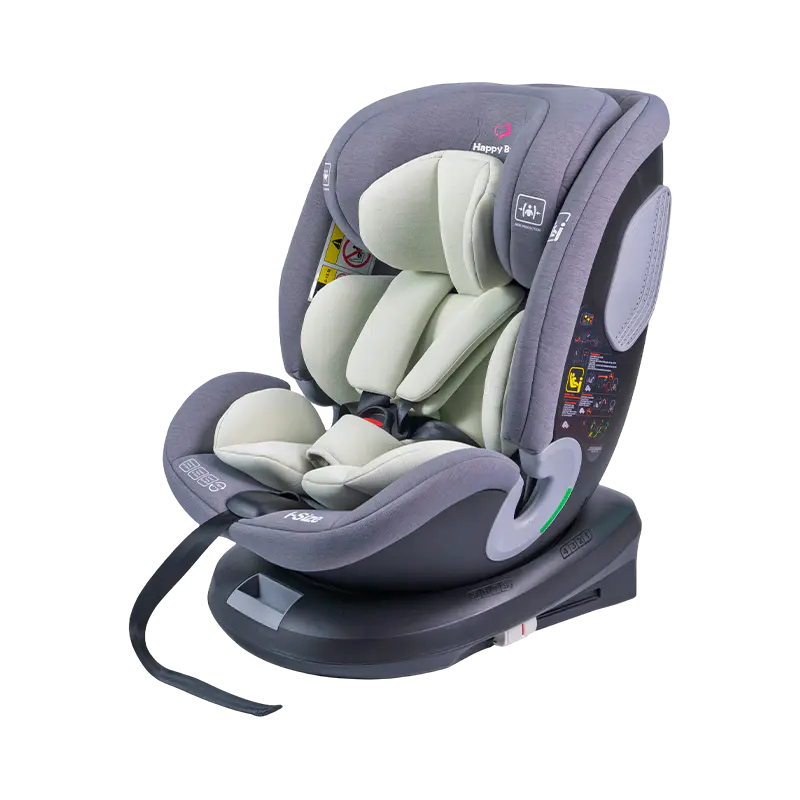
Loading and unloading matters more than most parents expect on a trip like this. A seat that rotates can be turned towards the door, harness opened, baby lifted out while standing upright, then clicked back into the rear-facing driving position without twisting around a door frame. On a journey with four or five stops, that difference is worth a lot. Seats built on this principle, such as our 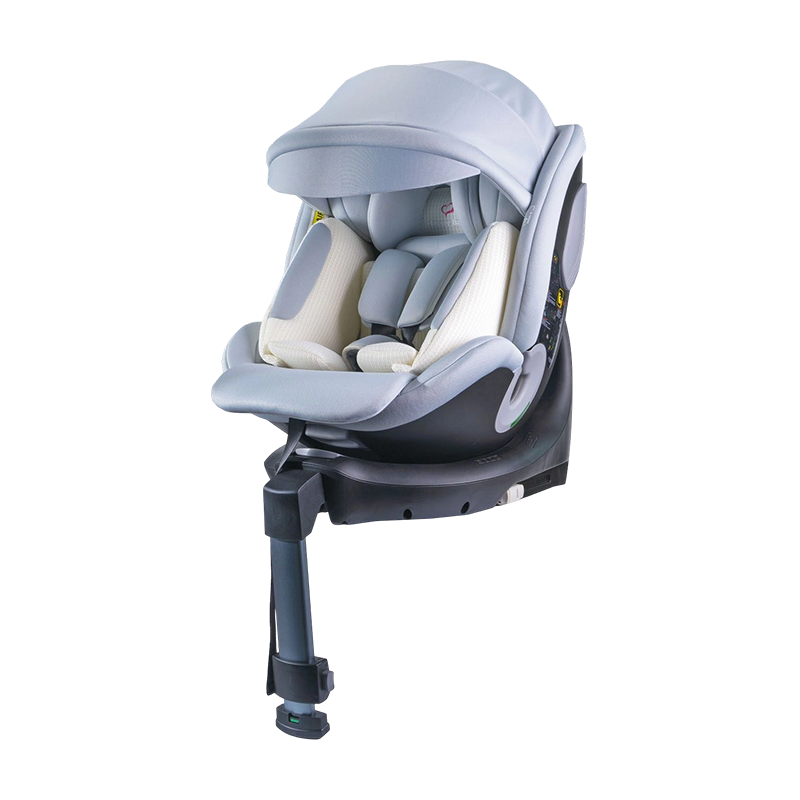 HB336 360 Rotation ISOFIX i-Size Car SeatA rotating ISOFIX seat with support leg for easier loading at repeated stops, certified i-Size and usable rear-facing then forward-facing.View Product → support-leg rotating model, are designed specifically around the repeated stop-and-go pattern of family travel.
Packing matters too. Keep a flat blanket, a spare nappy, a change of clothes, and a thin blanket for over the harness within reach. Avoid leaving the car seat in a hot vehicle before the journey; the shell and buckle can stay warm enough to make the first twenty minutes uncomfortable for a small baby.
Warning Signs That Mean Stop the Car
Most problems in a car seat develop gradually. The signs below are the ones that warrant pulling over at the first safe place rather than waiting for the next scheduled stop.
- Skin colour changes, particularly paleness or a grey or bluish tinge around the lips and mouth.
- Noisy, grunting, or obviously laboured breathing, or long pauses between breaths.
- The head is slumped forward with the chin pressing towards the chest and cannot be corrected by gently repositioning.
- The baby is unusually floppy, difficult to rouse, or unresponsive to touch and voice.
- Repeated head bobbing in a baby who was previously settled, which often indicates the seat angle is too upright.
- Drowsiness combined with sweating, a hot neck, or flushed skin, which points to overheating.
- Any continuous period approaching or exceeding two hours in the seat, even if the baby looks perfectly content.
If a baby becomes unresponsive, is struggling to breathe, or changes colour, the correct response is to stop, remove them from the seat, and call emergency services. Do not continue driving while trying to monitor a baby in distress.
Car Seat Sleep vs Safe Sleep: Keeping the Two Separate
The car seat is a transport device. It is not a cot, and it is not a bassinet. That distinction resolves most of the confusion around this question.
While the car is moving, a sleeping baby in a correctly installed, correctly reclined seat with a snug harness is the safest place for them. When the car stops, the calculation changes. The baby should come out, lie flat, and be monitored. If you are three minutes from home, that can wait. If you have arrived at a service station and the baby is in a deep sleep with the head to one side, lifting them out and letting them finish the nap on a flat surface is the right move, even if it costs you twenty minutes.
Families who travel long distances regularly may want to look at infant carriers that can be used in a flatter position inside the car, where the seat is approved for that configuration. These are not reclined seats with a different cover; they are a different structural design, tested in the flat position. If flat travel is a priority, check the approval label rather than the marketing description.
Which Seat Type Suits a 4-Month-Old Best?
There is no single winner here. The right choice depends on how often you drive, how long your journeys are, and whether you have a second child who will need the seat later.
| Type | Strengths | Trade-offs |
|---|---|---|
| Infant carrier, 40-87 cm | Light, clicks onto a stroller frame, deep recline, easy to carry indoors without waking the baby | Outgrown within roughly 9-15 months; the handle and shell add weight for smaller adults |
| Belted i-Size convertible, 40-105 cm | Long rear-facing life, low weight, works in cars without ISOFIX anchors, straightforward to install | Belt routing must be checked every time; tighter fit depends on the shape of your vehicle seat |
| ISOFIX rotating seat, 40-150 cm | Loading from the door, one seat from birth to booster age, support leg or tether controls rotation | Heavier, needs ISOFIX anchors and space in the cabin, higher cost |
| High-backrest booster with ISOFIX, 100-150 cm | Not suitable for a 4-month-old, listed here only to show where the ladder ends | Requires the child to sit unaided and to be at least 100 cm |
For a family doing mostly urban driving with regular breaks, an infant carrier remains the most convenient answer for another six to nine months. For a family that drives long distances monthly, a rotating ISOFIX seat that stays rear-facing to 105 cm and then switches forward-facing removes one purchase decision entirely.
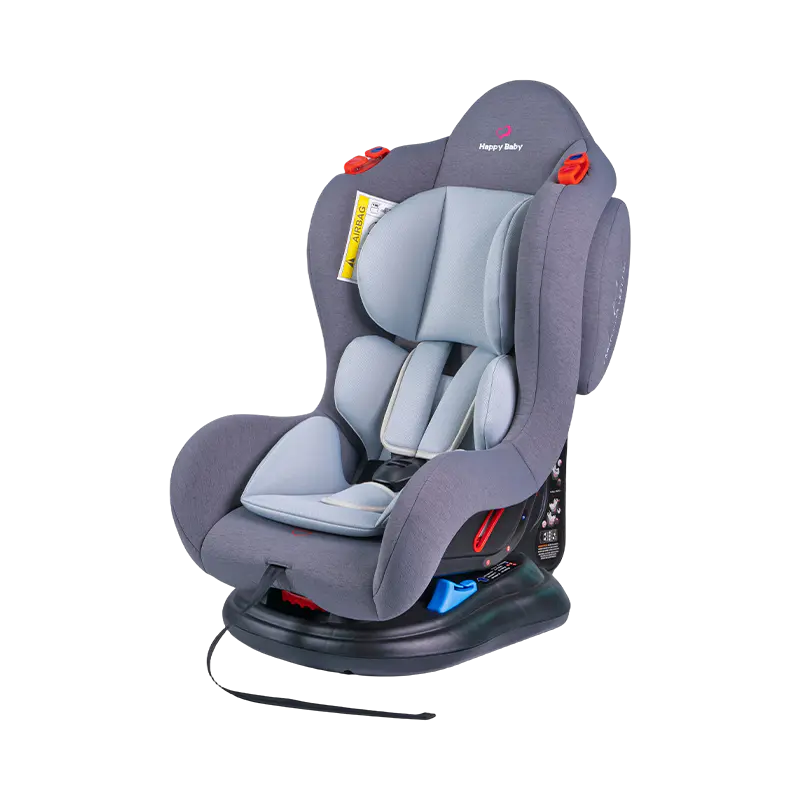
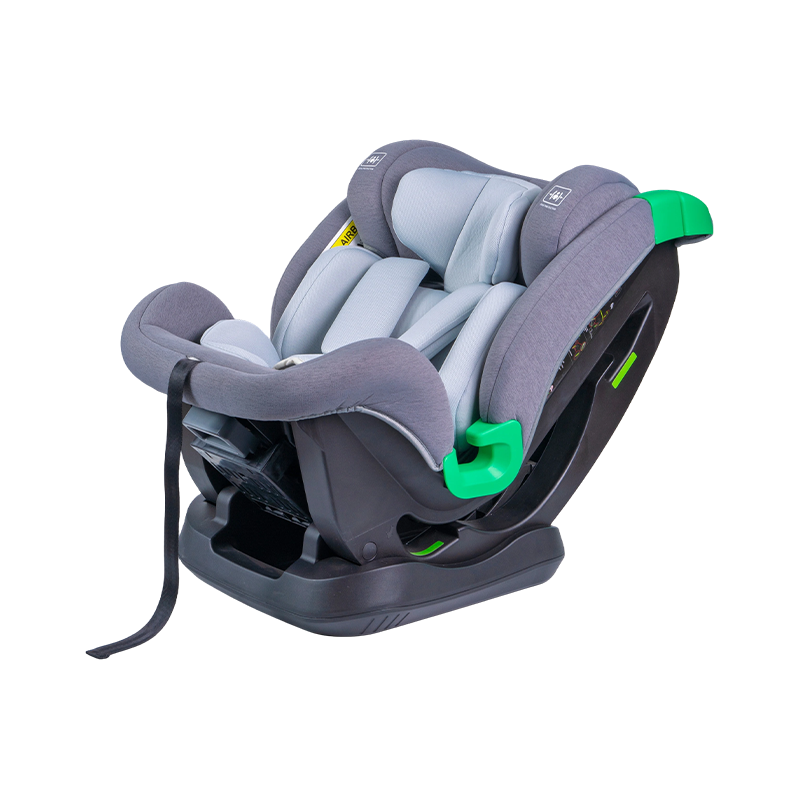 HB916Pro i-Size Belted Rear-Facing Car SeatA rear-facing belted i-Size seat for 40–105 cm, suited to older cars without ISOFIX and covering the full rear-facing period.View Product →
A belted i-Size seat rated from 40 to 105 cm covers the entire rear-facing period with no installation hardware beyond the vehicle belt, which makes it a practical choice in older cars or in vehicles where the ISOFIX anchor points are awkward to reach. If you want to see where these options sit against each other across the whole range, the full i-Size car seat range is organised by height rather than by age, which is the format R129 uses and the one that matters for fit.
Comfort Engineering: What Actually Makes a Difference
Comfort is not decoration. A baby who is uncomfortable shifts position, cries, and ends up being handled more often, which means more time out of the protective shell. Three engineering choices matter more than the fabric pattern.
Energy-absorbing foam. EPS and EPP foam liners in the head and torso areas deform on impact to spread the deceleration load. Foam also affects the shape of the seat around a small head, which is why the head insert on an infant seat should stay in place until the baby genuinely outgrows it, and should be removed when the manual says so rather than when it starts to look tight.
Airflow through the shell. Rear-facing seats trap heat because the baby faces the back of the vehicle. Ventilated shell channels, breathable mesh in the cover, and a slightly narrower shell profile all reduce how warm a baby gets. On a summer drive, that reduces drowsiness and sweating, both of which make monitoring harder.
Padding placement instead of padding quantity. More padding is not automatically better, because excessive padding under the harness changes strap geometry. The useful padding is in the head wings, the seat base, and the crotch area, where pressure points actually exist for a 4-month-old. Padding is also something that has to come out as the child grows, which is why a removable, clearly labelled insert set is more practical than a fixed one.
Fabric choice contributes too. A tightly woven cover that can be removed and washed at 30 degrees without losing its shape will be washed more often, and a clean seat is a seat whose straps and buckles work as intended.
How a Car Seat Is Actually Validated
Claims about safety are only meaningful if they map to a test. Under ECE R129, a rear-facing seat is subjected to a sled test that simulates a frontal impact, with the dummy restrained in the seat and the seat installed per its instructions. The standard also defines requirements for buckle release force so a child cannot open it and an adult can, webbing strength, and the flammability of the materials used.
Production controls matter as much as the type approval. Our own facility is a 40,000 square metre plant in Taixing, Jiangsu, with three assembly lines and more than ten blow-moulding and injection-moulding machines, working to ECE R44, ECE R129, China GB (CCC), and ISO 9001 requirements. The production sequence runs from fabric design and pattern cutting through sewing, moulded component production, and final assembly, with inspection at each stage.
| Stage | What happens | Control point |
|---|---|---|
| Fabric design | Cover patterns developed for each shell size | Fit check against the moulded shell before cutting begins |
| Pattern layout | Fabric laid and marked to minimise waste | Direction of stretch verified against the seat shape |
| Cutting | Panels cut to the released pattern | Panel dimensions and grain alignment |
| Sewing | Panels joined, harness openings reinforced | Stitch density and opening position |
| Moulded components | Shell, base, and structural parts produced | Wall thickness, weight, and dimensional check |
| Assembly | Foam, cover, harness, buckle, and connectors fitted | Harness routing, buckle engagement, tether and leg fitting |
| Finished goods | Final inspection and packaging | Angle indicator calibration, label accuracy, batch traceability |
Batch traceability is the part parents rarely see and benefit from most. If a specific production run is ever questioned, the batch code on the seat label is what links that seat back to a mould, a fabric roll, and an inspection record. When you buy, keep the label photo on your phone. It is the fastest way to confirm the seat you own is the seat that was tested.
Seven Mistakes That Show Up Again and Again
The coat under the harness
A padded jacket compresses in a crash, leaving several centimetres of slack in the straps. Thin layer, harness tight, blanket over the top.
Straps on the wrong slot
Rear-facing straps belong at or below shoulder level. They creep upwards as the baby grows, and nobody checks monthly.
The "one inch" installation
More than about 2.5 cm of movement at the belt path means the seat is not properly fixed. Re-read the routing diagram.
Too upright, too early
Parents tighten the recline as the baby gains head control, in the belief that sitting up is progress. It is not, not at four months.
Aftermarket inserts
Third-party head huggers and strap pads are not tested with your seat and change how the harness loads in a crash.
Sleeping in the seat indoors
The seat comes inside, the baby stays asleep in it on the living room floor or on a sofa. Neither is a safe sleep surface.
A second-hand seat with no history
No label, no manual, no idea whether it was in a collision or washed with harsh chemicals. The savings do not cover the risk.
What to Verify Before You Buy
Bring this list to the shop, or work through it online before ordering. It takes about ten minutes and it prevents the most common mistake, which is buying a seat that does not fit the car.
- Approval label showing ECE R129 (i-Size) or ECE R44/04, plus the height or weight range it covers.
- Rear-facing suitability covering your baby's current height with room to grow, ideally to 105 cm for a long-term purchase.
- Instruction manual present and in a language you read, with a vehicle compatibility list where one is supplied.
- Recline adjustment range that includes a position suitable for a baby who cannot yet sit unaided.
- Harness with at least three shoulder height positions and an adjustable crotch strap.
- Removable, washable cover, plus a note in the manual on which inserts must be removed and when.
- Installation hardware that matches your car: ISOFIX anchors present, or a belt-routed design if they are not.
- Support leg or top tether supplied and fitted as standard, not sold separately.
- Manufacturing date on the label, and an expiry date or service life stated by the manufacturer.
Care, Cleaning, and When to Retire a Seat
Car seats age. Webbing loses strength, plastic becomes more brittle, foam compresses permanently, and buckles accumulate grit. Most manufacturers state a service life, commonly somewhere between six and ten years from the date of manufacture, and that date is printed on the label.
Cleaning has its own rules. Covers can usually be removed and washed at 30 degrees on a gentle cycle, then air dried. Harness webbing should be wiped with a damp cloth and mild soap only, never soaked, never machine washed, and never treated with solvents or bleach, all of which attack the fibres. Do not iron webbing, and do not put covers in a dryer. Buckles should be checked periodically for crumbs and grit by working the release mechanism a few times.
A seat should be replaced after any moderate or severe collision, even if it looks undamaged, because the energy-absorbing components may have already deformed once. It should also be replaced if the harness has been cut, if the shell shows stress marks or cracks, if the buckle does not release cleanly, or if the manual and label are lost.
Finally, check the harness and inserts as the baby grows. The four-month mark is one of the points where a seat that was perfect at six weeks starts to need an adjustment. Recheck the shoulder slot height, the crotch strap position, and whether the newborn insert is still appropriate, then do it again at six months.
Frequently Asked Questions
Can a 4-month-old stay in a car seat for four hours?
Not in one continuous stretch. Four hours split into two or three driving blocks with proper breaks in between is a different situation. The limit applies to the uninterrupted period in the seat, which is why the practical maximum is about two hours before the baby needs to come out and lie flat.
Is it safe for a 4-month-old to sleep in a car seat while driving?
Yes, provided the seat is correctly installed at the right recline angle, the harness is snug, and the baby's head stays upright rather than slumping forward. Check the baby at every safe stop, and move them to a flat surface once the journey ends.
What is the safest position for a 4-month-old in a car?
Rear-facing, in the back seat. The rear-facing requirement under ECE R129 runs until at least 15 months or 76 cm, and the widely used advice is to keep the child rear-facing for as long as the seat allows within its height and weight limits.
Does my 4-month-old still fit an infant carrier?
Usually yes. Most infant carriers cover up to 13 kg or around 87 cm, which a typical 4-month-old is well inside. Check the harness slot height and whether the newborn insert should now come out, rather than judging purely by weight.
Can I leave my baby in the car seat when we get home if they are asleep?
No. A sleeping baby should be moved to a flat, clear sleep surface as soon as you arrive. A car seat is not a cot, and the semi-upright posture is not suitable for extended sleep.
How tight should the harness be on a 4-month-old?
Tight enough that you cannot pinch a fold of webbing at the shoulder, with no more than about a finger's thickness of slack, and with no twists anywhere along the strap. The buckle should sit low over the pelvis, not up on the stomach.
Can I put a thick coat on my baby in the car seat?
No. Bulky clothing compresses in a collision and leaves the harness loose on the child. Use thin layers, tighten the harness against them, and add a blanket over the top of the harness if the car is cold.
Should I buy a rotating ISOFIX seat for a 4-month-old?
A rotating seat is a reasonable choice if you frequently load and unload a baby from a car park, or if you want one seat to cover the child from birth to booster age. It is heavier and more expensive, and it needs ISOFIX anchors plus sufficient cabin space.
Can a car seat go on top of a shopping trolley?
No. Seats clicked onto trolleys or placed on raised, unstable surfaces tip easily, and head injuries from these falls are a documented pattern. Carry the baby or use a stroller frame designed for your seat model.
How long can a 4-month-old be in a car seat on a plane or train?
The posture concern is the same wherever the seat is used. On a long flight or rail journey, take the baby out for a break at roughly the same intervals you would use in a car, even though there is no crash or braking risk involved.
When should I move my baby to a forward-facing seat?
Not at four months. Forward-facing is generally appropriate only once the child exceeds the rear-facing height or weight limit of the seat, or reaches the minimum age and size set by the standard in your country. Under R129 that minimum is 15 months.
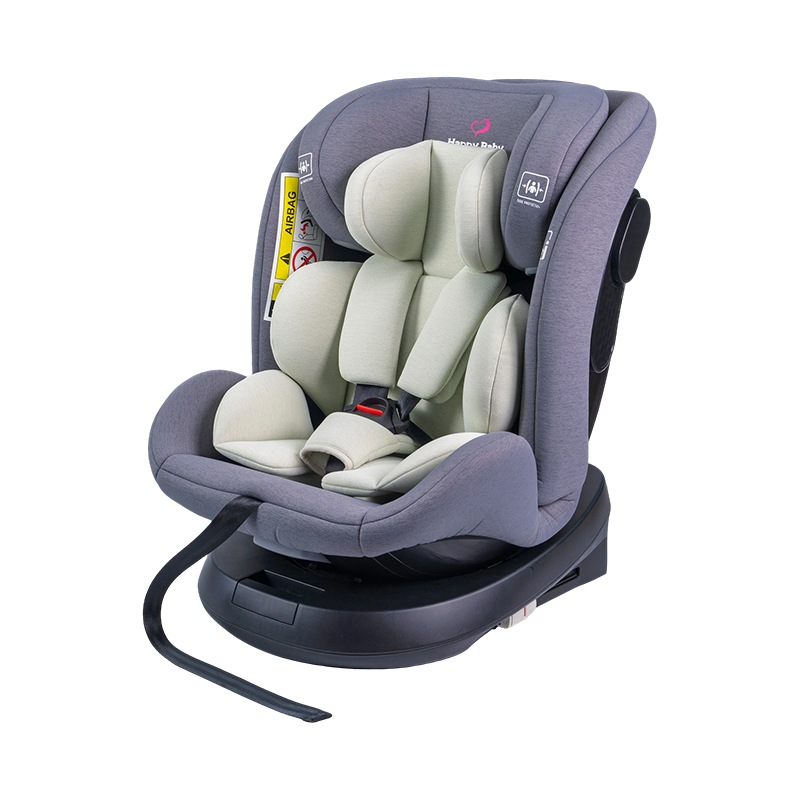
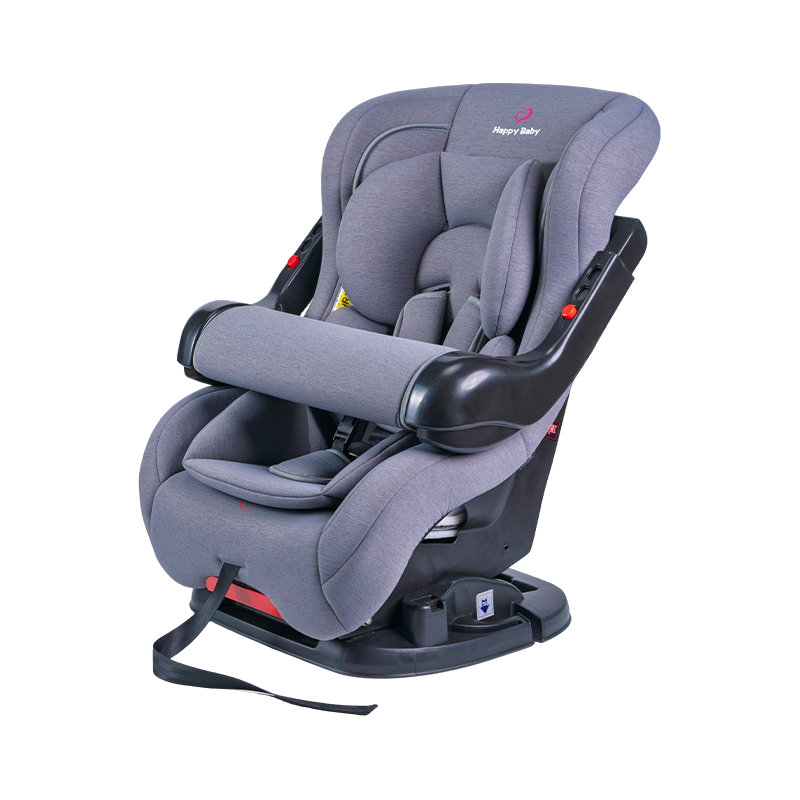

For the safety of babies' travel, we are committed to being a reliable partner for babies and families, and to becoming an expert in children's car safety seats. This is our eternal pursuit.
Contact Us
For exclusive deals and latest offers, sign up by entering your email address below.
CONTACT INFORMATION
-
Address: North of Sitong Road and west of Lianfu Port, Hongqiao Industrial Park, Taixing City, Jiangsu Province
-
Phone: +86 15996087029
-
E-mail: [email protected]
Copyright © JIANGSU HAPPY BABY SAFETY SEAT CO., LTD. All Rights Reserved.
Wholesale Child Travel Safety Seat Factory