
 English
 中文简体
中文简体 Home / News / Industry News / Are Portable Travel Car Seats Safe? What Parents Must Check Before Buying
Industry News
Are Portable Travel Car Seats Safe? What Parents Must Check Before Buying
2026-09-18
Content
- 1 What Counts as a Portable Travel Car Seat?
- 2 Why Lightweight Seats Can Still Pass the Same Crash Tests
- 3 Two Safety Standards You Need to Know: R44 and R129
- 4 Real-World Safety Factors That a Label Cannot Tell You
- 5 Common Concerns About Portable Seats: Myth or Fact?
- 6 How to Use a Travel Car Seat Safely During Your Trip
- 7 Renting a Seat Versus Bringing Your Own
- 8 A Practical Checklist Before You Buy
- 9 Frequently Asked Questions
- 9.1 Are portable travel car seats as safe as regular car seats?
- 9.2 What is the safest type of travel car seat?
- 9.3 Can I use a travel car seat as an everyday seat?
- 9.4 Are inflatable or backless boosters safe?
- 9.5 At what height can a child move to a travel booster?
- 9.6 How do I know if a travel car seat has been in a crash?
- 10 When to Retire a Travel Car Seat
Picture this: you are at the airport gate with a boarding pass in one hand and a compact car-seat bag over your shoulder. The seat is light enough to carry, narrow enough to fit through the aircraft aisle, and your toddler will actually sit in it for the whole flight. That is the promise of a portable travel car seat, and it is one more families rely on every year. But the question parents ask before buying is straightforward: is it safe? The short answer is yes, with two important conditions. The seat must carry a valid certification to a recognised standard, and it must be installed and used exactly as the manufacturer intended. A well-designed travel seat that meets ECE R129 (i-Size) or ECE R44/04 has passed the same frontal and rear impact crash tests as a heavier full-time seat. Weight is a design decision, not a measure of protective strength. This article explains what makes a portable seat safe, where the genuine risks are, and how to make a confident choice for your next trip.
What Counts as a Portable Travel Car Seat?
"Portable" means different things to different brands. Some seats fold, some simply use lighter materials, and some are boosters small enough to pack in a suitcase. Understanding the three main categories helps you match the right type to your child.
Foldable Full-Shell Seats
Foldable seats are the closest to a standard everyday car seat. They keep a rigid shell, a padded five-point harness and, in many cases, ISOFIX connectors, but the backrest or base folds to shrink the package for transport. A foldable i-Size seat rated from 76 to 150 cm can cover several years of growth while still providing the boundary protection of a full shell. The crash behaviour during use is the same as a similar non-folding seat, provided the folding mechanism is locked into its driving position. The trade-offs are usually a slightly higher price and the need to keep the folding joints clean and free of debris.
One model that fits this description well is an ISOFIX i-Size foldable seat with a 76–150 cm height range. It is long-lasting, practical for flights and rental cars, and still offers a full harness for younger children.
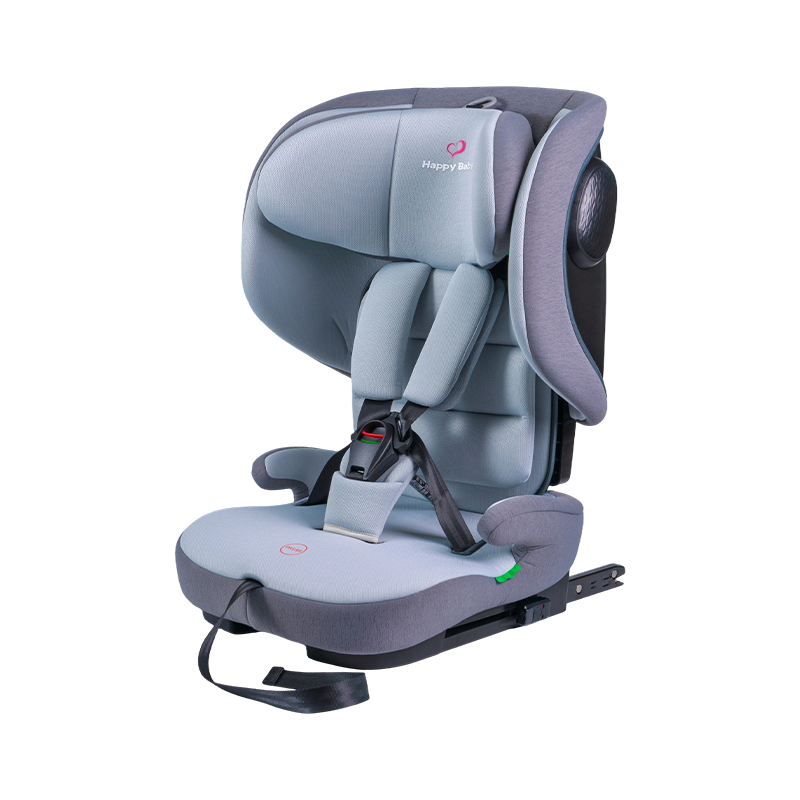 HB337 ISOFIX I-Size Foldable Car Seat for Children 76-150cmThis forward-facing foldable seat with a full 5-point harness suits growing children from 76 to 150cm. Its adjustable headrest, one-hand recline, and ISOFIX connection make it a dependable choice for families needing flexibility.View Product →
Belted Compact Seats
Belted seats are designed for vehicles without ISOFIX and are a natural fit for taxis, airport transfers and grandparents' cars. The adult seat belt passes through marked guides to hold both the seat and the child in position. This is not a downgrade in safety: a correctly routed belt passes the same crash tests as an ISOFIX connection. The main difference is that installation depends more on the user reading the instructions correctly.
Travel Boosters
Boosters are the lightest travel category. They do not have a five-point harness; instead, they lift the child so the adult belt sits across the chest and hips at the right height. Boosters are only appropriate after a child has outgrown a harnessed seat, usually from around 100 cm for the shortest i-Size boosters. A certified booster is safe for its intended height and weight range, but a backless design provides no structure around the child's upper body in a side impact. A high-back booster with side wings is a better travel choice if side-impact protection matters to you.
| Seat type | Typical weight | Typical height range | Installation | Key safety feature |
|---|---|---|---|---|
| Foldable full-shell | 6–10 kg | 76–150 cm (check label) | ISOFIX or vehicle belt | Rigid shell, five-point harness, side wings |
| Belted compact | 5–8 kg | 40–105 cm or 76–150 cm | Vehicle belt, no ISOFIX needed | Belt guides, rear-facing option |
| High-back booster | 3–6 kg | Approx. 100–150 cm | Vehicle belt or ISOFIX anchors | Belt positioning and side structure |
| Backless booster | 1–2 kg | Approx. 125–150 cm | Vehicle lap-and-shoulder belt | Belt positioning only |
None of these categories is automatically "safer" than the others. Each one is designed for a specific child height range and a specific travel purpose. The mistake would be using a backless booster for a three-year-old, or a heavy all-in-one seat on a flight where it is too wide. The safest seat is the one that fits the child, fits the vehicle, and is certified.
Why Lightweight Seats Can Still Pass the Same Crash Tests
The confusion is understandable. In everyday life, heavier objects feel more solid and protective. Helmets, however, show that this logic does not apply to safety equipment designed around energy absorption. A modern cycling helmet is lighter than older designs and protects better because its material structure, not its mass, absorbs the impact.
In a car crash, the job of a child seat is to slow the child's body down gradually over the distance the seat can deform. The shell spreads the load, the foam compresses to absorb kinetic energy, and the harness keeps the torso in position. None of these functions requires a heavy structure. Injection-moulded polypropylene shells and energy-absorbing foams such as EPS or EPP provide high absorption per gram. A dense, thin shell made with modern moulding technology can be lighter than an older bulky design while offering equal or better structural integrity.
The certification standards reinforce this point: they set no minimum weight for a seat. The R129 test applies the same sled speeds and dummies to a 2 kg backless booster and a 12 kg all-in-one seat. What matters is how the seat manages the forces on the child dummy, not the weight on the scale.
The folding mechanism itself goes through repeated stress. A foldable travel seat is opened and closed hundreds of times over its life, so quality manufacturers test the locking hinges beyond the number of cycles a typical family will use. When you evaluate a foldable seat, operate the mechanism a few times before you buy: it should click into place confidently and show no play when you push sideways on the backrest.
Typical empty weight comparison of car seat categories
Full-size ISOFIX seat
Foldable i-Size seat
Belted compact seat
High-back booster
Backless booster
Approximate typical weights are for guidance only; always check the manufacturer's label for the actual product.
Two Safety Standards You Need to Know: R44 and R129
The most useful way to judge a travel seat is to read the certification label. In Europe and many other markets, the two relevant benchmarks are ECE R44/04 and ECE R129, which is usually marketed as i-Size.
ECE R44/04
R44 is the older regulation and the simplest to recognise. It classifies seats by child weight groups: Group 0+ up to 13 kg, Group 1 from 9 to 18 kg, Group 2 from 15 to 25 kg, and Group 3 from 22 to 36 kg. R44 includes frontal and rear impact sled tests but does not require a dedicated side-impact test. Its head excursion limits are also more generous than those in R129. Where a travel seat is sold on a tight budget, it is often R44-certified.
ECE R129 (i-Size)
R129 was introduced to close the gaps in R44. It is height-based, which makes it easier for parents to judge fit, and it requires children to remain rearward-facing until at least 15 months. R129 also includes a side-impact test and stricter limits on how far a child's head can move in a crash. More travel seats are being certified to this standard every year, and for parents who want the most up-to-date design, an i-Size seat is the more future-proof choice.
| Feature | ECE R44/04 | ECE R129 (i-Size) |
|---|---|---|
| Basis for selection | Child weight group | Child height |
| Rear-facing requirement | Not strictly time-based | At least 15 months |
| Side-impact test | Not included as standard | Included in approval |
| Head movement criteria | Less strict | Stricter head excursion limits |
| Vehicle fit | Tested in representative vehicles | Fit list per vehicle / i-Size vehicle list |
| Label | Orange ECE R44/04 | i-Size logo with height range |
Both standards are legally recognised in the countries that apply them, and a seat certified to either one has passed real crash tests. If a seat has no certification label at all, do not buy it, regardless of how light or comfortable it looks. Choosing the right car seat involves more than checking a label; our guide to choosing the right baby car seat walks through category selection, height limits and vehicle compatibility in more detail.
If your travel destination is outside Europe, check the local regulation as well. North American markets use FMVSS 213, and some airlines have their own additional approvals. A seat certified to a European standard remains safe if it is designed for that standard, but for compliance with local law, the applicable local certification label may be required when using a seat in that country.
Real-World Safety Factors That a Label Cannot Tell You
Certification is a starting point, not the whole story. The everyday safety of a travel car seat depends on factors that no sticker can communicate, and some of these become more critical when the seat is very light or foldable.
Installation Correctness
The most important real-world factor is whether the seat is installed correctly in the vehicle. Common mistakes include routing the belt through the wrong slot, leaving the seat loose, and failing to tighten the harness. A portable seat only helps if the person installing it can do so correctly in an unfamiliar car. A belted design with colour-coded belt paths reduces guesswork in rental cars, while ISOFIX removes the risk of an under-tightened belt but only works when the car has anchor points. The way the belt path is designed directly affects how well a child is held in a crash.
Five-Point Harness and Recline Angle
For children who still need a harness, choose a seat with a five-point harness and a central adjuster that is easy to tighten. A stiff or short harness can tempt a parent to leave it loose. Recline angle is equally important: a newborn seat should allow a near-flat position to protect the airway, while an older child is safer in a more upright seat with a snug harness.
For families who frequently switch between cars, a belted i-Size seat from 40 to 105 cm is a practical travel companion because it does not depend on ISOFIX at the destination and keeps the child rearward-facing well beyond the minimum requirement.
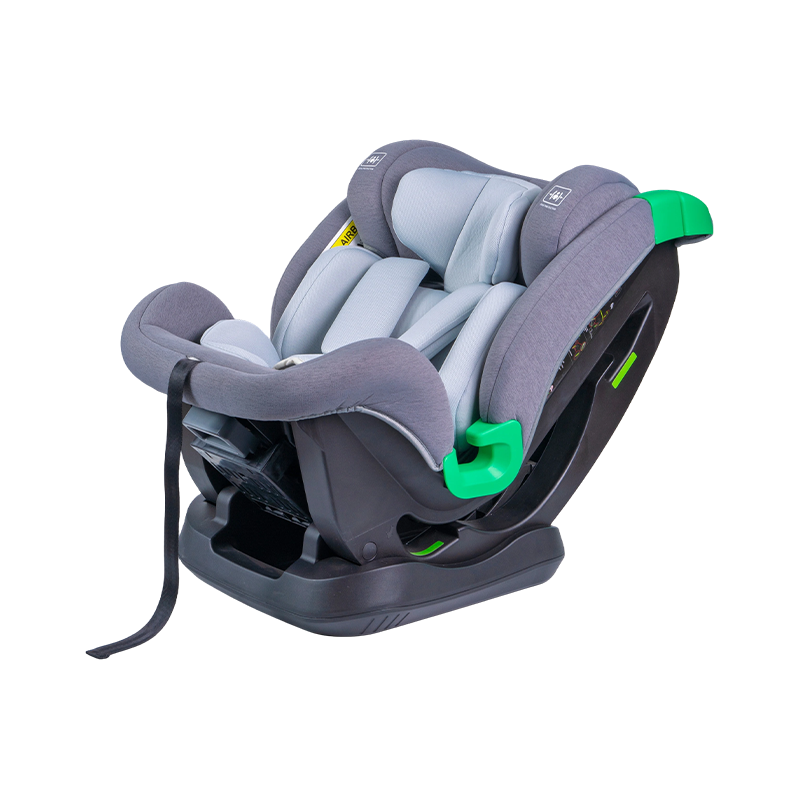 HB916Pro I-Size Belted Rear-Facing Car Seat 40-105cmA rearward-facing belted seat certified to R129 for 40-105cm children. The sturdy injection-molded shell, five-level headrest, and integrated harness offer strong side-impact protection, making it ideal for frequent car switching.View Product →
Side-Impact Protection
Side impacts are a serious concern in child casualties. R129 includes a side-impact test; R44 does not. A travel seat with deep side wings, energy-absorbing foam around the head, and a wide shell provides better side protection. Some foldable seats have a visible hinge at the sides, so always check that the locked position is flush and free of play. If you are choosing a foldable model, a one-piece shell gives the strongest side structure.
Head and Neck Support in a Slim Shell
The concern raised most often about portable seats is head protection in a narrow shell. When a child falls asleep, the head can lean sideways and reduce the effectiveness of the harness. Look for an adjustable headrest and side bolsters that hold the head in position while sleeping. A newborn insert is also useful because it limits side-to-side head movement before the child has enough neck strength.
Materials and Build Quality
A foldable seat is only as strong as its locking mechanism. Inspect the hinges, latches and belt guides regularly. The shell should show no cracks, the foam should not be compressed, and the harness webbing should be free of fraying. Because travel seats are packed and unpacked more often than a seat that stays in one car, inspection should happen before every journey. Pay special attention to the belt path if the seat can be installed both rearward-facing and forward-facing: the two paths differ, and crossing them can leave the seat loose in a crash.
Installation
Choose a seat type that matches the vehicles you will use. Belted seats work in any car; ISOFIX needs anchor points.
Harness
A five-point harness with a smooth central adjuster keeps the child correctly held and reduces the chance of loosening.
Side impact
Prefer an R129-certified seat or one with deep side wings and energy-absorbing foam in the head area.
Head support
An adjustable headrest and sleep-supporting bolsters prevent the head from falling sideways during a nap.
Inspection
Check folding locks, harness straps and foam condition before every trip, and replace after any significant crash.
Common Concerns About Portable Seats: Myth or Fact?
Parents meet a lot of well-meaning advice when they mention a travel seat. Here are four concerns that come up again and again, and what the evidence actually says.
"A heavier seat is safer"
Myth. Crash protection comes from shell geometry and energy-absorbing foam, not from mass. The certification test measures forces on the child dummy, not the weight of the seat.
"No ISOFIX means it is not safe"
Myth. A correctly routed adult seat belt passes the same crash tests. ISOFIX mainly reduces the chance of installation error.
"Backless boosters are equal to high-back boosters"
Fact, but only for belt positioning. A backless booster positions the belt but adds no side-impact structure. A high-back booster offers better upper-body protection.
"A travel seat cannot be used every day"
Not true. It can be used daily as long as the child fits and installation is correct. Daily use does mean more wear, so check the harness, foam and hinges more often.
Not every portable seat is equal, of course. The certification mark, the width of the head protection, and the quality of the belt path all matter. But the general idea that a lighter seat is dangerous simply because it is lighter does not stand up to crash-test data.
How to Use a Travel Car Seat Safely During Your Trip
Getting the seat from the suitcase to the car correctly is the step where most safety is gained or lost. The following sequence applies to most travel seats; always follow the manual supplied with your specific model.
Installing in a Rental Car or Taxi
- Read the seat manual and the vehicle owner's manual before you start.
- Place the seat on the rear seat. If your vehicle has side-curtain airbags, confirm the seat position is approved by the vehicle handbook.
- Route the adult belt through the correct guides, including the rear-facing belt path if the seat is used rearward-facing.
- Push the seat firmly into the vehicle seat with your knee while you tighten the adult belt.
- Shake the seat at the belt path. It should not move more than 2.5 cm (about 1 inch).
- Tighten the child harness until you cannot pinch a fold of webbing at the shoulder.
Vehicle seat belts vary in length. A bulky travel seat with a very thick base can be hard to tighten in a tight three-point belt. Before you buy, check that the adult belt in the largest car you use reaches the buckle after passing through the seat guides. This practical check is often overlooked but can make a travel seat painful to use.
On an Aircraft
A car seat approved for aviation use will state on its label that it is certified for use in motor vehicles and aircraft. Install it in the window seat so it does not block the aisle, and route the aircraft lap belt through the same belt path you use in a car. Not every aircraft seat is the same width, so measure the seat against your child's travel seat before you buy. Keeping a child in a familiar seat also helps them settle on a long flight, which is a practical benefit parents notice quickly.
Moving Between Cars on the Same Trip
If you are going to use one seat in several cars, take a photo of the correct belt routing from the manual and store it in your phone for quick reference. The risk of misuse rises when you are tired or in a hurry, and a small reminder image is an effective way to avoid mistakes.
Renting a Seat Versus Bringing Your Own
Some parents choose to book a seat with the rental company instead of carrying one. That decision carries real risks. Rental seats can be old, damaged, dirty or missing parts, and you often do not know the model until you arrive. A seat with an unknown crash history cannot be verified as safe. When you bring your own certified travel seat, you know the full history, you can practice the installation at home, and you ensure the harness is adjusted to your child.
The economic argument for renting can also be false. A single rental fee for a child seat can be significant, and a few trips equal the price of a dedicated travel seat. The second-hand market is full of seats with unknown histories; buying new from a manufacturer you trust is the only reliable way to know a seat was never in a crash.
| Factor | Rented seat | Your own travel seat |
|---|---|---|
| Crash history | Unknown | Known and controlled by you |
| Condition | Varies; may have wear or missing parts | You can inspect before every trip |
| Fit to child | Uncertain until pick-up | Matched to height and weight |
| Installation practice | No chance to practice | You can install at home in advance |
| Cost per trip | Adds up on every rental | One-time purchase |
For older children, a high-back booster with ISOFIX connectors is a smart travel choice because it is light, easy to install, and gives the child more side support than a backless pad.
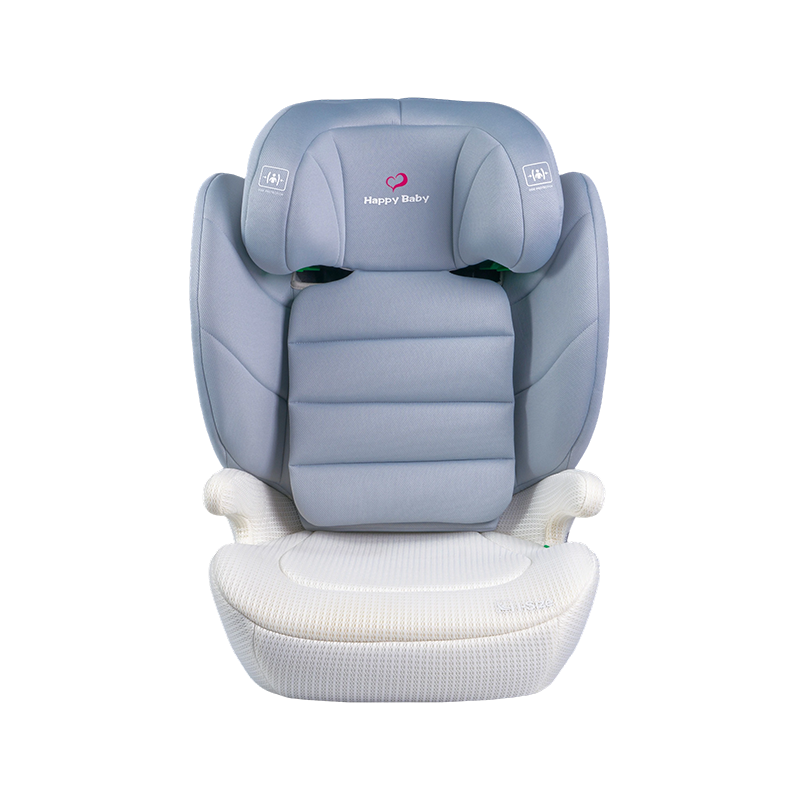 HB629 ISOFIX High-Back Booster Seat for 100-150cmThis high-back booster with ISOFIX connectors provides stable installation and side-impact protection for older children. With 13 headrest positions and a lightweight blow-molded cushion, it is a practical, easy-to-transfer travel seat.View Product →
If you do use a rental seat because a child seat is mandatory in the local law, inspect it carefully: check the label, the harness condition, the belt path, and the expiry date before driving away.
A Practical Checklist Before You Buy
When you compare portable travel car seats, work through this checklist before paying.
- Certification: an ECE R44/04 or ECE R129 (i-Size) label is present and readable.
- Height and weight range: your child fits with room to grow, but is not already at the upper limit.
- Installation method: matches the cars you will use, whether belt-only, ISOFIX, or both.
- Width: fits within the narrowest aircraft or taxi seat you expect to use.
- Harness: a five-point harness with an easy tension adjuster for younger children.
- Side impact: solid side wings and energy-absorbing foam around the head.
- Fold mechanism: locks firmly with no play and can be operated without rushing.
- Expiry date: check the production date and the recommended service life, usually six to ten years.
- Replacement rule: the seat should be replaced after any moderate or severe crash, as stated in the manual.
Take your time with this step. A travel seat is a long-term purchase for many families, and the difference between a good and a bad choice shows up in daily use, not on the label. You can also compare certified travel-friendly models across our full product range before making a decision.
Frequently Asked Questions
Are portable travel car seats as safe as regular car seats?
Yes, if the seat carries a valid ECE R44/04 or ECE R129 certification. A portable seat is tested with the same sled speeds, dummies and force measurements as a heavier seat. Portability is achieved through materials and folding design, not by lowering the test standard.
What is the safest type of travel car seat?
For a child under about 105 cm, a certified rear-facing seat, whether a compact belted model or a foldable full-shell seat, offers the best combination of protection and practicality. For children who have outgrown a harness, a high-back booster is preferable to a backless one because it adds side structure.
Can I use a travel car seat as an everyday seat?
Yes, as long as the child fits within the height and weight range and the installation is correct in your vehicle. Frequent packing and unpacking increases wear, so check the harness, hinges and belt guides regularly, and clean the shell with mild soap rather than harsh chemicals.
Are inflatable or backless boosters safe?
Some inflatable boosters are certified to booster standards and can be safe for their intended height and weight range. A backless booster is acceptable for a child who meets the height minimum, but it provides no side-impact structure. A high-back booster is the better choice when you can carry it.
At what height can a child move to a travel booster?
The i-Size standard approves boosters from around 100 cm, while some R44 Group 2/3 boosters are approved from 15 kg, which is usually around three and a half to four years old. The safest approach is to keep the child in a harnessed seat until they reach the maximum limit marked on it.
How do I know if a travel car seat has been in a crash?
You cannot reliably tell from the outside. If a seat's history is unknown, do not use it. Buy new or from someone who can confirm the full history, and always replace a seat after a crash that caused visible damage, activated airbags, or in which the child was seated during the impact.
When to Retire a Travel Car Seat
A travel seat follows the same replacement rules as a full-size seat. The shell ages, the foam degrades, and the webbing loses strength over time. Most manufacturers mark the production date on the shell and state a service life in the manual, typically six to ten years. The clock starts at the date of manufacture, not the date of purchase.
Replace the seat immediately after any crash in which the child was in the seat, the shell cracked, or the harness showed signs of stress. This applies whether the crash was serious or moderate; many manufacturers advise replacement after any collision that triggered airbags or caused visible damage to the vehicle.
A portable seat lives a harder life than a permanent one: it is folded, stacked, thrown into overhead bins and squeezed into car boots. Give it a quick inspection at least once per season. Check the folding locks, confirm the ISOFIX connectors are tight, and clean the harness with a damp cloth instead of aggressive detergents, which can weaken the fibres. With the right care, a certified travel car seat can protect a child through many trips while still being small enough to make family travel practical.
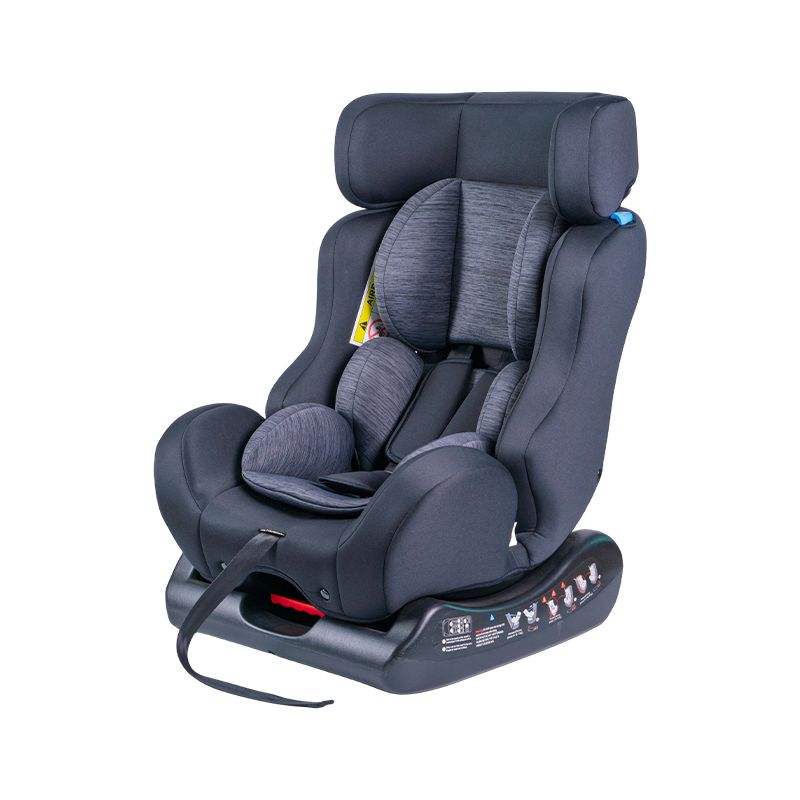
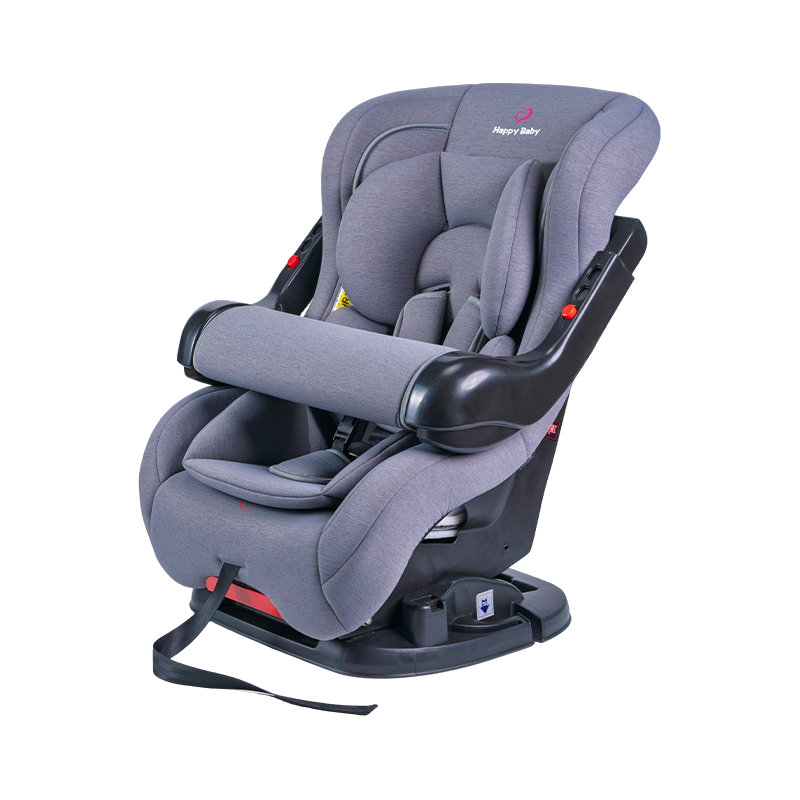

For the safety of babies' travel, we are committed to being a reliable partner for babies and families, and to becoming an expert in children's car safety seats. This is our eternal pursuit.
Contact Us
For exclusive deals and latest offers, sign up by entering your email address below.
CONTACT INFORMATION
-
Address: North of Sitong Road and west of Lianfu Port, Hongqiao Industrial Park, Taixing City, Jiangsu Province
-
Phone: +86 15996087029
-
E-mail: [email protected]
Copyright © JIANGSU HAPPY BABY SAFETY SEAT CO., LTD. All Rights Reserved.
Wholesale Child Travel Safety Seat Factory