
 English
 中文简体
中文简体 Home / News / Industry News / What Is the Best Car Seat for Travelling Abroad? Expert Tips for Families
Industry News
What Is the Best Car Seat for Travelling Abroad? Expert Tips for Families
2026-09-11
Content
- 1 What makes a car seat genuinely travel-friendly?
- 2 Which safety standard should your travel seat meet?
- 3 Matching the seat to your child and the way you travel
- 4 Getting the seat through the airport and onto the plane
- 5 Frequently asked questions
- 5.1 Q: Can I bring a car seat on a plane?
- 5.2 Q: Is it better to rent a car seat at my destination?
- 5.3 Q: Does the best travel car seat need to be lightweight?
- 5.4 Q: Can a booster seat be used for international travel?
- 5.5 Q: Will a European R44 or R129 seat work in cars abroad?
- 5.6 Q: Should I buy a second, lighter seat just for travel?
Imagine this: you have booked a family flight to Lisbon, the accommodation is sorted and the packing list is almost complete. Then the question you have been avoiding surfaces — what will your 18-month-old actually sit in once you land? It is the same question parents ask in airport terminals around the world. The best car seat for travelling abroad depends on three factors: the child's height, the rules at your destination, and how you plan to move around once you are there.
Here is the answer up front. For most international trips, the most practical seat is a belt-installed model built to the ECE R44-04 or R129 (i-Size) standard, with an airline-approval mark printed directly on the shell. Seatbelt installation works in the widest range of vehicles, so you never have to search for ISOFIX anchors in a taxi boot. A belted seat is also usually lighter and easier to pack, which is exactly what you need after a long flight and a walk through a busy terminal.
What makes a car seat genuinely travel-friendly?
Before comparing models, it helps to separate the features that really affect whether a seat will be usable abroad from the ones that only look good in promotional photos. These four factors deserve the most attention when you are choosing a car seat for travel.
| Feature | Why it matters for travel | What to look for |
|---|---|---|
| Aircraft approval | Airlines and foreign authorities expect proof that the seat passed the relevant aircraft restraint tests. | An approval label on the seat shell, often marked as an airline-compatible standard. |
| Seatbelt installation | Rental cars and taxis often lack ISOFIX, or the anchors are buried under thick upholstery. | A clearly marked belt path and a lock-off that holds the lap belt secure in both rear-facing and forward-facing positions. |
| Weight and portability | The seat will travel through check-in, security scanners and gate boarding. | Infant carriers around 4–6 kg and convertible seats that feel balanced enough to carry with one hand. |
| Fitting range | A seat that becomes too small mid-trip forces you to buy a second one while abroad. | A height range that covers your child's current height plus reasonable growth for the coming year. |
Notice what is not on that list: brand, colour or extra padding. A travel-friendly seat is a functional tool. Parents who fly regularly look for a label they can show to airline staff, a belt path they can find without a torch, and a weight their arms can tolerate at five in the morning.
Which safety standard should your travel seat meet?
If your seat is bought in Europe, the UK or any market that follows European regulation, it will carry one of two approvals: ECE-R44-04 or ECE-R129, the standard commonly known as i-Size. Both are widely recognised around the world, because dozens of countries have built their local child-restraint laws on the same test protocol.
| Characteristic | ECE R44-04 | R129 / i-Size |
|---|---|---|
| Classification basis | Weight-based groups 0, 0+, I, II, III | Height-based range, usually 40–150 cm |
| Installation flexibility | Belt and ISOFIX versions available depending on the model | Both ISOFIX and belted variants exist |
| Rearward travel | Required up to 9 kg; later by group rules | Mandatory at least until 15 months of age |
| Side-impact testing | Not part of the original approval | Included in the approval protocol |
For practical travel purposes, either label is acceptable across most of Europe and in many countries whose local law is still based on the older European regulation. When a rental clerk or taxi driver asks whether your seat is approved, showing them the ECE label printed on the shell usually settles the question in ten seconds.
Matching the seat to your child and the way you travel
The perfect travel seat looks different at six months and at five years. Use the child's height and the type of transport you expect to use as your guide, and you will arrive at a much shorter shortlist.
Newborns and young infants
At this stage, the priority is a rear-facing seat that installs with a seatbelt and does not depend on a separate base. The ability to lift a sleeping baby out of a taxi and carry them to the hotel is what makes a compact carrier style so popular with travelling families.
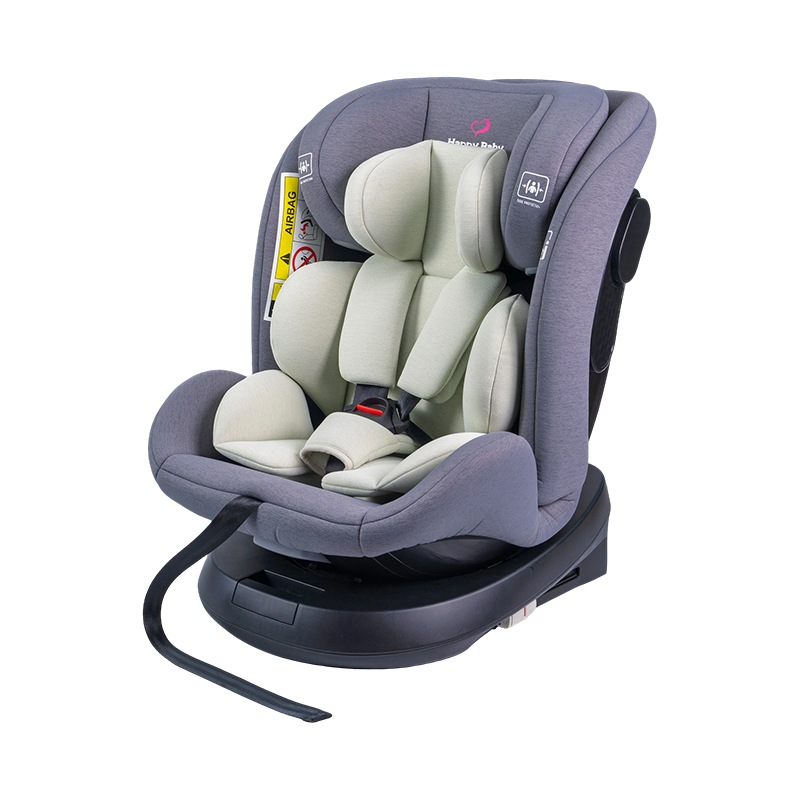
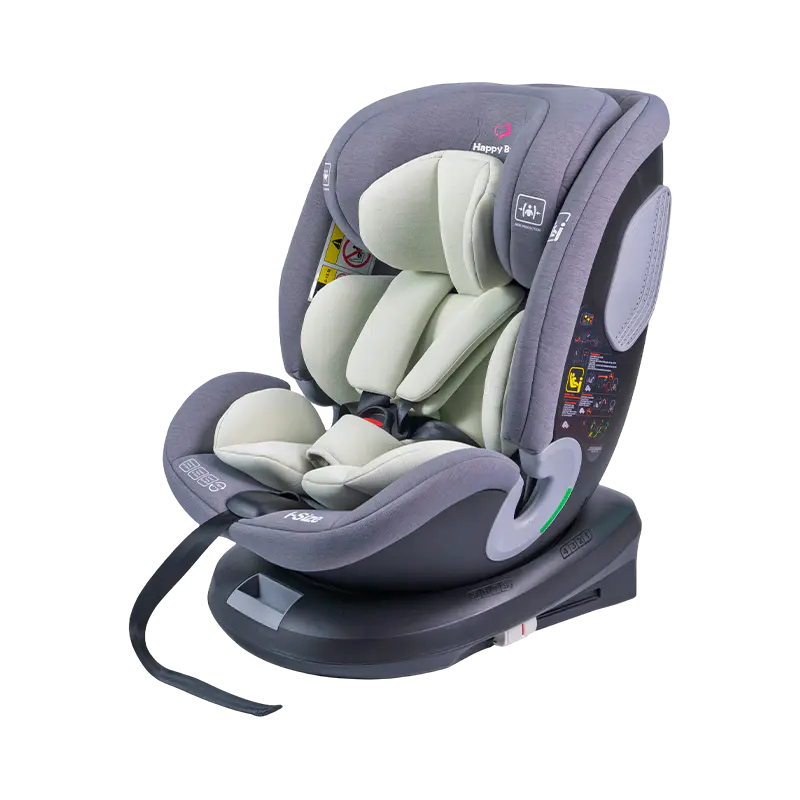
Belted i-Size Car Seat (40–105 cm) Rear-facing and forward-facing use with seatbelt installation, sized from newborn to around four years old. It removes the need to search for ISOFIX anchors in a strange car. View this travel-ready seatToddlers and pre-schoolers
Once the carrier years are behind you, look for a seat that can change with your child for several years. A foldable body makes the difference between a seat that becomes an obstacle in the boot and one that slips into the luggage without drama.
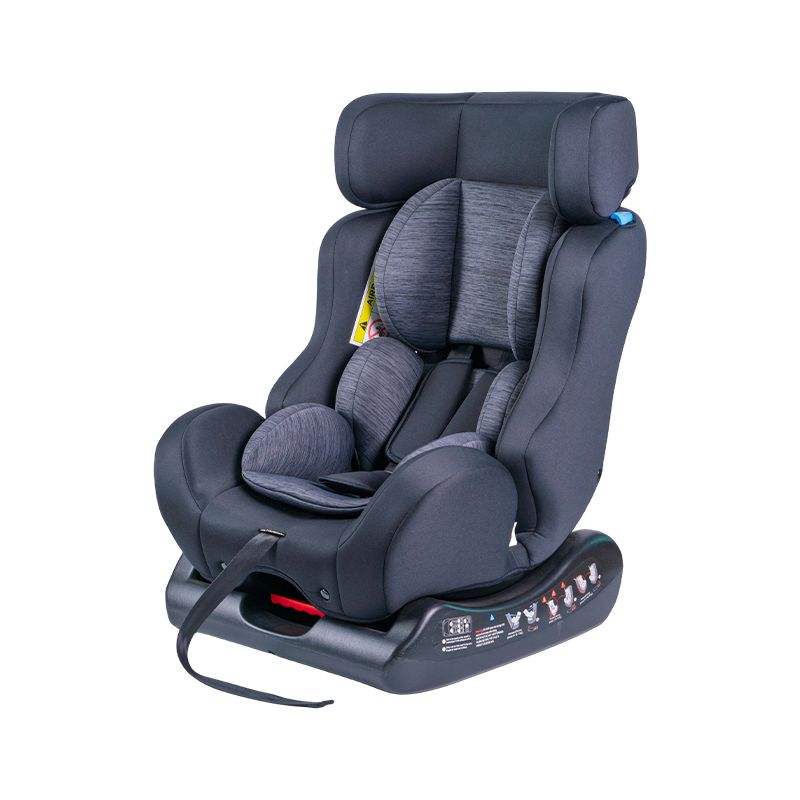
Foldable ISOFIX i-Size Seat (76–150 cm) Folds compactly for the journey between destinations while providing a full height range from toddler through to booster stage. View this foldable travel seatSchool-age children
For older children, the goal is belt positioning. A high-back booster with ISOFIX anchors installs in seconds, keeps the lap and diagonal belt exactly where they should be, and provides side support when your child is tired after a long day of exploring.
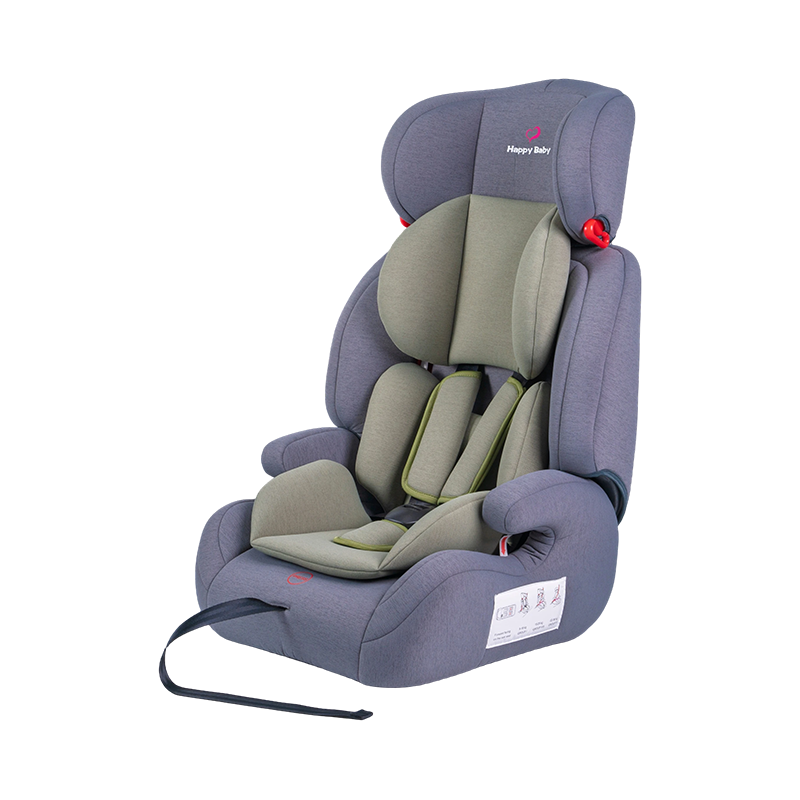
ISOFIX High-Backrest Booster (100–150 cm) Keeps the adult belt at the correct height on long transfers and daily trips around town, with the comfort of a high backrest. View this high-back boosterNot sure which height range applies to your child? Our guide to choosing the right baby car seat walks through every category, so you can narrow the choice before you start comparing models.
Getting the seat through the airport and onto the plane
A great travel seat still needs a routine around it. These are the steps that make the whole process smoother, from your front door to the hotel at the other end.
- Find the airline approval sticker before you leave home and take a photo of it. If an airline asks for proof at check-in, you can show the picture without pulling labels off the shell.
- Keep a digital copy of the instruction manual on your phone. Rental staff or drivers occasionally ask how the seat is installed, and a simple diagram ends the discussion quickly.
- Wrap the seat in a padded car-seat bag or backpack. Tuck the harness and buckle away before putting it on the conveyor so nothing catches on the handling equipment.
- If you install the seat on the plane, choose a window seat and feed the aircraft belt through the exact path marked on the seat shell. Tighten it until the seat moves very little.
- If you prefer not to install the seat in the cabin, ask for a gate-check tag at the boarding gate. The seat is then carried down to the aircraft and placed in the hold without a second trip to the bag-drop counter.
For ground transfers, keep the installation routine the same everywhere. A three-point lap-and-shoulder belt is the closest thing car seats have to a universal language; it avoids the stress of hunting for ISOFIX anchors in a vehicle that was not prepared for them.
Frequently asked questions
Q: Can I bring a car seat on a plane?
Yes, on most airlines, as long as the seat has an aircraft-approval mark and the child has their own ticket. Book a window seat and install the seat using the aircraft belt exactly as the manual shows. Some carriers also limit the seat's width, so check the dimensions before you pay for the child's seat.
Q: Is it better to rent a car seat at my destination?
Renting is convenient, but the seat's history, crash exposure and general condition are usually unknown. If you do rent, verify the approval label, installation type and age of the seat before driving away. For families who fly several times a year, bringing your own seat is nearly always more predictable.
Q: Does the best travel car seat need to be lightweight?
Weight matters most when you will be carrying the seat through a long terminal or a narrow train aisle. However, a very light seat that cannot be installed correctly is not a bargain. Aim for the lightest seat that still offers a full height range, a proper belt path and the relevant approvals.
Q: Can a booster seat be used for international travel?
Yes, once your child meets the legal height and weight requirements of the destination and your home country. A high-back booster with ISOFIX installs quickly and provides useful side support, making it a strong choice for children above 100 cm who still need help with belt positioning.
Q: Will a European R44 or R129 seat work in cars abroad?
In most cases, yes, because many countries have based their child-restraint law on European standards. The universal fallback is a three-point seatbelt: if the car has ISOFIX, the same seat may offer that option as well. When using a belted installation, always pull the lap portion firmly tight and check that the lock-off is engaged.
Q: Should I buy a second, lighter seat just for travel?
If you only fly once a year, the luggage space is not worth the extra expense. For frequent travellers, a dedicated travel model is easier to justify. The smarter investment is a seat that is both light and long-lasting, because it removes the need to own two separate products for the same child.
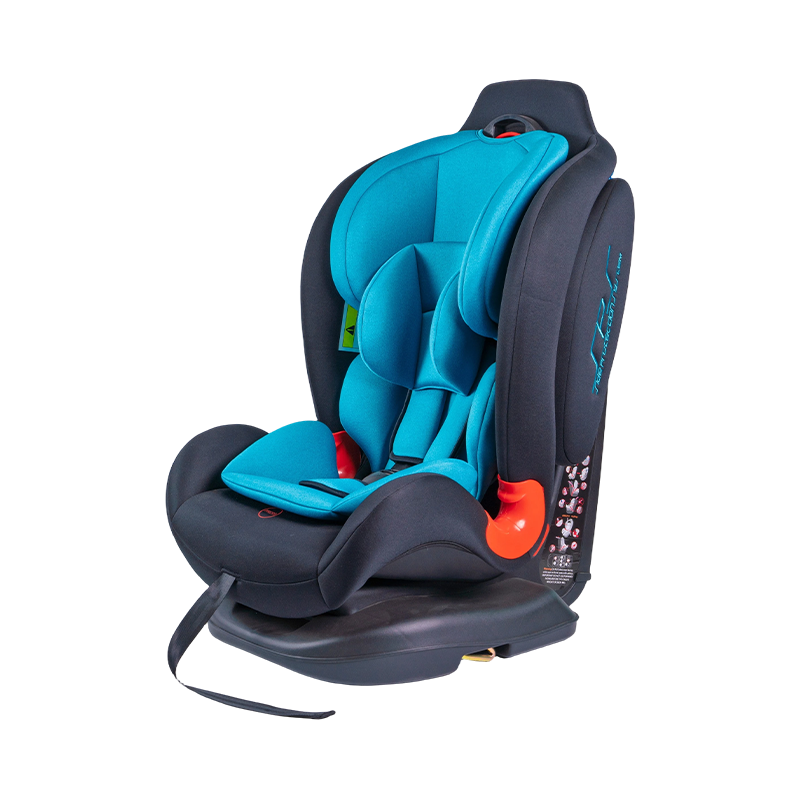
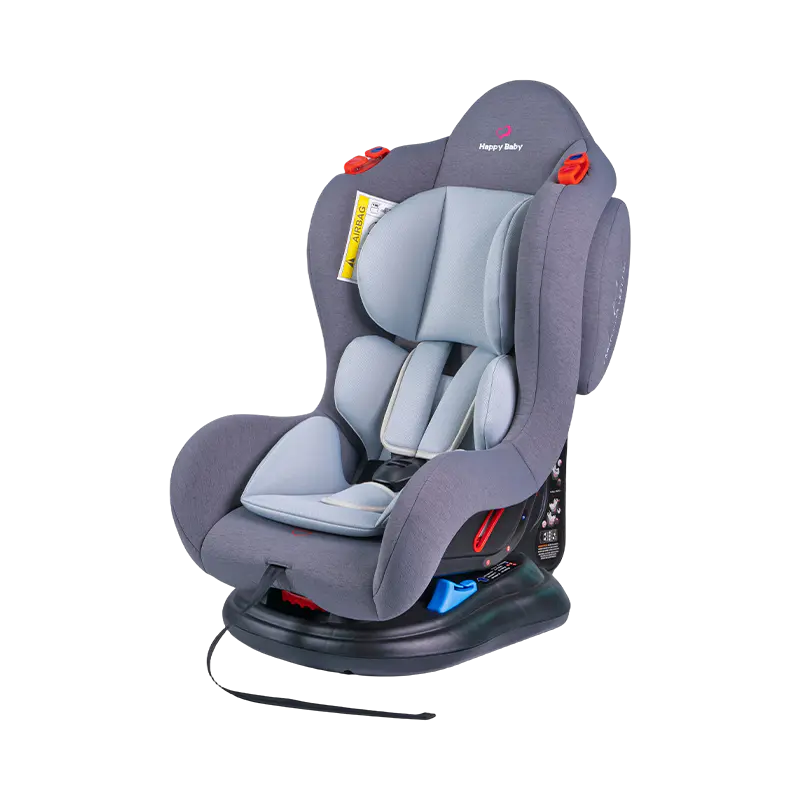

For the safety of babies' travel, we are committed to being a reliable partner for babies and families, and to becoming an expert in children's car safety seats. This is our eternal pursuit.
Contact Us
For exclusive deals and latest offers, sign up by entering your email address below.
CONTACT INFORMATION
-
Address: North of Sitong Road and west of Lianfu Port, Hongqiao Industrial Park, Taixing City, Jiangsu Province
-
Phone: +86 15996087029
-
E-mail: [email protected]
Copyright © JIANGSU HAPPY BABY SAFETY SEAT CO., LTD. All Rights Reserved.
Wholesale Child Travel Safety Seat Factory