
 English
 中文简体
中文简体

Industry News
How to Choose the Best Baby Car Seat for Your Little One's Safety
2026-03-13
Content
- 1 Baby Car Seat Ultimate Guide: The Safety Fortress for Your Baby's Travel
- 2 Decoding the Main Categories and Applicable Stages of Baby Car Seats
- 3 How to Choose the Best Baby Car Seat for Your Family?
- 4 Life or Death: Correct Installation and Pitfalls of Baby Car Seats
- 5 Usage Suggestions for Baby Car Seats in Different Seasons and Scenarios
- 6 Maintenance, Lifespan, and Retirement of Baby Car Seats
- 7 In-Depth Science: The Core Safety Tech of Baby Car Seats
- 8 Frequently Asked Questions (FAQ)
- 8.1 Q1: If the baby is crying in the seat, can I temporarily loosen the harness?
- 8.2 Q2: Why can't I place a thick blanket or protector under the Baby Car Seat?
- 8.3 Q3: How do I know if a Baby Car Seat is too dirty and needs replacement?
- 8.4 Q4: Can I install a Baby Car Seat in the front passenger seat?
- 8.5 Q5: At what height can a child stop using a Booster?
Baby Car Seat Ultimate Guide: The Safety Fortress for Your Baby's Travel
Among the countless items on a parenting checklist, the Baby Car Seat is often regarded as the most indispensable investment. This is not just about complying with the law; it is based on deep principles of physics and life protection.
Why a Baby Car Seat is the Top Priority for Parents
Many new parents may have the illusion that holding a child tightly in their arms or using the car's built-in adult seat belt is sufficient during an accident. However, the impact force generated at the moment of collision far exceeds the limits of human strength.
Mechanical Impact: When a vehicle collides at a speed of 50km/h, a 10kg infant will instantly generate an inertial force equivalent to 300-500kg. Without any mechanical structural support, the human body simply cannot hold an "object" of this magnitude.
Seat Belt Misalignment: Adult seat belts are designed for adults with mature skeletal development, with pressure points located on the hard pelvic and shoulder bones. Infants' bones are not yet calcified, and their abdominal organs lack protection. If an adult seat belt is used directly, it can easily cut into the baby's soft abdomen during a collision, causing severe internal organ damage, a phenomenon known in medicine as "Seat Belt Syndrome."
Core Protection Mechanism: Energy Dispersion
The core value of a Baby Car Seat lies in its design as a carefully engineered "energy absorption chamber."
Advantages of Rear-Facing Installation: For newborns whose neck muscles are not yet fully developed, a rear-facing Baby Car Seat can evenly disperse the collision force across the entire back and head, effectively protecting the fragile spine.
Side Impact Protection (SIP): Modern Baby Car Seat models are commonly equipped with side-wing protection technology, using energy-absorbing foam (such as EPS or EPP) to cushion the impact to the head during a lateral collision.
Safety Data Comparison: The Huge Difference Between Use and Non-Use
According to long-term tracking data from global authoritative traffic safety agencies, the correct use of a Baby Car Seat can significantly reduce the risk of injury or death for infants and young children in traffic accidents.
| Protection Level Comparison | Using Correct Spec Baby Car Seat | Adult Belt Only / No Protection | Risk Reduction Rate |
| Infant Death Risk (<1 year) | Extremely Low | Extremely High | Reduced by approx. 71% |
| Toddler Death Risk (1-4 years) | Significantly Reduced | Higher | Reduced by approx. 54% |
| Child Injury Risk (4-8 years) | Lower | Medium-High | Reduced by approx. 45% |
| Body Displacement during Impact | Restrained within the seat shell | Prone to ejection or hitting interior | Reduced by over 60% |
Decoding the Main Categories and Applicable Stages of Baby Car Seats
When choosing a Baby Car Seat, the most common mistake is trying to find a "one-size-fits-all" solution. In reality, children at different stages of growth require different mechanical structural protections.
Infant Car Seat (Carrier Style)
This is a Baby Car Seat designed specifically for newborns.
Features: Limited to rear-facing installation, equipped with a detachable base, making it convenient to carry a sleeping baby out of the car or attach to a stroller.
Application: Usually covers birth up to 13kg (or until height limits are reached, typically around 1 year old).
Convertible Car Seat
This is a Baby Car Seat with a long life cycle and excellent cost-effectiveness.
Features: Can be used as a rear-facing seat in the early stages and converted to forward-facing as the child grows.
Application: From birth up to approximately 18-30kg. It is generally larger than a carrier and stays fixed in the car.
All-in-One Car Seat
Known as the "only one you'll ever need" option.
Features: Integrates rear-facing, forward-facing, and booster modes.
Application: Can span up to 10 years, from newborn until the child no longer needs a seat. While convenient, its specialized fit in certain stages might be slightly less than dedicated seats.
Booster Seat
Used when a child's height is insufficient to correctly wear an adult seat belt (usually under 145cm).
Function: Its sole purpose is to "boost" the child so the car's seat belt crosses the upper thighs (not the stomach) and the center of the shoulder (not the neck).
How to Choose the Best Baby Car Seat for Your Family?
When screening for a Baby Car Seat, parameter comparison is at the heart of the decision.
Safety Certification Standards (2026 Update)
| Standard Name | Core Requirements and Features | Applicable Region |
| i-Size (ECE R129) | Uses height as the classification standard; mandates rear-facing until 15 months; includes side-impact tests. | Europe and International |
| FMVSS 213a | Uses weight as the primary standard; the new 2026 standard strengthens 30mph side-impact simulation. | North American Market |
| GB 27887 | Formulated with reference to European R44 standards; the basic market entry certificate. | China |
Installation System Comparison: ISOFIX vs. LATCH
ISOFIX (EU Standard): Uses two rigid steel connectors at the bottom of the seat. The advantage is extremely simple installation with nearly zero error rates, and as a hard connection, displacement is smaller.
LATCH (US Standard): Uses flexible tether straps. While it offers more flexibility for vehicles without ISOFIX anchors, it requires parents to use significant force to tighten it, and it can be prone to side-to-side wobbling.
Purchase Pitfall Guide
Check Expiration: The plastic parts of a Baby Car Seat become brittle over time. The validity period is usually 6-10 years, and the production date is printed on the label at the bottom of the seat.
Non-toxic Materials: Since babies have long-term skin contact with the seat, choosing flame-retardant fabrics with Oeko-Tex or equivalent certification is crucial.
Life or Death: Correct Installation and Pitfalls of Baby Car Seats
Purchasing a high-quality Baby Car Seat is only the first step. According to 2026 traffic safety statistics, over 50% of seats are still installed or used incorrectly, which greatly compromises safety performance.
The Golden Rule of Rear-Facing Installation
Among all advice regarding a Baby Car Seat, "extending rear-facing time as long as possible" is the most important.
Physical Protection: Infants have large heads and weak necks. In a frontal collision, the shell of the rear-facing seat supports the head, neck, and spine, absorbing the impact.
Timing: Experts suggest staying rear-facing at least until age 2, and ideally until the child reaches the height or weight limit of the Baby Car Seat (often up to age 4).
Core Installation Technical Indicators Comparison Table
| Inspection Item | The "Gold Standard" | Common Mistake |
| Stability Test | Grasp the seat base; side-to-side or front-to-back movement is < 2.5 cm. | Only pushing lightly by hand. |
| Recline Angle | Observe the built-in angle indicator; ensure it is in the green safety zone. | Too upright or too reclined. |
| Chest Clip Position | The chest clip must be at the armpit level of the baby. | Placed on the stomach or near the neck. |
| Harness Tightness | Perform the "Pinch Test": You cannot pinch any excess webbing. | Leaving it too loose for fear of discomfort. |
| Harness Height (Rear) | Shoulder straps should be at or slightly below the shoulders. | Straps are too high. |
| Harness Height (Forward) | Shoulder straps should be at or slightly above the shoulders. | Straps are too low. |
Frequently Ignored "Anti-Rebound" and "Top Tether"
Rear-Facing: Many high-end Baby Car Seat models feature an Anti-Rebound Bar or support leg. These devices reduce seat movement during the rebound phase of a collision.
Forward-Facing: For forward-facing seats, the Top Tether is mandatory. It reduces the distance the child's head moves forward, greatly reducing the risk of brain injury.
Usage Suggestions for Baby Car Seats in Different Seasons and Scenarios
The Deadly "Thick Coat" Trap
In winter, many parents habitually leave thick down jackets on babies when placing them in a Baby Car Seat. This is a major hazard.
Expansion Space: The air inside a thick coat is compressed during a collision, causing the harness to instantly become loose, and the baby may be ejected from the seat. Correct practice is to remove the coat and place it over the outside of the fastened harness.
Long-Distance Travel Strategy
It is recommended to let the baby out of the seat to rest every 2 hours. Never leave a baby sleeping in a carrier-style seat for long periods outside the car to prevent positional asphyxiation.
Maintenance, Lifespan, and Retirement of Baby Car Seats
Why Do Seats Expire?
Material Aging: Long-term exposure to high temperatures and UV rays inside a car causes the plastic structure of the Baby Car Seat to become brittle. Safety standards also iterate every few years.
The "One-Strike Out" Rule for Second-Hand Seats
If you cannot fully verify the history of a Baby Car Seat, do not buy or borrow it second-hand. Even if it looks perfect, if the seat has been in a moderate-to-severe collision, internal structural cracks invisible to the naked eye may have formed.
In-Depth Science: The Core Safety Tech of Baby Car Seats
Energy-Absorbing Materials: EPS vs. EPP
| Physical Parameter | EPS (Expanded Polystyrene) | EPP (Expanded Polypropylene) |
| Toughness | Brittle, like "white foam," breaks under pressure. | Extremely strong, elastic, can bend without breaking. |
| Energy Absorption | Absorbs impact by breaking or deforming once. | Absorbs energy through elastic deformation. |
| Durability | Prone to invisible micro-cracks; ages faster. | Fatigue resistant, chemical resistant, longer lifespan. |
| Environment | Hard to degrade. | 100% recyclable, usually odor-free. |
Framework Structure: Steel vs. Reinforced Plastic
Steel-Reinforced Frame: High-performance Baby Car Seat models embed industrial-grade steel in core impact zones. This keeps the structure absolutely stable during a collision.
Reinforced Plastic Shell: Uses High-Density Polyethylene (HDPE), which is lightweight and easy to carry. While it passes safety tests, its rigidity in extreme collisions is slightly less than that of a steel frame.
Frequently Asked Questions (FAQ)
Q1: If the baby is crying in the seat, can I temporarily loosen the harness?
Absolutely not. Even at slow speeds, a sudden brake can turn an unrestrained baby into a projectile. If the baby is uncomfortable, park in a safe area to check the harness or for overheating.
Q2: Why can't I place a thick blanket or protector under the Baby Car Seat?
It's about the thickness. Any non-original thick padding changes the friction coefficient between the Baby Car Seat and the vehicle seat and creates a "compression gap" during impact.
Q3: How do I know if a Baby Car Seat is too dirty and needs replacement?
If vomit or liquids have seeped into non-removable internal foam, or if the harness webbing has been washed with strong chemicals, contact the manufacturer. Washing or soaking can destroy fibers or wash away flame-retardant coatings.
Q4: Can I install a Baby Car Seat in the front passenger seat?
Strong Warning: Unless your passenger airbag is physically deactivated, it is strictly forbidden. The force of an airbag deployment can shatter a rear-facing Baby Car Seat shell, causing fatal injury.
Q5: At what height can a child stop using a Booster?
Do not go by age alone; use the Five-Point Test: Does the back sit flat? Do knees bend at the edge? Does the shoulder belt cross the center of the shoulder? Is the lap belt on the upper thighs? Can the child stay in this position for the whole trip? Generally, this is reached at approximately 145cm in height.
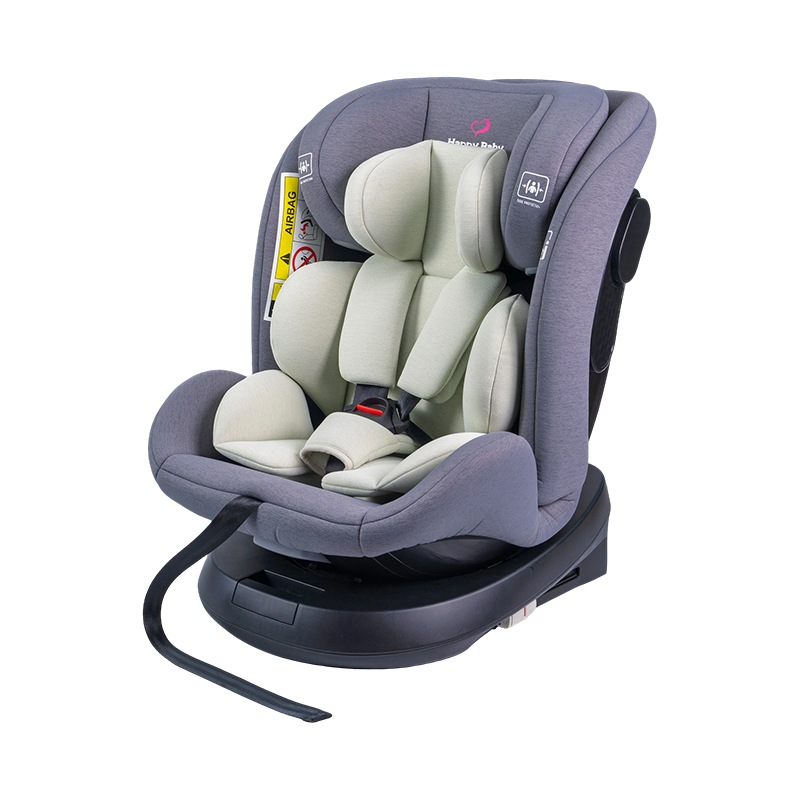
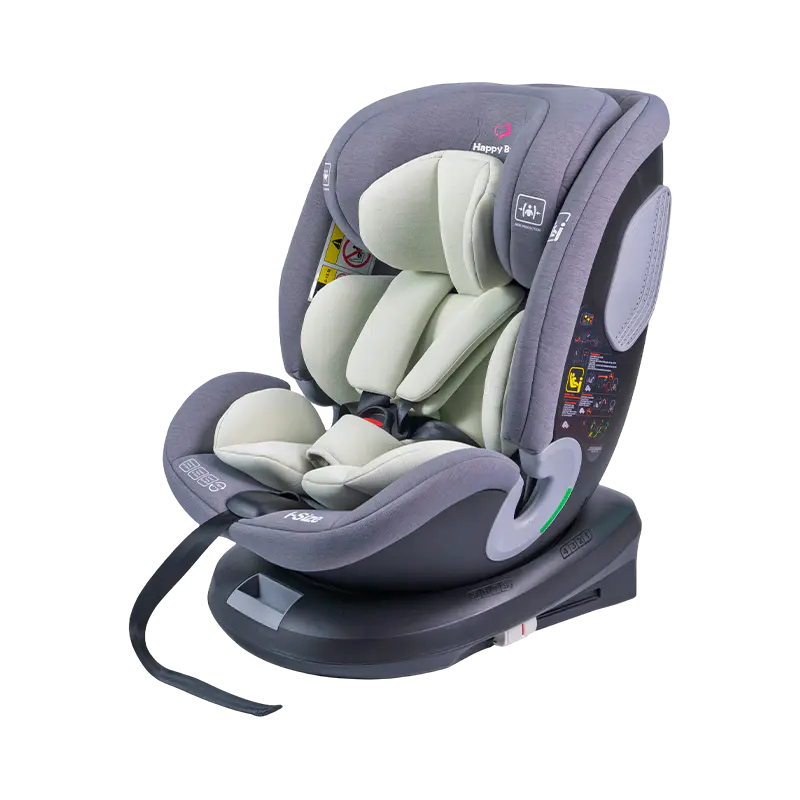
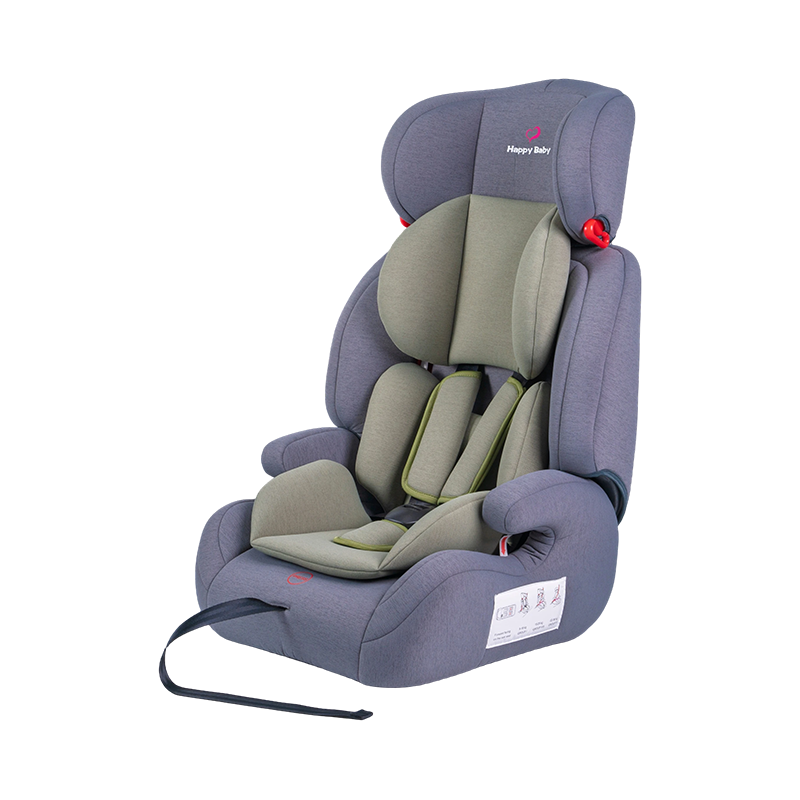
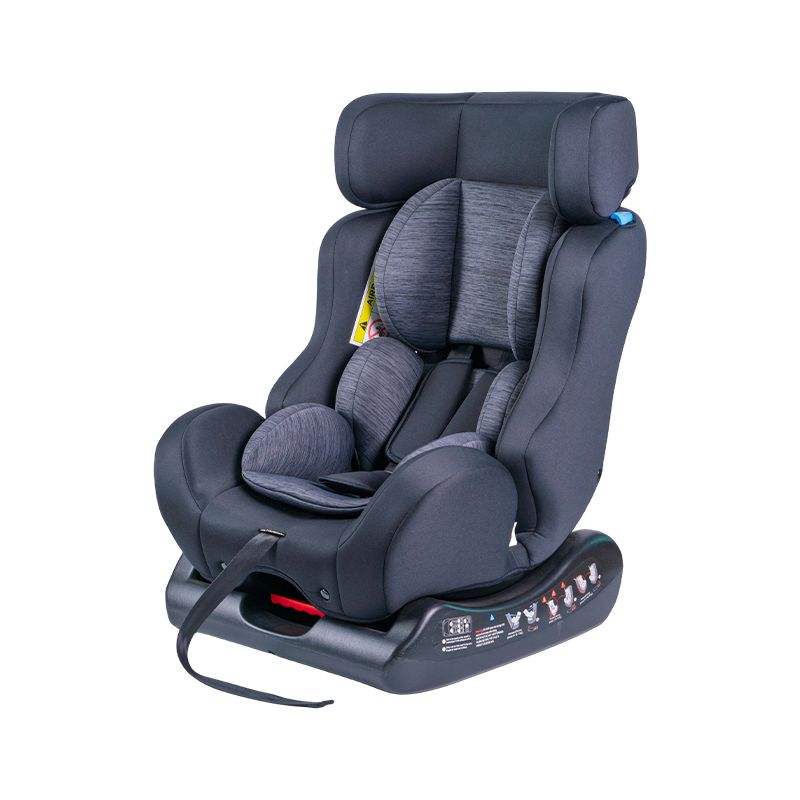
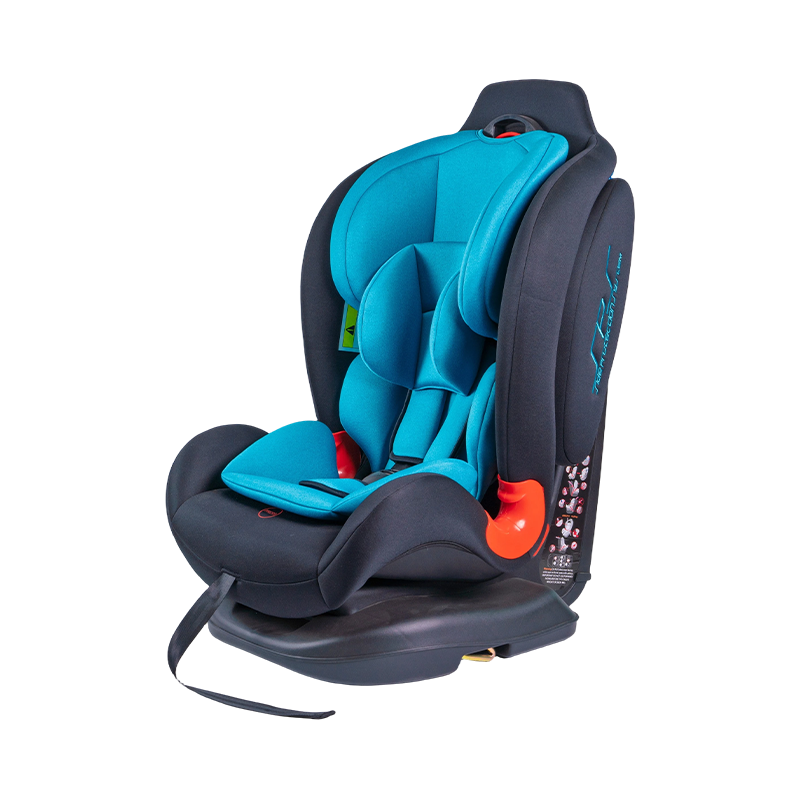
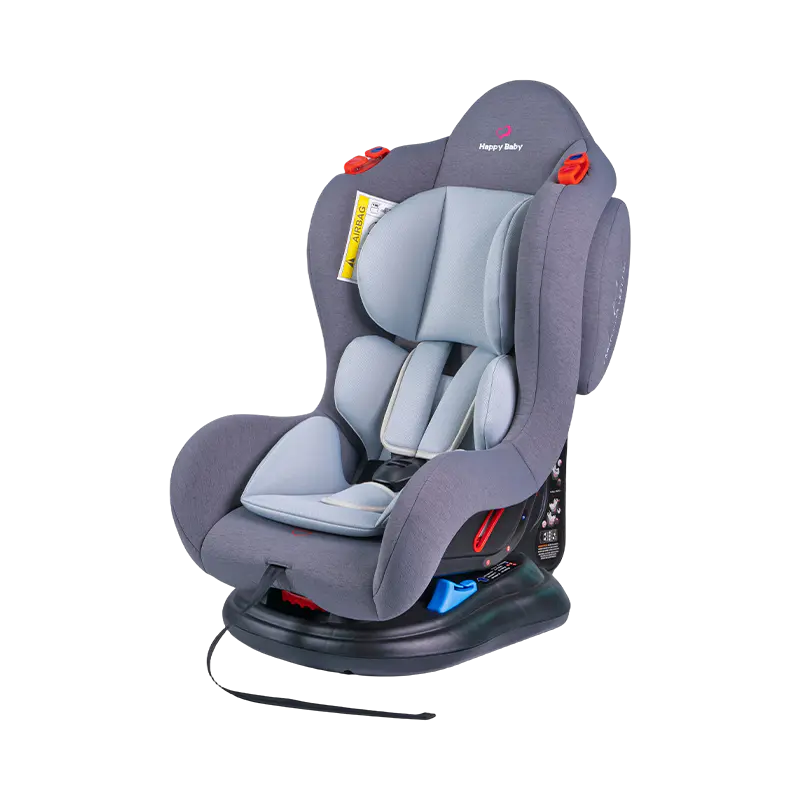

For the safety of babies' travel, we are committed to being a reliable partner for babies and families, and to becoming an expert in children's car safety seats. This is our eternal pursuit.
Contact Us
For exclusive deals and latest offers, sign up by entering your email address below.
CONTACT INFORMATION
-
Address: North of Sitong Road and west of Lianfu Port, Hongqiao Industrial Park, Taixing City, Jiangsu Province
-
Phone: +86 15996087029
-
E-mail: [email protected]
Copyright © JIANGSU HAPPY BABY SAFETY SEAT CO., LTD. All Rights Reserved.
Wholesale Child Travel Safety Seat Factory