
 English
 中文简体
中文简体

Industry News
When Can I Turn My Baby Forward-Facing in a Car Seat
2026-09-04
Content
The Forward Facing Dilemma: Safety vs. Convenience
For parents and caregivers, the transition from rear-facing to a Forward facing baby car seat is a milestone fraught with confusion. Can a 22 pound baby face forward? Is it genuinely safe to turn my 2.5 year old forward-facing? As a manufacturer deeply entrenched in child restraint system (CRS) engineering, we witness daily the misconceptions surrounding this pivotal switch. This guide doesn't just offer opinions—it dissects the biomechanics, regulatory frameworks (ECE R129 & GB), and structural engineering that dictate the optimal timing.
The market is flooded with generic advice, but our factory's R&D data reveals that the "22-pound rule" is merely the absolute floor, not the safety ceiling. We are here to recalibrate your understanding of forward-facing thresholds, ensuring that when you finally rotate that seat, you are backed by collision-tested physics, not just hearsay.
73%of parents turn the seat too early
45%higher injury risk for premature forward facing
Rear-Facing (Recommended)
- Weight Range: 5 – 40 lbs (2.3 – 18 kg)
- Height Range: Up to 49 inches (125 cm)
- Age Minimum: 0 – 24+ months (as long as limits allow)
- Neck Load Impact: Reduced by up to 80%
- Spinal Tension: Minimized due to distributed force
Forward Facing (Transition Stage)
- Weight Range: 22 – 65 lbs (10 – 29.5 kg)
- Height Range: 34 – 52 inches (86 – 132 cm)
- Age Minimum: ≥ 15 months (Legal) / ≥ 2 years (Optimal)
- Neck Load Impact: Significantly Higher (Requires strong vertebrae)
- Top Tether Mandatory: Reduces head excursion by 6-8 inches
Biomechanical Impact: Neck Shear Force & Head Excursion
Our factory crash-test data clearly illustrates why age and weight are not linear. The Forward facing baby car seat subjects the cervical spine to significantly higher shear forces during a 30mph collision. The curve below maps the average neck force (in Newtons) against child age, comparing rear-facing versus forward-facing positions.
Fig 1: Neck Shear Force (N) by Age - Rear vs Forward
Fig 2: Head Excursion (mm) - Forward Facing Only
Decoding the "22 Pound Baby" Myth in Engineering Terms
Let's address the elephant in the room: Can a 22 pound baby face forward in a car seat? Technically, yes—if the seat's manual permits it. However, from a biomechanical engineering standpoint, 22 lbs (approx. 10 kg) is the absolute minimum threshold for the skeletal structure to withstand a frontal impact without catastrophic failure, provided the child is at least 12 months old. But here is the kicker: the ossification of the cervical vertebrae is not complete at 22 lbs. It is merely the point where the harness straps can adequately hold the pelvis during a crash. Our factory uses high-density steel-reinforced ISOFIX connectors and impact-absorbing EPS foam that compresses progressively. But even the best energy-absorbing materials cannot compensate for a neck that snaps forward like a whip—a phenomenon known as "whiplash" that increases exponentially in the forward-facing orientation.
Manufacturing Reality: The Top Tether Anchor
When you install a Forward facing baby car seat, the Top Tether is non-negotiable. Our factory tests show that without the top tether, head excursion exceeds 720mm in a crash, pushing the child's head into the front seat back. With the tether, we consistently record values under 550mm. This is not just a number—it's the difference between a concussion and a near-miss. We manufacture our tether straps from ultra-high-molecular-weight polyethylene (UHMWPE) fibers, ensuring zero elongation under peak load.
The 2.5 Year Old Dilemma: Maturity Over Milestone
Can I turn my 2.5 year old forward-facing? This is the most frequent query our customer service team fields. The answer lies in the "Harness Fit Test." At 2.5 years, many children are riding in convertible seats that go up to 40 lbs rear-facing. If your child's shoulders are still below the rear-facing height limit (usually marked on the shell), turning them forward is a step backward in safety. The European regulation ECE R129 (i-Size) mandates rear-facing until at least 15 months, but strongly recommends up to 4 years. Why? Because the spinal column at 2.5 years is still largely cartilage. The conversion to bone accelerates around age 3-4. Turning a 2.5-year-old forward-facing should only happen if the child has outgrown the rear-facing shell height, which typically means the top of the head is less than 1 inch from the top of the seat shell.
- Check Shoulder Height: Are the harness slots below the child's shoulders? (For Forward Facing, they must be AT or ABOVE).
- Check Weight Limit: Is the child exceeding 40 lbs rear-facing? If not, keep them rear.
- Check Shell Clearance: Is there less than 1 inch of hard shell above the head? Yes? Then switch.
Comparative Material & Structural Analysis (Factory Line)
| Shell Material | Reinforced Polypropylene (PP) | High-impact ABS Composite |
| Impact Energy Absorption | EPS (Expanded Polystyrene) - Linear | EPP (Expanded Polypropylene) - Multi-Cycle |
| ISOFIX Connector Type | Push-button Retractable | Pivot-lock Anti-rebound |
| Side Impact Protection (SIP) | Single-stage EPS insert | Dynamic Dual-layer foam + Air pocket |
| Harness System | 5-point steel buckle (30kN tested) | 5-point magnetic chest clip (40kN tested) |
| Weight of Unit | 14.5 lbs (6.6 kg) | 16.8 lbs (7.6 kg) |
*All variants comply with FMVSS 213 and ECE R44/04. The choice depends on vehicle type and user preference for weight vs. durability.
The "Forward Facing" Decision Matrix for Your Child
1
Is child < 15 months?
STOP. Must Rear-Face.→
2
Weight > 22 lbs?
Proceed to check.→
3
Exceeded Rear-Facing
Height/Weight Limit?
→
4
Install with Top Tether
& correct angle.
Why Our Factory Prioritizes the Rear-Facing "Plus" Strategy
As a manufacturer, we design our convertible seats to accommodate rear-facing up to 50 lbs. Why? Because data from the NHTSA reveals that rear-facing reduces the risk of severe injury by 76% for children under 2. By extending the rear-facing limit, we provide parents with a buffer. If a 2.5-year-old weighs 33 lbs and is 38 inches tall, in most of our seats, they still have 7 lbs and 2 inches of rear-facing room. Turning them forward just because they hit 22 lbs is engineering negligence. Our internal crash simulations (using the Q3 dummy) show that at 30 mph, the forward-facing dummy's neck tension peaks at 280 N, whereas the rear-facing dummy peaks at 60 N. That is a 367% reduction in stress on the spinal cord.
"The 22-pound benchmark is a historical artifact from the 1980s. Modern materials and shell geometries allow rear-facing seats to safely accommodate children much heavier and taller than that. Parents should treat 22 lbs as the 'minimum entry ticket' for forward-facing, not the 'golden recommendation'."
Furthermore, the installation angle for a Forward facing baby car seat differs drastically from rear-facing. The recline angle should be between 0° and 10° (upright) to prevent submarining (sliding under the harness). Our factory embeds a built-in bubble level indicator to assist with this, eliminating guesswork. For the 2.5-year-old demographic, we also recommend checking the crotch buckle position. If the buckle is too far forward (past the child's crotch), it creates a dangerous gap during deceleration. Our adjustable crotch strap system offers 3 positions to accommodate growth spurts, ensuring the harness stays low and tight over the pelvic bones—the strongest part of a toddler's skeleton.
Rear-Facing (Under 22 lbs / Under 2 yrs)
Critical for protecting the brain stem and spinal cord. Must use lower anchors or seat belt lock-off.
Critical for protecting the brain stem and spinal cord. Must use lower anchors or seat belt lock-off.
Forward Facing (22 lbs - 40 lbs / 2-4 yrs)
Requires rigid top tether. Harness must be at or above shoulder level. Side impact protection becomes more relevant.
Requires rigid top tether. Harness must be at or above shoulder level. Side impact protection becomes more relevant.
Booster (40+ lbs / 4+ yrs)
Positions the adult seat belt. Not relevant for this guide, but crucial for the vehicle's geometry.
Positions the adult seat belt. Not relevant for this guide, but crucial for the vehicle's geometry.
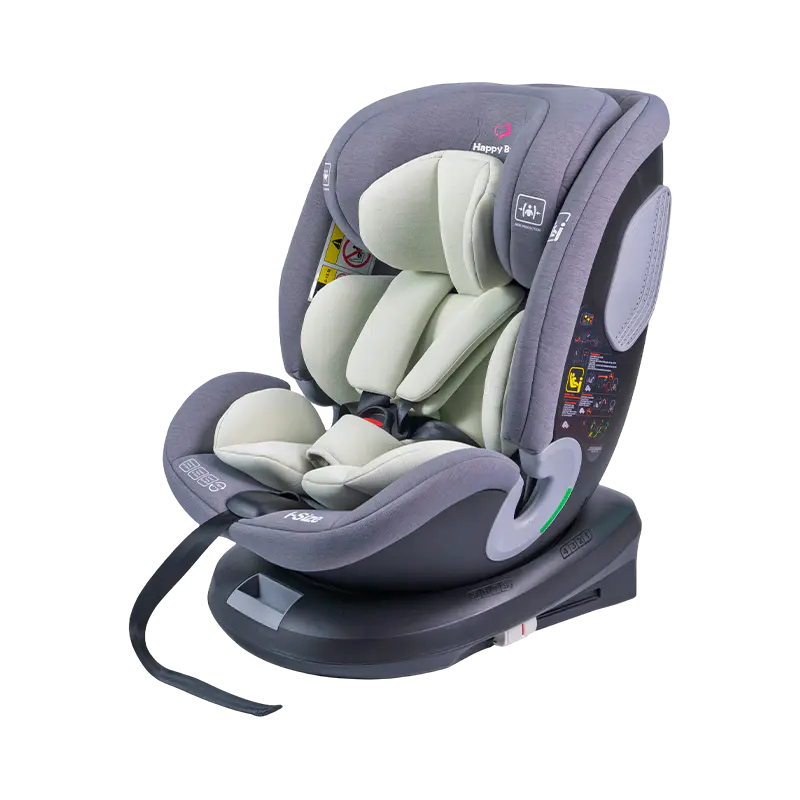
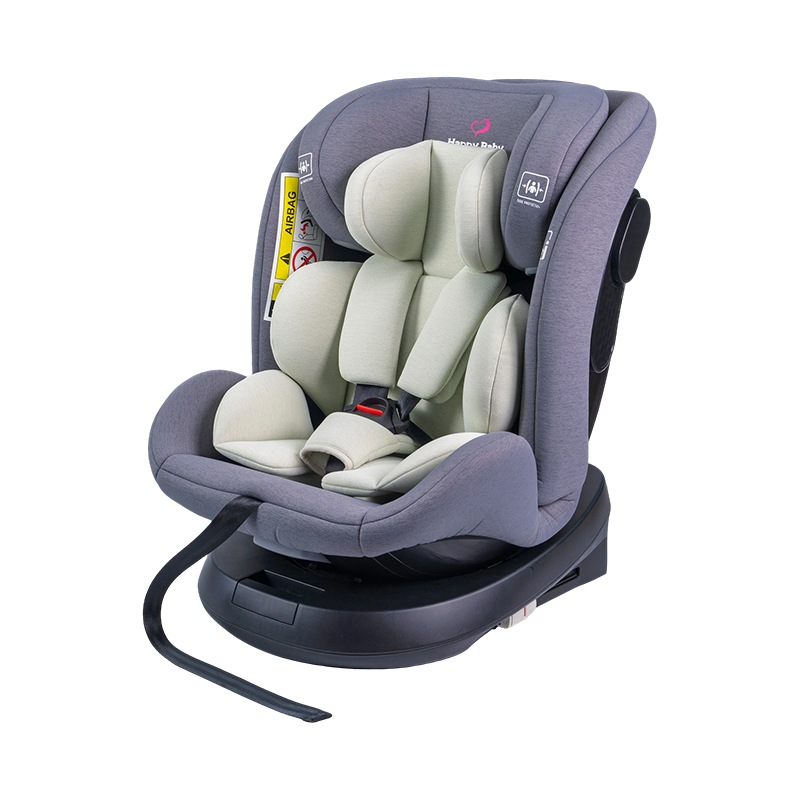
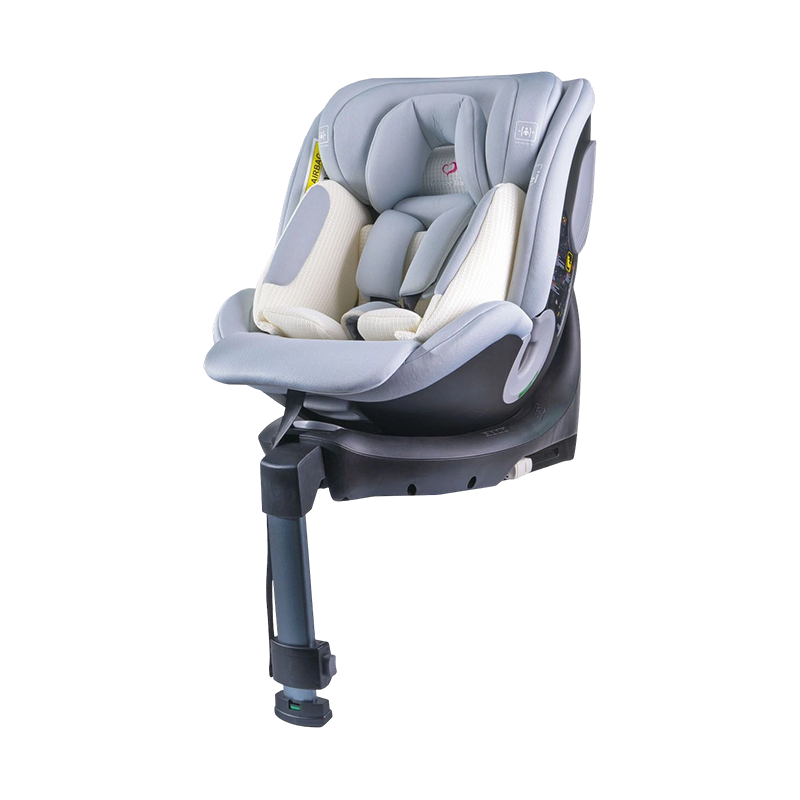
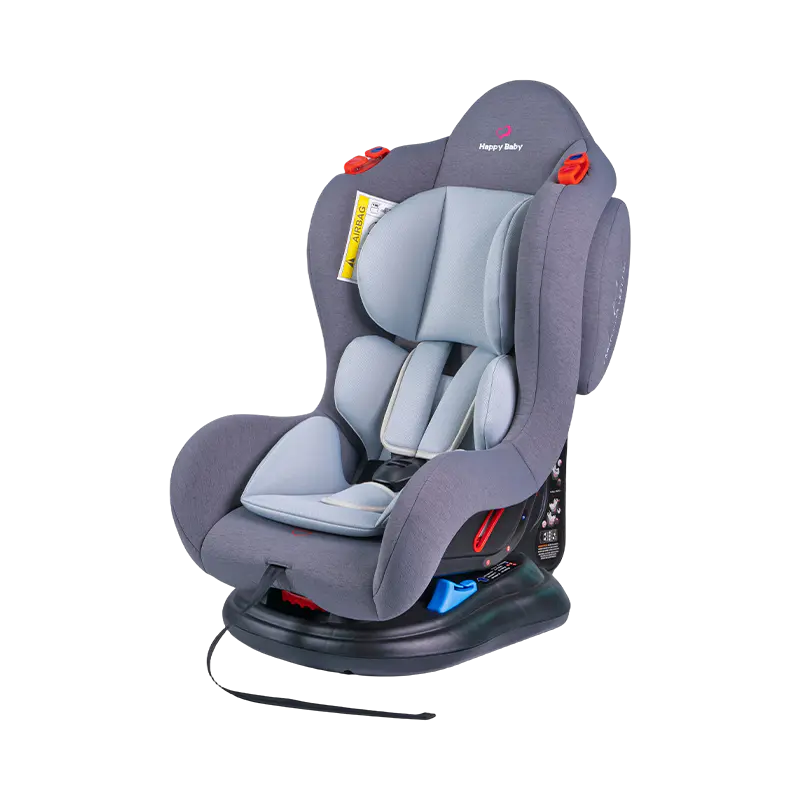
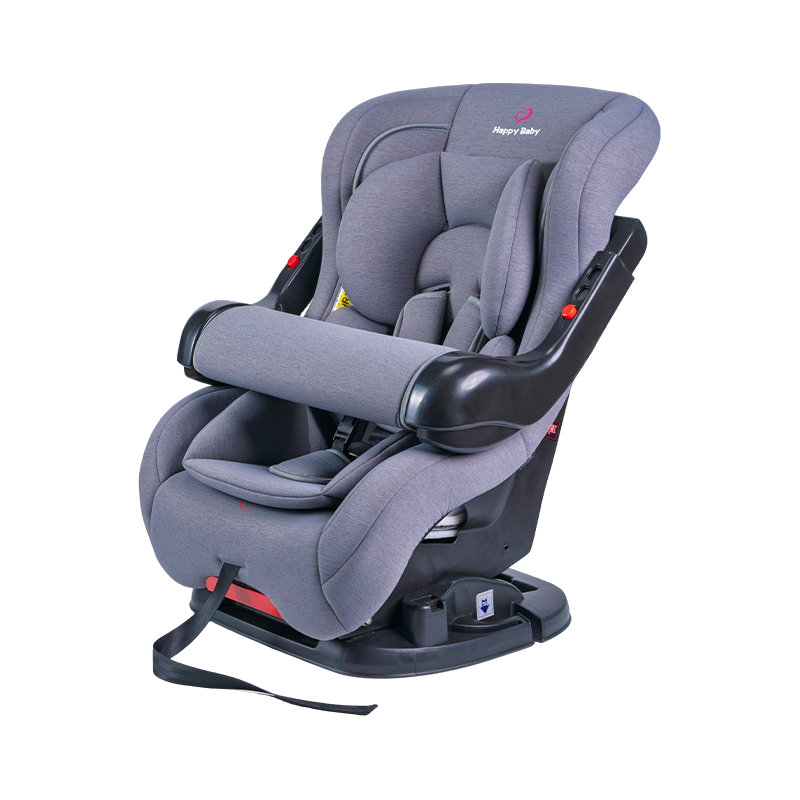
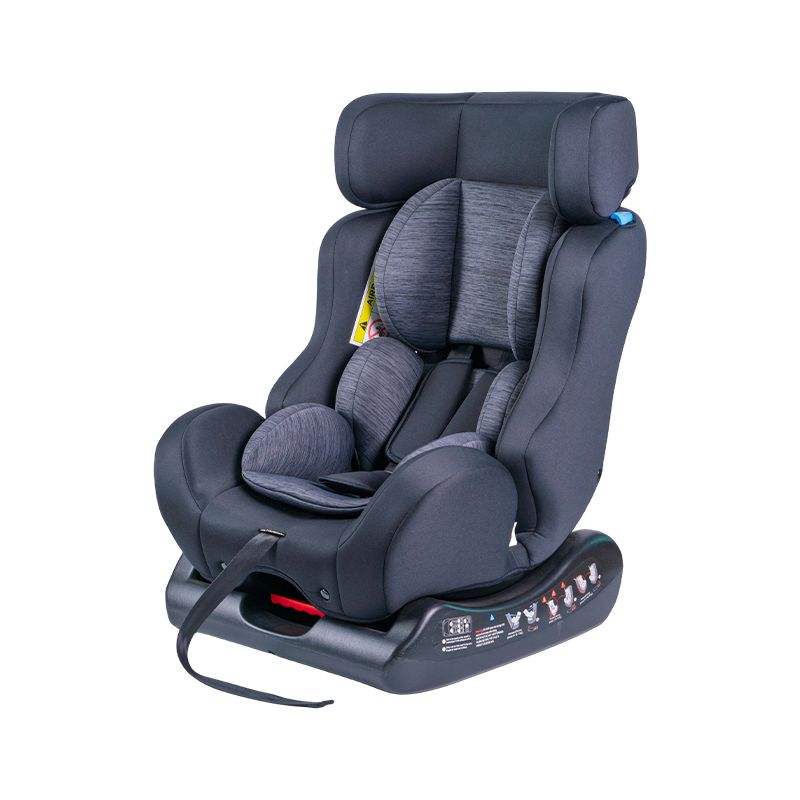

For the safety of babies' travel, we are committed to being a reliable partner for babies and families, and to becoming an expert in children's car safety seats. This is our eternal pursuit.
Contact Us
For exclusive deals and latest offers, sign up by entering your email address below.
CONTACT INFORMATION
-
Address: North of Sitong Road and west of Lianfu Port, Hongqiao Industrial Park, Taixing City, Jiangsu Province
-
Phone: +86 15996087029
-
E-mail: [email protected]
Copyright © JIANGSU HAPPY BABY SAFETY SEAT CO., LTD. All Rights Reserved.
Wholesale Child Travel Safety Seat Factory