
 English
 中文简体
中文简体 Home / News / Industry News / Can a 22 Pound Baby Face Forward in a Car Seat? Complete Safety Guide for Parents
Industry News
Can a 22 Pound Baby Face Forward in a Car Seat? Complete Safety Guide for Parents
2026-09-25
Content
- 1 Can a 22 Pound Baby Face Forward in a Car Seat? The Short Answer
- 2 Why 22 Pounds Is Not a Safety Milestone
- 3 Weight vs. Height: What Actually Matters
- 4 What About i-Size and R129 Rules?
- 5 Comparison of Forward-Facing Minimums and Recommendations
- 6 What Happens If You Turn a 22-Pound Baby Forward Too Soon?
- 7 How to Keep a 22-Pound Baby Comfortable Rear-Facing
- 8 When Can a 22-Pound Baby Legally Face Forward?
- 9 What to Look for in a Car Seat for a 22-Pound Baby
- 10 360-Degree Rotation: A Helper for Rear-Facing
- 11 Installation Tips for Rear-Facing Seats
- 12 Common Myths About Turning Forward
- 13 Frequently Asked Questions
- 14 Making the Switch: When Your Child Is Ready
- 15 Product Considerations for Growing Families
- 16 Final Thoughts: Safety Over Convenience
Can a 22 Pound Baby Face Forward in a Car Seat? The Short Answer
No, a 22-pound baby should not face forward in a car seat based on weight alone. While many convertible car seats list a forward-facing minimum of 22 pounds, that number is a legal floor, not a safety recommendation. At 22 pounds (about 10 kilograms), most babies are between 12 and 18 months old. Their neck and spine are still developing, and a forward-facing position exposes them to far greater forces in a crash.
The safer choice is to keep your child rear-facing until they reach the maximum height or weight limit allowed by your specific car seat. For many modern seats, that means 40 pounds or more. If your baby weighs 22 pounds, they almost certainly still fit rear-facing—and that is where they belong.
Why 22 Pounds Is Not a Safety Milestone
Car seat labels can be confusing. A label might say "forward-facing: 22–40 lbs." That does not mean your child is safe to turn around at 22 pounds. It means the seat has been tested to meet a minimum federal standard at that weight. Safety experts, pediatricians, and crash test engineers agree that the longer a child rides rear-facing, the better protected they are.
Here is why: a rear-facing car seat cradles the child's head, neck, and spine. In a frontal crash, the seat shell absorbs energy and distributes it across the back. A forward-facing child is thrown forward against the harness, and their relatively heavy head can stretch the neck. For a 22-pound baby, the head is a large fraction of total body weight, and the neck ligaments are not yet strong enough to handle that load.
What the Research Shows
Studies of real-world crashes find that children under age two are significantly less likely to be seriously injured when rear-facing. The American Academy of Pediatrics (AAP) recommends keeping children rear-facing until they reach the highest weight or height allowed by the car seat manufacturer. That usually means at least age two, and often longer.
Weight vs. Height: What Actually Matters
Weight is only one part of the puzzle. Car seats also have height limits, and a child can outgrow a seat by height before weight. For rear-facing, the key limits are:
- Maximum rear-facing weight (often 30–50 lbs for convertible seats)
- Maximum rear-facing height (often 40–49 inches)
- The child's head must be at least 1 inch below the top of the seat shell
A 22-pound baby might be 28 inches long or 32 inches long. The seat's manual will tell you the exact limits. If your child still fits within both the weight and height limits, keep them rear-facing.
What About i-Size and R129 Rules?
If you are shopping for a car seat in Europe or a market that follows European standards, you will see i-Size (ECE R129) seats. Under i-Size, a child must ride rear-facing until at least 15 months old. That is a legal minimum, not a maximum. Many i-Size seats allow rear-facing up to 105 cm (about 41 inches) or even 125 cm.
A 22-pound baby is usually well under 15 months, but even if they are older, the i-Size rule says 15 months is the earliest—not the goal. The goal is to max out the rear-facing limits of your seat. Our R129 i-Size car seats are designed with extended rear-facing capabilities, so you can keep your child protected longer.
Comparison of Forward-Facing Minimums and Recommendations
| Standard or Source | Forward-Facing Minimum | Recommended Practice |
|---|---|---|
| U.S. Federal Motor Vehicle Safety Standard (FMVSS 213) | Seats must be tested forward-facing from 22 lbs | Keep rear-facing as long as possible |
| American Academy of Pediatrics (AAP) | No specific weight floor | Rear-facing until at least 2 years old or until seat limits |
| i-Size (ECE R129) | 15 months minimum rear-facing | Rear-facing up to 105 cm or more, depending on seat |
| Many convertible car seat manuals | 22 lbs and 1 year old | Use rear-facing to the highest weight/height allowed |
What Happens If You Turn a 22-Pound Baby Forward Too Soon?
The risk is not theoretical. In a crash, a forward-facing child's body is held back by the harness while the head whips forward. This can cause spinal cord stretching, neck injury, and in severe cases, internal decapitation. The younger and lighter the child, the greater the risk because the head is proportionally heavier and the neck structures are more flexible.
Crash test data shows that rear-facing seats reduce the risk of serious injury by more than 70 percent for children under two, compared with forward-facing seats. That is why every major safety organization recommends delaying the switch.
How to Keep a 22-Pound Baby Comfortable Rear-Facing
Many parents turn their child forward because they think the child is uncomfortable or has no legroom. But comfort is not a safety reason to switch. Here are practical solutions:
- Adjust the recline angle. Most rear-facing seats have multiple recline positions. A more reclined angle can give your child more legroom and better head support.
- Use a seat with a higher shell. A taller seat shell gives more room for growing legs and keeps the head below the top edge.
- Let them cross their legs or prop them on the vehicle seat back. Children are flexible, and sitting cross-legged is normal and safe.
- Choose a 360-degree rotating seat. A rotating seat makes it easier to load and unload your child, and many models support extended rear-facing.
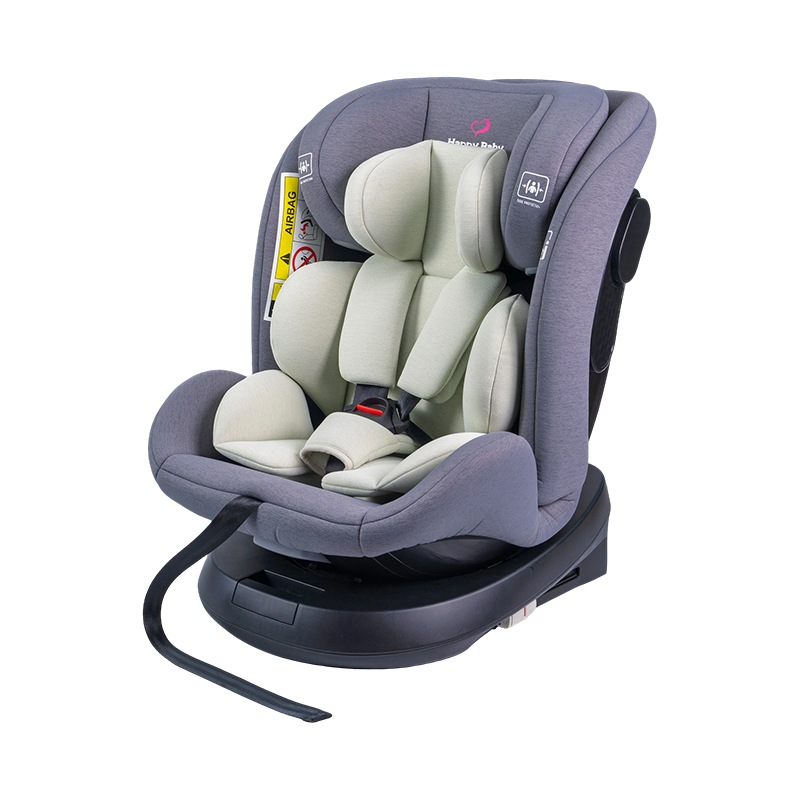
For example, this i-Size belted seat supports rear-facing from 40 cm to 105 cm, which covers most children up to around four years old. It is a practical choice if you want to keep a 22-pound baby rear-facing for years to come.
When Can a 22-Pound Baby Legally Face Forward?
Legally, the answer depends on where you live. In the United States, every state has its own child passenger safety law. Many states require rear-facing until age one and 20 pounds, but some have upgraded to age two or until the child reaches the seat's rear-facing limit. In Europe, i-Size rules require rear-facing until 15 months.
However, legal minimums are not safety recommendations. A 22-pound baby might meet a state's legal minimum, but that does not mean forward-facing is the safest choice. Always follow the car seat manufacturer's instructions and the latest guidance from safety organizations.
What to Look for in a Car Seat for a 22-Pound Baby
If your baby weighs 22 pounds and you are shopping for a seat, look for one with generous rear-facing limits. Key features include:
- Rear-facing weight limit of at least 40 pounds
- Rear-facing height limit of at least 40 inches
- Multiple recline positions for comfort
- Easy-to-adjust harness with no-rethread design
- Side impact protection
- Compatibility with your vehicle (ISOFIX, seat belt, or both)
Convertible and all-in-one seats typically offer the longest rear-facing use. Infant seats are usually outgrown by 22–30 pounds, so a convertible seat is often the better investment.
360-Degree Rotation: A Helper for Rear-Facing
Rotating car seats have become popular because they make it easier to get a child in and out of the car, especially when the seat is rear-facing. A 360-degree seat can be turned toward the door, allowing you to buckle your child without twisting your back. Once the child is secured, the seat rotates back into the rear-facing position until it locks.
Many rotating seats also support extended rear-facing, so you do not have to give up safety for convenience. If you are looking for a seat that can handle both rear-facing and forward-facing as your child grows, a rotating model is worth considering.
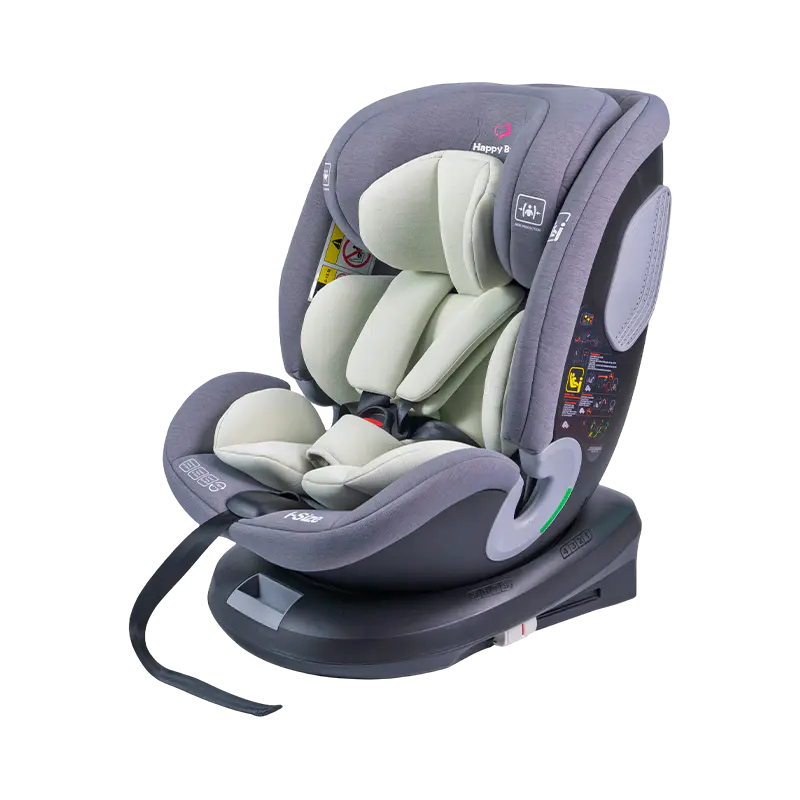
This ISOFIX seat with support leg and 360-degree rotation is rated for 40–150 cm. It can be used rear-facing for a 22-pound baby and later switched to forward-facing when the child is truly ready.
Installation Tips for Rear-Facing Seats
Even the best car seat can fail if it is installed incorrectly. Here are the essentials for a secure rear-facing installation:
- Use either the seat belt or ISOFIX lower anchors, not both unless the manual says so.
- For ISOFIX with a support leg, make sure the leg is firmly on the vehicle floor.
- For a top tether, route it over the seat and attach it to the designated anchor point.
- Check that the seat does not move more than one inch at the belt path.
- Adjust the harness so it is snug—you should not be able to pinch a fold in the strap.
- Place the chest clip at armpit level.
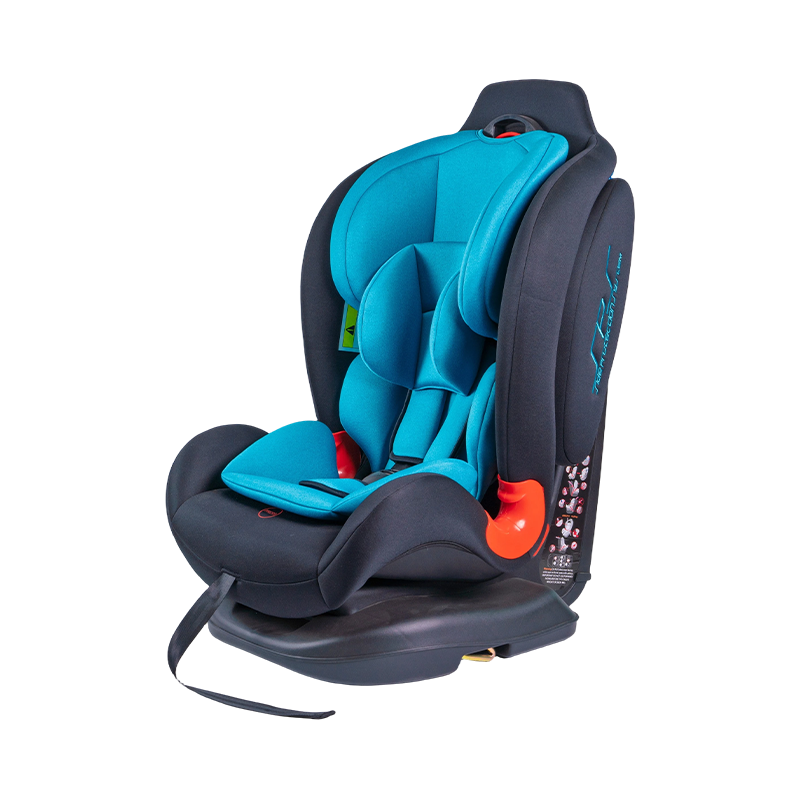
This model uses an ISOFIX top tether and offers 360-degree rotation. The top tether adds stability and reduces forward movement in a crash. It is a strong option for parents who want a secure rear-facing seat that can later be turned forward.
Common Myths About Turning Forward
Myth 1: A baby can face forward at 20 or 22 pounds.
Many car seats list 22 pounds as the minimum for forward-facing, but that is a test standard, not a safety milestone. Keep your child rear-facing until they reach the seat's rear-facing height or weight limit.
Myth 2: Legs are too long, so the child must turn forward.
There is no evidence that a rear-facing child's legs are at risk of injury. Children often sit cross-legged or with legs up the seat back. Broken legs are rare in rear-facing crashes, and they are far less serious than neck or spine injuries.
Myth 3: Rear-facing is only for infants.
Rear-facing is for anyone who fits within the seat's rear-facing limits. Many children can ride rear-facing until age three or four.
Myth 4: Once the child can walk, they should face forward.
Walking has nothing to do with car seat safety. The decision should be based on the seat's limits and the child's size, not developmental milestones.
Frequently Asked Questions
Can a 22-pound baby face forward if the law allows it?
Legally, maybe. But safety experts strongly recommend keeping a 22-pound baby rear-facing. The law is a minimum, and your child's safety is better served by following the seat's rear-facing limits.
What if my car seat only goes to 22 pounds rear-facing?
If your infant seat has a rear-facing weight limit of 22 pounds, your baby has outgrown it for rear-facing use. You should move to a convertible seat that allows rear-facing to at least 40 pounds. Do not turn your baby forward just because the infant seat is outgrown.
How do I know when to switch to forward-facing?
Switch when your child reaches the maximum rear-facing weight or height for their convertible seat, or when their head is less than one inch from the top of the seat shell. For many children, this happens between ages two and four.
Is a 22-pound baby too heavy for a rear-facing seat?
No. Most convertible seats have rear-facing weight limits of 30 to 50 pounds. A 22-pound baby is well within that range for most seats.
What is the safest car seat for a 22-pound baby?
The safest seat is one that fits your child, fits your vehicle, and is installed correctly. Look for a convertible or all-in-one seat with high rear-facing limits and features like side impact protection and easy harness adjustment.
Making the Switch: When Your Child Is Ready
When your child finally reaches the rear-facing limit, it is time to switch to forward-facing. Here is a checklist for a safe transition:
- Read your car seat manual for forward-facing weight and height limits.
- Reinstall the seat in the forward-facing position according to the manual. This may involve routing the seat belt differently or using the top tether.
- Adjust the recline angle. Forward-facing seats usually need a more upright angle.
- Move the harness straps to the correct slot. For forward-facing, the harness should be at or above the child's shoulders.
- Attach the top tether if available. It reduces forward head movement.
- Check that the seat is tightly installed—no more than one inch of movement at the belt path.
Even after switching, keep your child in a forward-facing harnessed seat until they reach the maximum weight and height for that mode. Then move to a booster seat.
Product Considerations for Growing Families
Choosing a car seat is a long-term decision. A seat that works for a 22-pound baby should also work as the child grows. Consider these features:
- Extended rear-facing: Look for seats that allow rear-facing up to 40 or 50 pounds.
- Adjustable headrest and harness: No-rethread harnesses make it easy to adjust as your child grows.
- Multiple recline positions: Important for both comfort and correct installation.
- Side impact protection: Helps protect the head and torso in a side collision.
- Easy-to-clean fabrics: Spills and crumbs are inevitable.
If you are a retailer, importer, or brand owner looking for a reliable manufacturing partner, our factory produces a wide range of R129 and R44 seats. We focus on extended rear-facing designs, robust ISOFIX systems, and tested safety performance. You can explore our comprehensive guide for parents to see how we explain safety choices to families.
Final Thoughts: Safety Over Convenience
A 22-pound baby is still small. Their body is not ready for the forces of a forward-facing crash. The safest choice is to keep them rear-facing until they max out the seat. It may take longer to buckle them in, and their legs may look cramped, but those are minor inconveniences compared with the risk of a life-changing injury.
If you are unsure, check your car seat manual, consult a certified child passenger safety technician, and remember that weight alone is never the full story. Height, age, and the seat's limits all matter. When in doubt, keep them rear-facing.

For the safety of babies' travel, we are committed to being a reliable partner for babies and families, and to becoming an expert in children's car safety seats. This is our eternal pursuit.
Contact Us
For exclusive deals and latest offers, sign up by entering your email address below.
CONTACT INFORMATION
-
Address: North of Sitong Road and west of Lianfu Port, Hongqiao Industrial Park, Taixing City, Jiangsu Province
-
Phone: +86 15996087029
-
E-mail: [email protected]
Copyright © JIANGSU HAPPY BABY SAFETY SEAT CO., LTD. All Rights Reserved.
Wholesale Child Travel Safety Seat Factory