
 English
 中文简体
中文简体

Industry News
When Can Babies Face Forward in a Car Seat? A Safe Transition Guide
2026-07-31
Content
Why Rear-Facing Is the Safest Position for Your Baby
A baby's head makes up roughly 25 percent of total body weight; an adult's head is only about 6 percent. That gap explains why pediatricians, crash engineers, and regulators on both sides of the Atlantic agree: keep children rear-facing for as long as the seat allows.
Rear-facing is the safest position because of anatomy and physics. In a frontal collision, the most common severe crash type, a forward-facing child is held by the harness while the head whips forward, forcing the neck to absorb forces it is not ready for. A rear-facing child is pressed into the seat shell, so the impact spreads across the back and head while the neck and spine stay aligned. For an immature skeleton, that alignment is everything.
Three anatomical facts explain why the first years are so critical, and individual development varies from child to child:
- A baby's head is large and heavy relative to the body, and the neck muscles that stabilize it are still weak.
- The cervical vertebrae are not fully ossified until roughly age three to six, leaving the spine more flexible and less protective.
- Ligaments around the spinal cord are loose, allowing more movement of the vertebrae in a crash.
The American Academy of Pediatrics (AAP) recommends rear-facing until the highest height or weight limit allowed by the car seat. NHTSA agrees: keep the child rear-facing until the manufacturer's top height or weight limit. For most convertible seats, that point arrives between the third and fourth birthday.
Every extra month rear-facing is a month of spinal development under the safest possible conditions. There is no medical or engineering argument for switching earlier; there is only a legal minimum, which we look at next.
Current Guidelines: When Is the Minimum and the Ideal?
Parents are asking two questions: what is the legal minimum, and what is the safest choice? They are not the same number, and confusing them is the most common reason children are turned forward too early.
Every family follows the same progression: a rear-facing infant carrier, a convertible seat used rear-facing, that same seat turned forward-facing, and finally a high-back booster. Getting the first transition right is what matters most.
In the United States, car seat laws vary by state, and many states now require rear-facing until age two. Confirm the rule where you live. But the medical benchmark is higher: the AAP says stay rear-facing until the seat's listed height or weight limit, usually age three or four. NHTSA similarly sets the switch point at the manufacturer's top height or weight limit. A state law is a floor, not the goal.
European regulations reach the same destination by a different route. The ECE-R129 standard, marketed as i-Size, requires rear-facing travel for infants up to 15 months. In practice, i-Size seats go well beyond that point, and most list a rear-facing limit of 105 cm, around age four.
R129 is the only major standard that defines seating phases by height rather than age or weight. Height is a steadier indicator of skeletal development than weight: two children of the same weight can have very different bone maturity, while the same height usually reflects a similar spine size. That is why i-Size seats read like "40 to 105 cm" instead of "birth to four years."
The older European standard, ECE-R44, uses weight groups. Group 0+ seats are rear-facing to 13 kg, and many Group 1 seats (9 to 18 kg) accept both directions. For cars without ISOFIX anchors, a belted rear-facing and forward-facing seat built to R44 keeps a child rear-facing through the toddler years with a simple seatbelt installation.
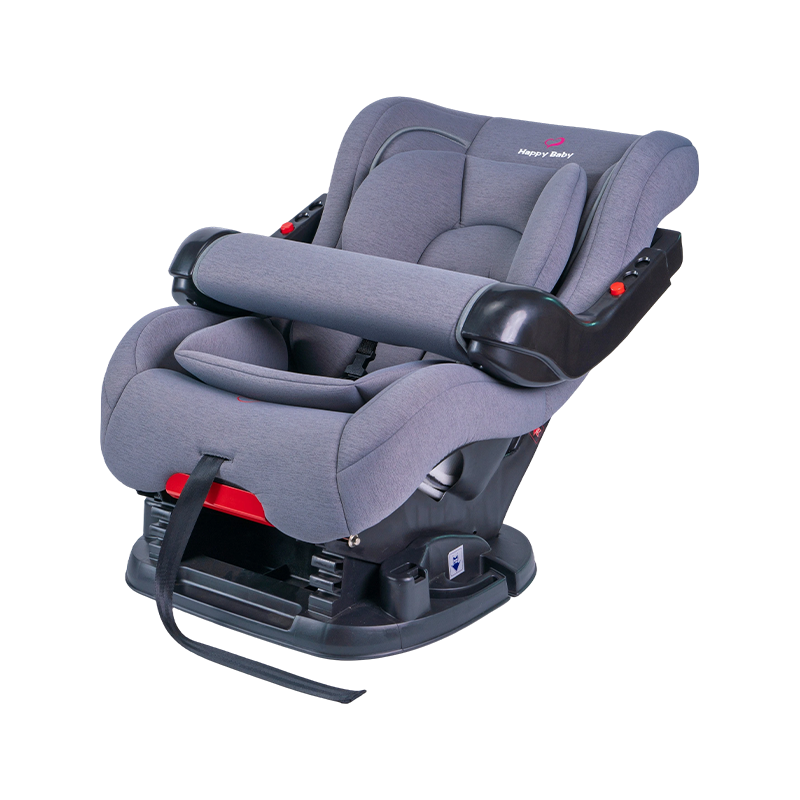 Custom R44 Standard Belted Rear-Facing/Forward-Facing Safety Seat Group 0+/1 SupJIANGSU HAPPY BABY SAFETY SEAT CO., LTD. is China R44 Standard Belted Rear-Facing/Forward-Facing Safety Seat Group 0+/1 Suppliers and OEM...View Product →
The table below compares the main guidelines at a glance.
| Guideline or standard | Minimum rear-facing requirement | Typical rear-facing window | Limit defined by |
|---|---|---|---|
| AAP (United States) | No fixed minimum; follows state law | Until the seat's height or weight limit, often age 3–4 | Seat label |
| NHTSA (United States) | Follow applicable state law | Until the manufacturer's highest allowed height or weight limit | Seat label |
| ECE-R129 / i-Size (Europe) | Mandatory rear-facing to 15 months | Usually up to 105 cm, around age 4 | Height (cm) |
| ECE-R44 (Europe) | Group 0+ rear-facing to 13 kg | Group 1 seats may allow rear-facing to 18 kg | Weight group |
Across every system the conclusion is identical: rear-facing continues until the seat itself says stop. The standards only differ in how they measure the limit, not in the safety principle behind it.
How to Know Your Child Has Outgrown the Rear-Facing Limit
The only authority in this decision is the label on the side of the seat and the manual that came with it. Not the child's age. Not how big they look. Not the advice of relatives or neighbors. The label.
Work through these steps to confirm your child is genuinely ready:
- Find the printed label and the instruction manual. Identify the rear-facing height limit and the rear-facing weight limit.
- Check height. Place the child in the seat and look at the top of the head. If the head is above the top edge of the seat shell, the height limit is reached. For infant carriers, keep at least 2.5 cm (1 inch) of shell above the head.
- Check weight. Weigh the child and compare the result with the printed rear-facing maximum.
- Make the call: if either limit is exceeded, switch direction; if neither is exceeded, continue rear-facing even at age two or three.
Labels look different depending on the standard. A U.S. FMVSS 213 seat lists height and weight limits. An i-Size seat usually prints a height range, such as 40 to 105 cm. An R44 seat prints weight groups, such as Group 1 at 9 to 18 kg. Read the printed numbers and ignore appearances.
A common worry is that turning forward means buying a new seat. In a convertible seat, that is not true. A 360° rotating i-Size car seat with rear-facing capability carries a child from 40 cm to 150 cm, so the same shell rotates forward-facing the day the limit is reached. Switching direction does not have to mean switching products.
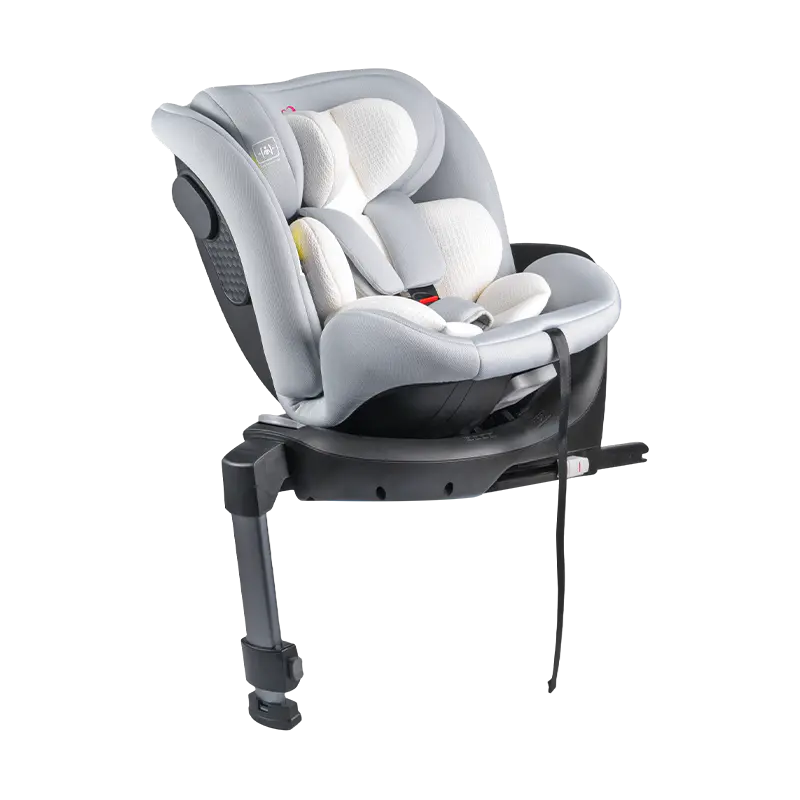 Custom R129 Standard ISOFIX + support leg 360 Rotation Rearward/Forward facing bJIANGSU HAPPY BABY SAFETY SEAT CO., LTD. is China R129 Standard ISOFIX + support leg 360 Rotation Rearward/Forward facing baby car seat 4...View Product →
Common Parent Concerns — What About Their Legs, Crying, and Comfort?
Leg room: a misunderstanding, not a safety problem
The most common reason parents turn a child around is that their legs look cramped. The legs are not in danger. Children's hip joints are far more flexible than adults', so they sit cross-legged, with knees near the chest, or with feet resting on the seat back. This frog-leg pose is normal and safe. In a crash, the shell absorbs forces that would otherwise travel through the legs, and lower-limb injuries in rear-facing children are uncommon and heal well. Head and spinal cord injuries do not. When in doubt, protect the parts that do not heal.
Fussing at the start of a ride is usually a habit, not a signal
Some children fuss when facing backward, especially after watching an older sibling face forward. The fussing is usually behavioral rather than physical. Check the harness: it should be snug without digging in, with the chest clip at armpit level. Adjust the seat recline to the angle in the manual. A soft toy or a small mirror can help. If the ride becomes genuinely upsetting, stop safely, comfort the child, and continue. Short-term fussing is not a reason to expose an immature spine to greater risk.
"I cannot see you" is a comfort issue, not a safety issue
A child will often ask to see you or to face the front like an older sibling. It is hard to say no, but a rear-facing child does not need a view of the road; they need the seat shell between their body and the impact. A mirror on the headrest gives them eye contact with the driver. If the request comes from a sibling, explain the rule and hold the line. The standard does not bend because someone is unhappy about it.
The pattern is the same in every case: the inconvenience is temporary, and the protection is permanent.
After the Switch: Forward-Facing Best Practices
Turning the seat forward does not mean the standards relax. Forward-facing is a new phase with installation rules that many parents do not expect.
Always use the top tether
In forward-facing use, the top tether is mandatory. It anchors the top of the seat to the vehicle and limits how far the child's head moves forward in a crash; without it, head movement increases. An i-Size car seat with top tether support keeps that protection available from the day you switch until the day the child moves to a booster.
 Custom R129 Standard ISOFIX + top tether 360 Rotation Rearward/Forward facing baJIANGSU HAPPY BABY SAFETY SEAT CO., LTD. is China R129 Standard ISOFIX + top tether 360 Rotation Rearward/Forward facing baby car seat 40...View Product →
Check the harness and the belt path every time
Read the manual again when you change direction: the belt path differs between rear-facing and forward-facing. The harness straps should sit at or slightly above the shoulders, the chest clip at armpit level, and the harness tight enough that you cannot pinch a fold of webbing at the shoulder. Recline the seat to the manufacturer's specified angle, usually more upright than rear-facing.
Know the next stage and do not rush it
The five-point harness stays in use until the seat's forward-facing height or weight limits, commonly around 18 to 25 kg or 105 to 125 cm. Only then should you consider a high-back booster. Moving to a booster early is the forward-facing version of turning a one-year-old forward: it feels like progress, but it is a step down in protection.
When the day comes to rotate the seat, do it with confidence. You kept the rear-facing position for every centimeter the seat allowed. That is what every guideline asks, it is what the engineers designed for, and it is the strongest position a parent can take.
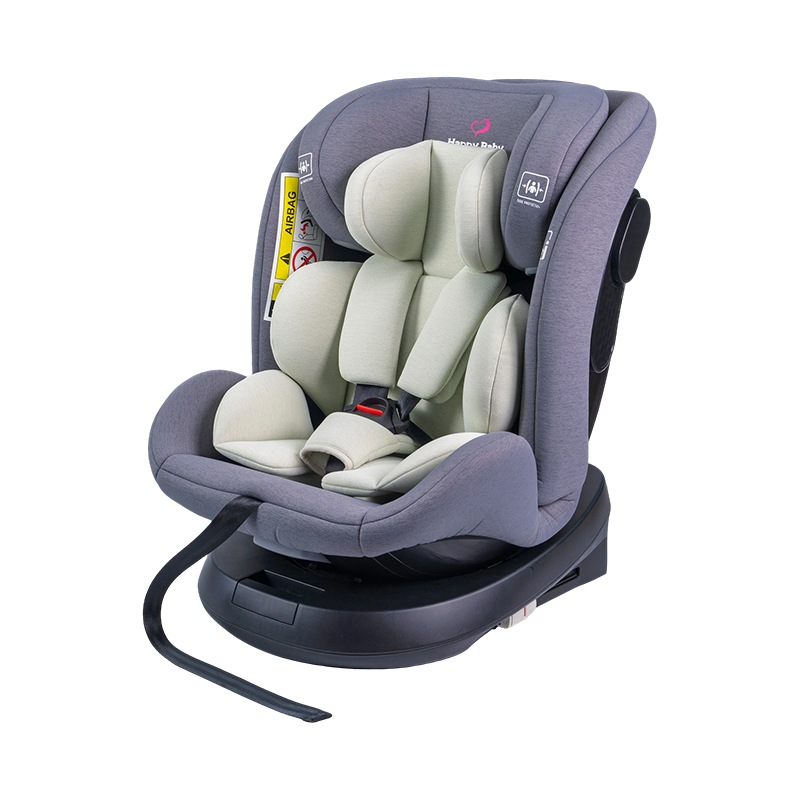
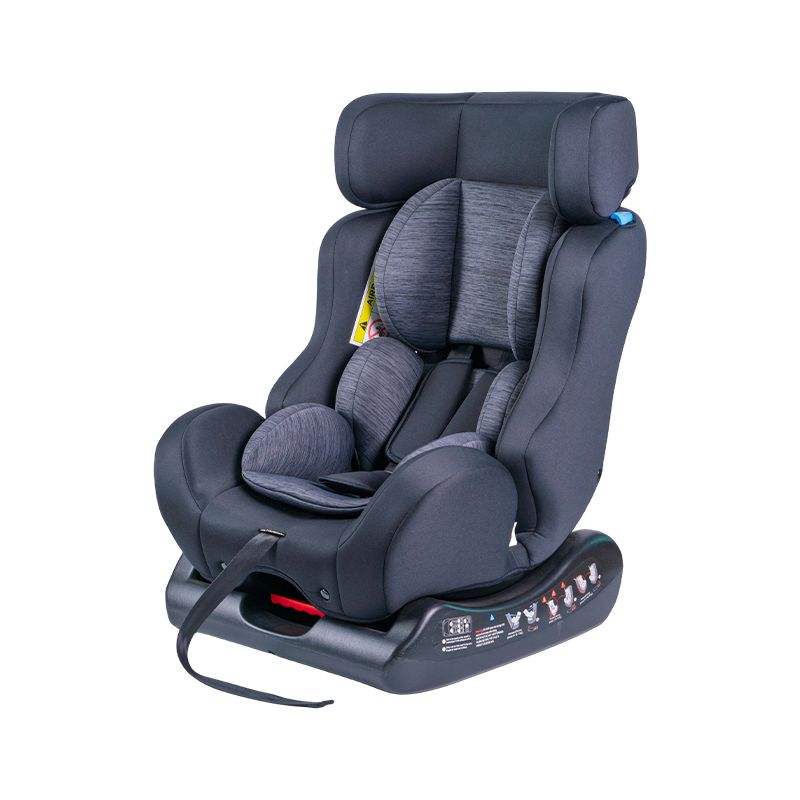
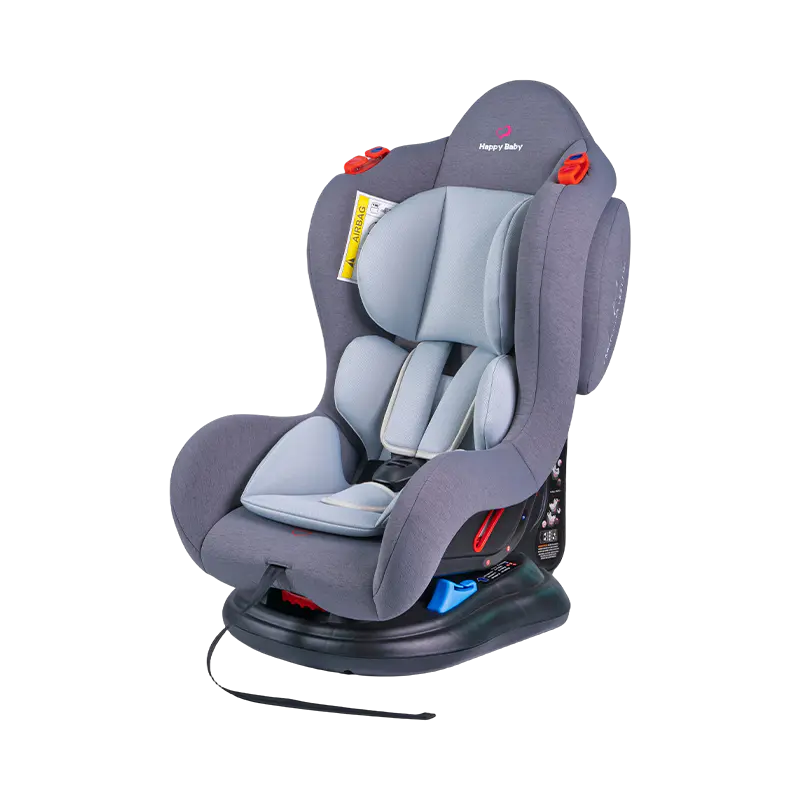
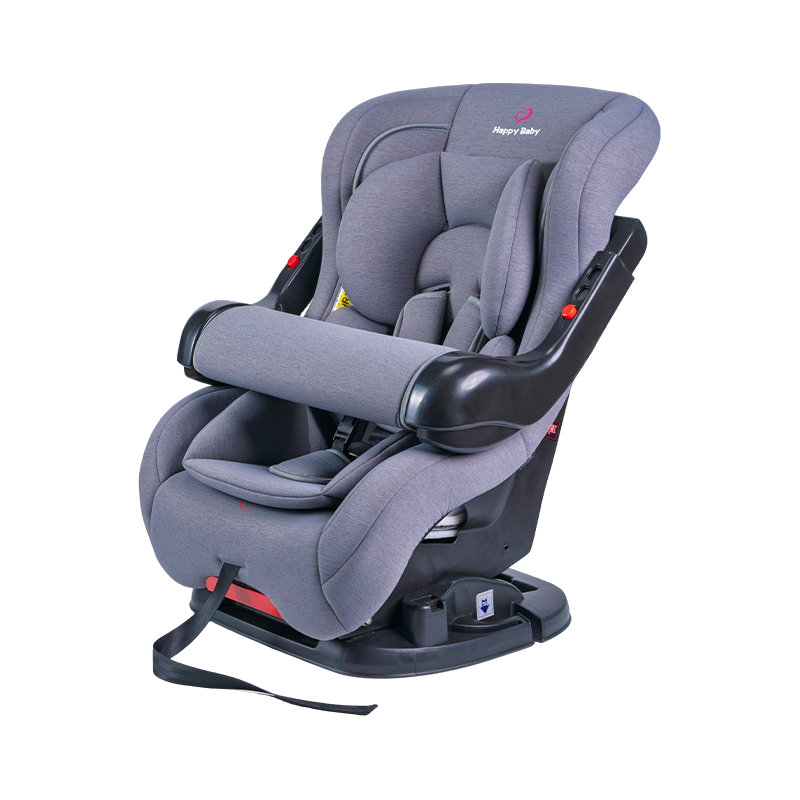
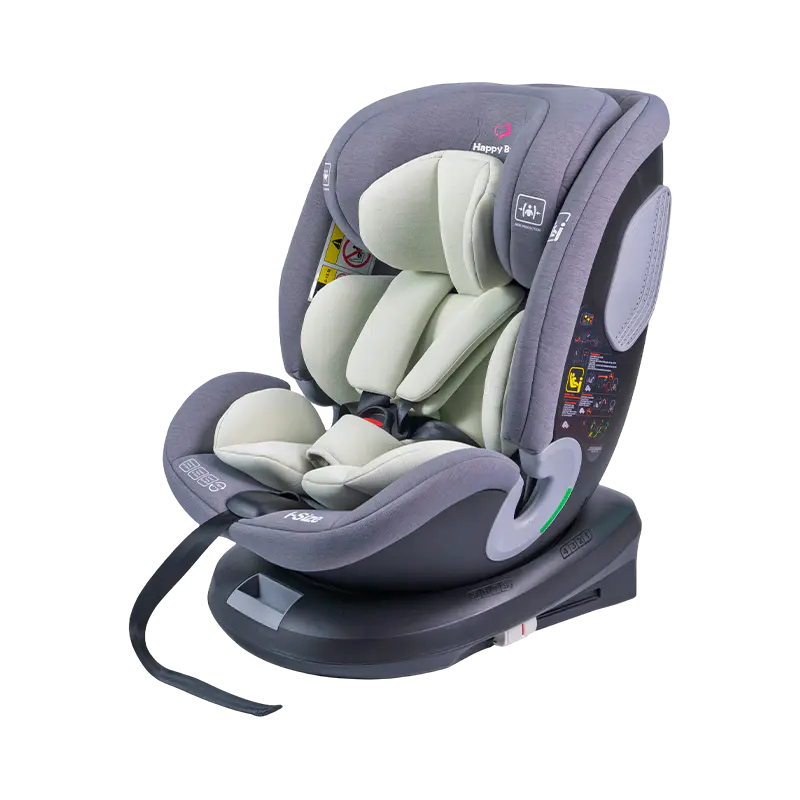
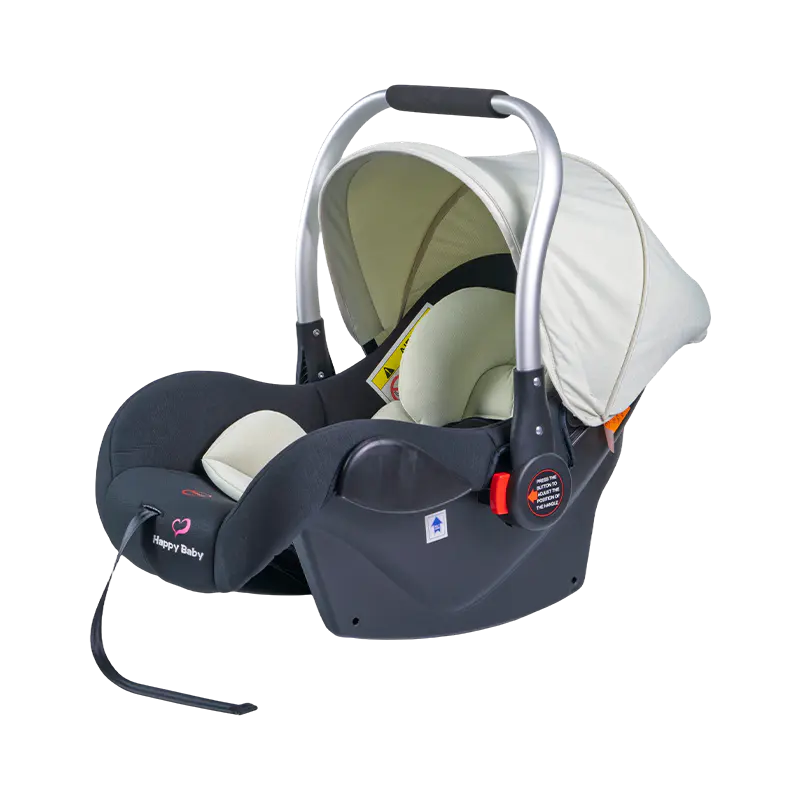

For the safety of babies' travel, we are committed to being a reliable partner for babies and families, and to becoming an expert in children's car safety seats. This is our eternal pursuit.
Contact Us
For exclusive deals and latest offers, sign up by entering your email address below.
CONTACT INFORMATION
-
Address: North of Sitong Road and west of Lianfu Port, Hongqiao Industrial Park, Taixing City, Jiangsu Province
-
Phone: +86 15996087029
-
E-mail: [email protected]
Copyright © JIANGSU HAPPY BABY SAFETY SEAT CO., LTD. All Rights Reserved.
Wholesale Child Travel Safety Seat Factory