
 English
 中文简体
中文简体

Industry News
Baby Car Seat Ages: Complete Guide from Newborn to Booster
2026-08-14
Content
- 1 Why Car Seat Stages Matter More Than a Single Age
- 2 Stage 1 – Newborn to About 12 Months: Rear-Facing Infant Seats
- 3 Stage 2 – About 6 Months to 4 Years: Rear-Facing and Forward-Facing Convertible Seats
- 4 Stage 3 – About 4 to 7 Years: Forward-Facing Seats with a Five-Point Harness
- 5 Stage 4 – About 6 to 12 Years: Booster Seats
- 6 Quick Reference: Age-by-Age Car Seat Chart
- 7 Putting the Age Guide Into Practice
Your mother-in-law says babies can't ride in car seats during the first weeks. Your best friend insists you need a convertible seat from day one. The chart you found online uses pounds and inches, but the seat you're eyeing is labeled in centimeters. When every source gives a slightly different age, it's no wonder parents ask: What age should a baby be in a car seat?
Here is the short answer: from the first ride home, a baby must sit in a rear-facing car seat, and they will move through a sequence of seats until roughly age 10–12. The exact timing depends on your child's height, weight, and development, not just a birthday. This guide maps each stage with practical age ranges, height limits, and clear signs that it's time to switch. If you want the broader buying principles first, read our article on choosing the right baby car seat before diving into the stage-by-stage breakdown.
Why Car Seat Stages Matter More Than a Single Age
Car seats are not sized like clothing. They are engineered around crash-test dummies of specific heights and weights, and a harness only protects a child when the straps align with the strongest parts of the skeleton. That is why every major safety standard defines car seat stages by physical measurements rather than a simple calendar age.
Two European standards dominate the market:
- ECE R44 (the older standard) groups seats by weight: Group 0 (up to 10kg), Group 0+ (up to 13kg), Group 1 (9–18kg), Group 2 (15–25kg), and Group 3 (22–36kg).
- ECE R129, also called i-Size (the newer standard) groups seats by height in centimeters, such as 40–75cm, 40–105cm, 76–150cm, and 100–150cm. It also requires rear-facing travel until at least 15 months (76cm).
R129 is stricter than R44 in several ways: rear-facing is mandatory for longer, side-impact protection is included in testing requirements, and most new models use ISOFIX mounting. However, R44 seats that are new and within their expiration date remain fully legal. The practical difference? A label that reads "Group 1-2-3" comes from the R44 weight system, while a label that reads "40–150cm" comes from R129. Many seats carry both markings.
Why does this matter for your child? A small toddler may still fit rear-facing in an infant carrier at 14 months, while a taller child can outgrow that same seat at 9 months. Height and weight tell you when a seat no longer fits; age alone cannot. For this reason, the age ranges in this article are starting points, not exact deadlines.
Stage 1 – Newborn to About 12 Months: Rear-Facing Infant Seats
A newborn must travel rear-facing from the very first ride home. This is not a preference; it is a matter of anatomy. A baby's head is large relative to the body, and the neck bones are soft and underdeveloped. In a frontal crash, a rear-facing seat cradles the head, neck, and spine across the entire shell, while a forward-facing position forces fragile structures to absorb the impact. Both the American Academy of Pediatrics (AAP) and the U.S. National Highway Traffic Safety Administration (NHTSA) state that children under 1 year should always ride rear-facing.
The most common first seat is an infant carrier, known as Group 0+ under R44 or 40–75cm under R129. These carriers have a handle and a detachable base, so you can move a sleeping baby without unbuckling them. Most cover from about 40cm up to 75 or 85cm, which usually means birth to 10–12 months.
Move your baby out of the infant carrier when any of these is true:
- The top of your baby's head is less than 2.5cm (about 1 inch) from the top edge of the seat shell.
- Your baby reaches the height or weight limit printed on the seat label.
- The harness straps sit at or above the baby's shoulders in rear-facing mode (they should sit at or below the shoulders).
A frequent worry is that rear-facing babies "run out of legroom" when their knees press against the vehicle seat. That is normal and safe. Bending legs do not increase injury risk in a rear-facing crash; the head and neck protection is what matters, so there is no reason to turn the seat forward for legroom alone.
If you are weighing whether to buy an infant carrier or go straight to a convertible seat, our comparison of infant seat vs convertible car seat covers the trade-offs in detail. For a direct example of a stage-1 seat, take a look at our newborn baby carrier car seats (Group 0+).
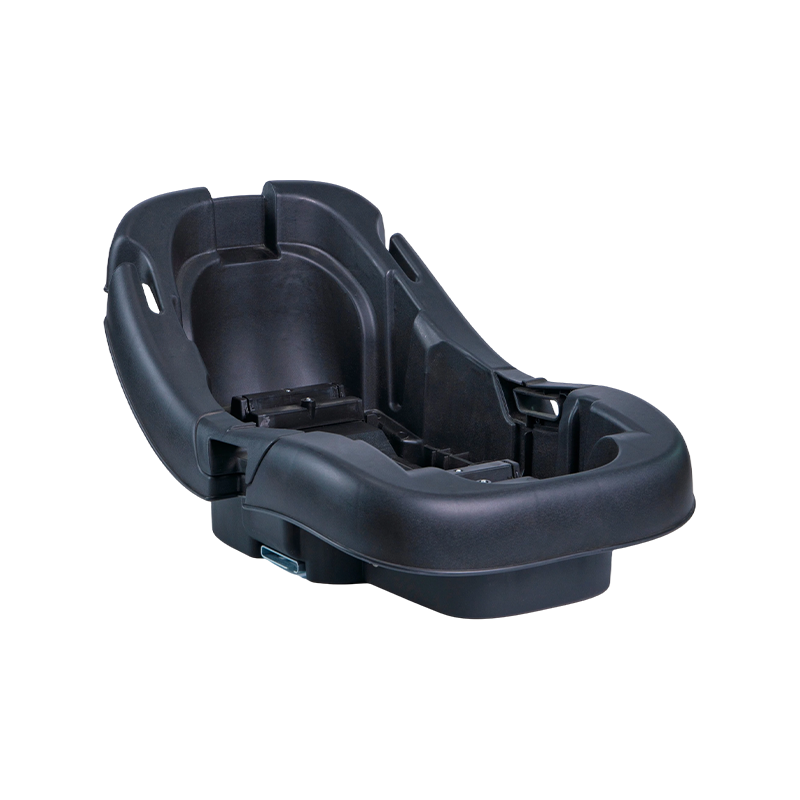 Custom R44 Standard Infant new born baby carrier car seat Group 0+ Suppliers, OEJIANGSU HAPPY BABY SAFETY SEAT CO., LTD. is China R44 Standard Infant new born baby carrier car seat Group 0+ Suppliers and OEM Factory, ...View Product →
One note on secondhand seats: unless you know a used seat's full history—no crashes, no missing parts, a readable manufacture date, and no visible damage—skip it. A seat that has been through a crash can have hidden structural damage that compromises its next use.
Stage 2 – About 6 Months to 4 Years: Rear-Facing and Forward-Facing Convertible Seats
Once your baby outgrows the infant carrier, the next seat is a convertible or multi-group seat that can face both directions. These are labeled Group 1, Group 1-2-3, or with an R129 height range such as 40–105cm or 76–150cm. A single seat can cover your child from around 6 months all the way to 12 years, depending on the model.
Here is the single most important rule of this stage: stay rear-facing as long as possible. The R129 standard makes rear-facing mandatory until at least 15 months and 76cm. The AAP recommends keeping children rear-facing until age 2 or the seat's upper height or weight limit, and NHTSA advises that children between 1 and 3 years stay rear-facing as long as possible. Extended rear-facing is the safest way for a toddler to ride.
So, can you turn your baby forward-facing at 1 year old? Legally, many places set the minimum at 12 months, but the safety recommendation is to wait longer. Fifteen months is the absolute floor under R129, and waiting until age 2 or beyond is even better. Decide based on three conditions, not the birthday alone:
- Your child is at least 15 months old, ideally closer to 2 years.
- Your child's height and weight are within the forward-facing limits printed in the seat manual.
- Your child can hold their head upright without fatigue, even when falling asleep in the car.
When you do switch to forward-facing, re-check the harness: shoulder straps must be at or above the child's shoulders, the straps must be snug enough that you cannot pinch a fold, and the chest clip should sit at armpit level. The same five-point harness rules apply whether the seat is rear-facing or forward-facing, but the shoulder strap position is different for each direction.
Rotating seats make this entire transition easier in daily life. A 360° rotating seat spins toward the door for loading and unloading, then locks back into the driving position, without reinstalling the seat for a direction change. Our 360° rotating rear-facing and forward-facing car seats (40–150cm) cover the full range from newborn up to about 150cm, which means one seat can serve a child from Stage 1 through the booster years.
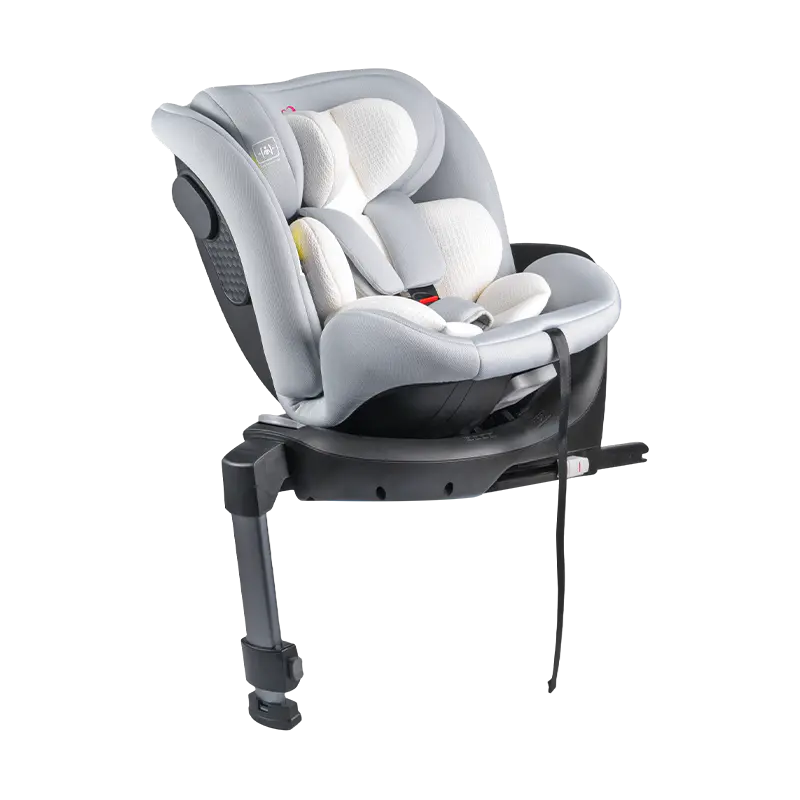 Custom R129 Standard ISOFIX + support leg 360 Rotation Rearward/Forward facing bJIANGSU HAPPY BABY SAFETY SEAT CO., LTD. is China R129 Standard ISOFIX + support leg 360 Rotation Rearward/Forward facing baby car seat 4...View Product →
Stage 3 – About 4 to 7 Years: Forward-Facing Seats with a Five-Point Harness
Once the seat faces forward, the five-point harness should keep protecting your child until they outgrow its upper limits. Many parents assume that reaching 18kg (roughly 40 lbs) means the child can move to a booster or the adult seat belt. That assumption is incorrect. The adult seat belt is designed for bodies of about 145–150cm and taller. Before that height, the shoulder belt cuts across the neck and the lap belt rides over the abdomen, creating a risk of serious internal injuries in a crash.
Keep your child in the five-point harness until one of these happens:
- The child's shoulders are above the top harness slot.
- The child's ears are above the top edge of the seat shell or headrest.
- The child exceeds the harness's rated weight limit (typically 18–25kg, depending on the model).
Multi-group seats such as Group 1-2-3 (9 months to 12 years) are designed to handle this entire period. In these seats, the five-point harness can be removed once outgrown, and the same seat then transforms into a high-back booster. This "one seat for over a decade" approach is popular across Europe because it eliminates the need to buy a separate booster later.
Stage 4 – About 6 to 12 Years: Booster Seats
Booster seats solve a geometric problem: the vehicle's seat belt is routed for an adult's proportions. A booster raises the child so the lap belt sits on the upper thighs and the shoulder belt crosses the collarbone and chest—not the neck or stomach. Under R129, high-back boosters start at 100cm, while backless boosters typically start at 125cm. High-back models add side support and are the better choice for children who sleep in the car or ride in vehicles without adjustable head restraints.
When can your child use just a seat belt? The answer requires a three-part test, not a single age:
- Posture: The child sits with their back flat against the vehicle seat and their knees bending naturally over the seat edge. This usually corresponds to a height of about 145–150cm.
- Shoulder belt position: The belt crosses the middle of the shoulder and chest, not the side of the neck.
- Lap belt position: The belt rests on the hips and upper thighs, not the abdomen.
There is a fourth, often overlooked condition: the child must maintain this correct position for the entire ride, without slouching, leaning, or tucking the belt under an arm. Most children do not meet all four conditions until age 10–12, so plan for a booster phase that lasts several years. High-back models such as our high-back booster seats with ISOFIX (100–150cm) provide solid head and side support throughout that period.
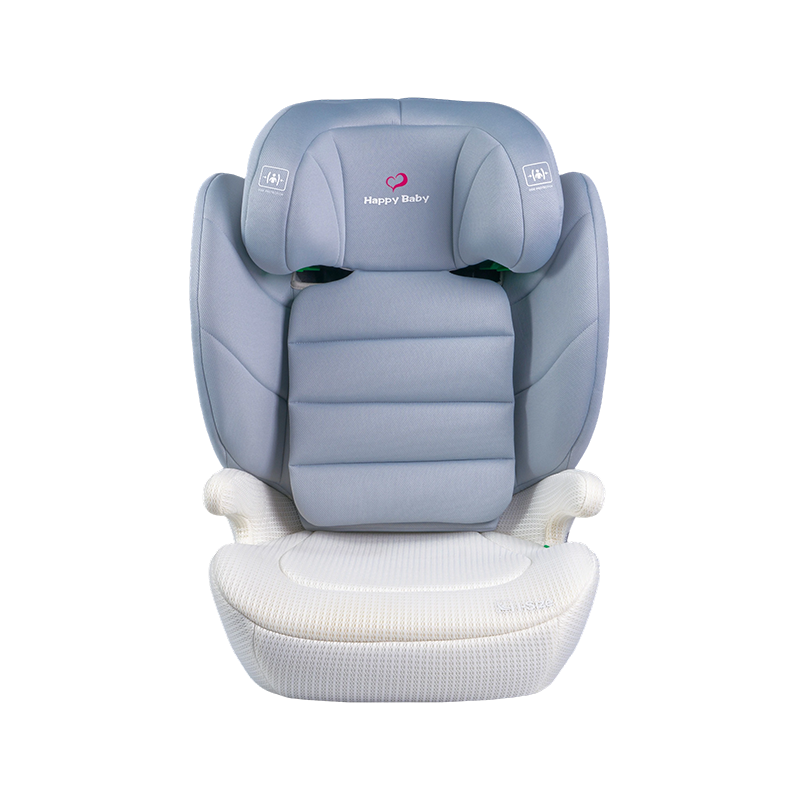 Custom R129 Standard ISOFIX High backrest Booster 100-150cm Suppliers, OEM/ODM FJIANGSU HAPPY BABY SAFETY SEAT CO., LTD. is China R129 Standard ISOFIX High backrest Booster 100-150cm Suppliers and OEM Factory, details...View Product →
Quick Reference: Age-by-Age Car Seat Chart
Use this chart as a fast visual guide. Remember that every child grows differently, so height and weight limits in your specific seat manual always take precedence.
| Stage | Approx. Age | R129 Height | R44 Group | Seat Type | Direction |
|---|---|---|---|---|---|
| Newborn | 0–6 months | 40–75cm | 0 / 0+ | Infant carrier | Rear-facing |
| Infant to toddler | 6 months–4 years | 40–105cm or 76–150cm | 0+ / 1 | Convertible or multi-group | Rear-facing, then forward |
| Preschool | 4–7 years | 105–125cm | 2 | Forward-facing harness seat | Forward-facing |
| School age | 6–12 years | 125–150cm | 3 | Booster seat | Forward-facing |
| Seat belt | 10–12+ years | 145–150cm+ | — | Adult seat belt | — |
Putting the Age Guide Into Practice
The reliable way to remember car seat ages: treat age as a starting point, then confirm with height, weight, and how the seat fits your child. Keep the rear-facing position for as long as possible—at least 15 months under R129 and longer whenever the seat allows. Keep the five-point harness until it is genuinely outgrown, and keep the booster until the adult seat belt fits correctly across the shoulder, hips, and thighs.
Before every transition, measure your child and check the seat manual's limits. The few extra minutes of verification are the best protection you can offer on the road. If you are ready to select the right seat for your child's current height and weight, browse our full range of car seats or contact our team for personalized guidance.
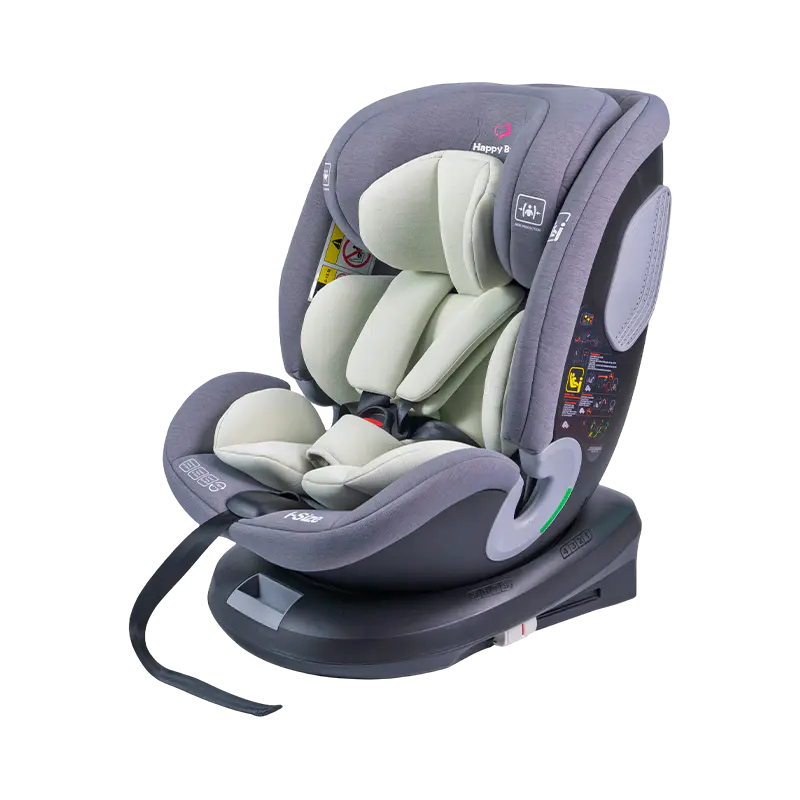

For the safety of babies' travel, we are committed to being a reliable partner for babies and families, and to becoming an expert in children's car safety seats. This is our eternal pursuit.
Contact Us
For exclusive deals and latest offers, sign up by entering your email address below.
CONTACT INFORMATION
-
Address: North of Sitong Road and west of Lianfu Port, Hongqiao Industrial Park, Taixing City, Jiangsu Province
-
Phone: +86 15996087029
-
E-mail: [email protected]
Copyright © JIANGSU HAPPY BABY SAFETY SEAT CO., LTD. All Rights Reserved.
Wholesale Child Travel Safety Seat Factory