
 English
 中文简体
 Home / News / Industry News / R129 vs R44 Car Seats: Key Differences, Safety Standards, and Buying Guide

Industry News
R129 vs R44 Car Seats: Key Differences, Safety Standards, and Buying Guide
2026-11-26
Content
- 1 R129 vs R44: The Difference Starts With How the Seat Is Approved
- 2 Weight Groups vs Height Bands: Why the Fit Changes
- 3 Crash Testing: What R129 Adds Beyond the R44 Test
- 4 Installation: Belts, ISOFIX, Support Legs and Top Tethers
- 5 What the Difference Means on the Factory Floor
- 6 Sourcing and Stocking: How to Compare R129 and R44 Ranges
- 7 The Product Range in Practice: From Infant Carrier to Booster
- 8 Common Misunderstandings That Affect Safety and Sales
- 9 Frequently Asked Questions
- 9.1 What is the main difference between R129 and R44?
- 9.2 Is an R129 seat required for every child?
- 9.3 Can an R44 seat be used with ISOFIX?
- 9.4 Does R129 always mean rearward-facing for longer?
- 9.5 Why do R129 seats use height instead of weight?
- 9.6 What should I check before buying an i-Size seat?
- 9.7 Is a high-back booster better than a backless booster?
- 9.8 How can I tell whether a seat is genuinely approved?
R129 vs R44: The Difference Starts With How the Seat Is Approved
Every Happy Baby safety seat is engineered to one of two European approval routes: ECE R44 or ECE R129/i-Size. The difference is not a label change. It affects how the child is classified, how the seat is tested, how it installs in the vehicle, and what a parent or buyer should verify before the seat is used.
The short answer is this: R44 is a mature, weight-based system with a long vehicle fleet history. R129 is a newer, height-based system with a stronger side-impact focus, expanded dummy testing, and clearer installation logic for i-Size seats. Neither standard is automatically “better” in every vehicle. The correct choice depends on the child’s height and weight, the vehicle’s seating position, the installation method, and the documents that accompany the seat.
| Comparison point | ECE R44 | ECE R129 / i-Size |
|---|---|---|
| Primary classification | Child weight groups, from Group 0 to Group 3 | Child height bands, such as 40–105 cm, 76–150 cm, and 100–150 cm |
| Crash test focus | Frontal impact test with established dummy families | Frontal and side-impact assessment with Q-series dummies and stricter performance criteria |
| Side impact | Not assessed as a separate mandatory crash test in the original R44 framework | Side-impact protection is a core part of R129 evaluation |
| Installation logic | Seat belt and ISOFIX options, depending on the approval | i-Size seats use ISOFIX; R129 also covers other seat categories with specific installation rules |
| Vehicle fit | Often checked against a vehicle list or the vehicle owner’s manual | i-Size seats are matched to vehicle seating positions approved for i-Size use |
| Label information | Weight group, approval number, and installation direction | Height range, i-Size marking where applicable, approval number, and installation limits |
For a manufacturer, the practical consequence is that an R129 seat cannot simply be an R44 shell with a new cover. The seat structure, side wings, headrest adjustment, ISOFIX arms, support leg or top tether, foam density, and label set all need to align with the approval route. For a parent, the consequence is simpler: read the height or weight range on the label, check the installation method in the vehicle, and confirm that the seat is approved for that seating position.
Weight Groups vs Height Bands: Why the Fit Changes
R44 organises child seats by weight. Group 0 covers up to 10 kg, Group 0+ up to 13 kg, Group 1 from 9 to 18 kg, Group 2 from 15 to 25 kg, and Group 3 from 22 to 36 kg. Many R44 products combine groups, which is why names such as Group 1-2-3 are common. The system is familiar because it has been used for decades, and it gives a clear weight-based limit for the seat.
R129 shifts the focus to height. A seat may be approved for 40–105 cm, 76–150 cm, 100–150 cm, or 125–150 cm. Height is easier to check at home, and it tracks the part of the body that interacts with the seat shell: the head, neck, shoulders, and hips. A child who is tall for their age may outgrow a weight-based seat earlier than expected, while a child who is heavy but short may remain within a height band for longer.
| System | Common classification | What it controls | Practical check |
|---|---|---|---|
| R44 | Group 0, 0+, 1, 2, 3 | Child weight range and seat category | Weigh the child and compare with the group marking |
| R44 | Group 1-2-3 | Long-use seat covering multiple weight stages | Check harness routing, booster mode, and headrest height |
| R129 | 40–105 cm | Rearward-facing infant and toddler use | Confirm the child’s height and the seat’s lower and upper limits |
| R129 | 76–150 cm | Convertible or long-use seat with rearward and forward stages | Check the minimum forward-facing height and the harness mode |
| R129 | 100–150 cm and 125–150 cm | Booster and high-back booster stages | Check belt routing, headrest fit, and vehicle belt geometry |
The height-band approach is helpful, but it is not a licence to ignore weight. A child at the lower end of a height band may still need the newborn insert, and a child near the upper limit may need a different seat even if the weight seems acceptable. In production, this is why our R129 and R44 ranges are kept separate rather than treated as one platform with different labels. The key differences between R44 and R129 car seats are visible in the shell geometry, insert design, and adjustment range.
Crash Testing: What R129 Adds Beyond the R44 Test
Both standards use dynamic sled tests that simulate a vehicle crash. The seat is mounted on a test bench, instrumented dummies are placed in the seat, and the assembly is subjected to a controlled acceleration pulse. Engineers then review head movement, chest loading, belt forces, and structural integrity. The difference is not that one standard tests crashes and the other does not. The difference is the test matrix, the dummy family, and the performance criteria.
R129 introduces the Q-series dummies, which are designed to represent children more closely across the height range. It also places much greater emphasis on side-impact protection. In a side impact, the child’s head can move toward the door, the neck can bend laterally, and the shoulder area can load against the seat’s side wing. R129 evaluates this scenario as part of the approval, which is why many R129 seats have deeper side wings, energy-absorbing foam, and a headrest that adjusts together with the harness.
Test coverage at a glance
R44 frontal test
R129 frontal test
R44 side impact
R129 side impact
Installation checks
This does not mean an R44 seat is unsafe. A correctly installed R44 seat that fits the child and the vehicle can provide strong protection. It does mean that R129 gives buyers more information about side-impact performance and child fit. For a factory, the added test requirements influence tooling and quality control. The side wings need consistent foam density, the headrest locking mechanism must hold its position, and the ISOFIX or belt path must remain stable under load. These are not cosmetic details; they are the parts of the seat that determine how the shell behaves in a crash.
Installation: Belts, ISOFIX, Support Legs and Top Tethers
R44 seats are often installed with the vehicle’s three-point belt, although ISOFIX versions also exist. Belt installation can work well, but it depends on the belt path, buckle clearance, and the installer’s attention to tension. A loose belt, a twisted strap, or a buckle that sits against the seat frame can reduce protection. R44 seats therefore rely heavily on clear routing diagrams and a stable belt path.
Under R129, i-Size seats use ISOFIX as the primary connection. Many i-Size seats add a support leg or a top tether to control rotation and pitch. A support leg transfers load to the vehicle floor, while a top tether anchors the upper part of the seat to a designated point in the vehicle. Both systems can be effective, but they are not interchangeable. The seat must be used exactly as approved, and the vehicle must have the corresponding anchor point.
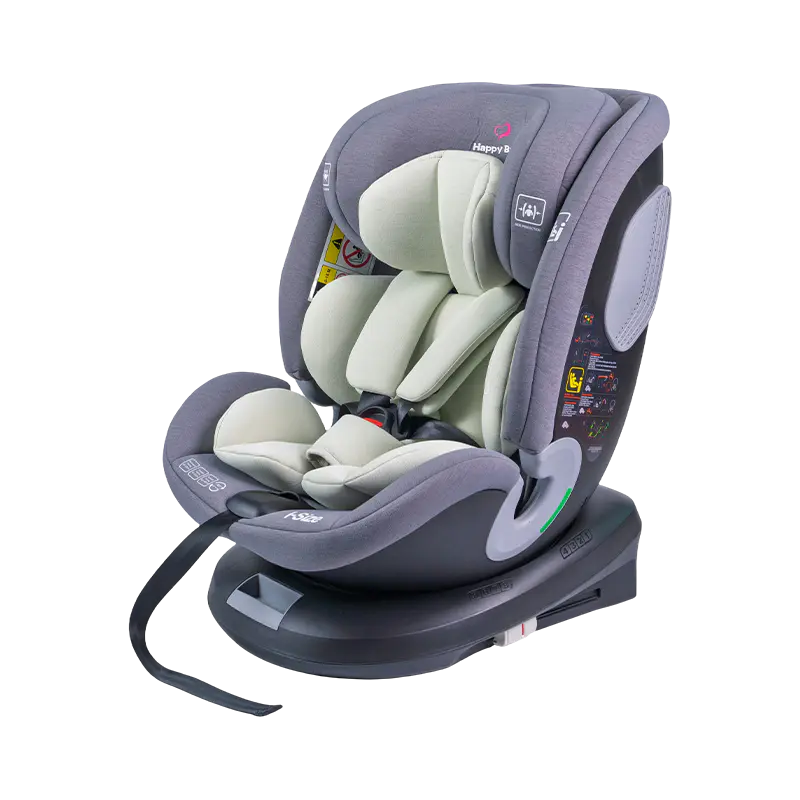
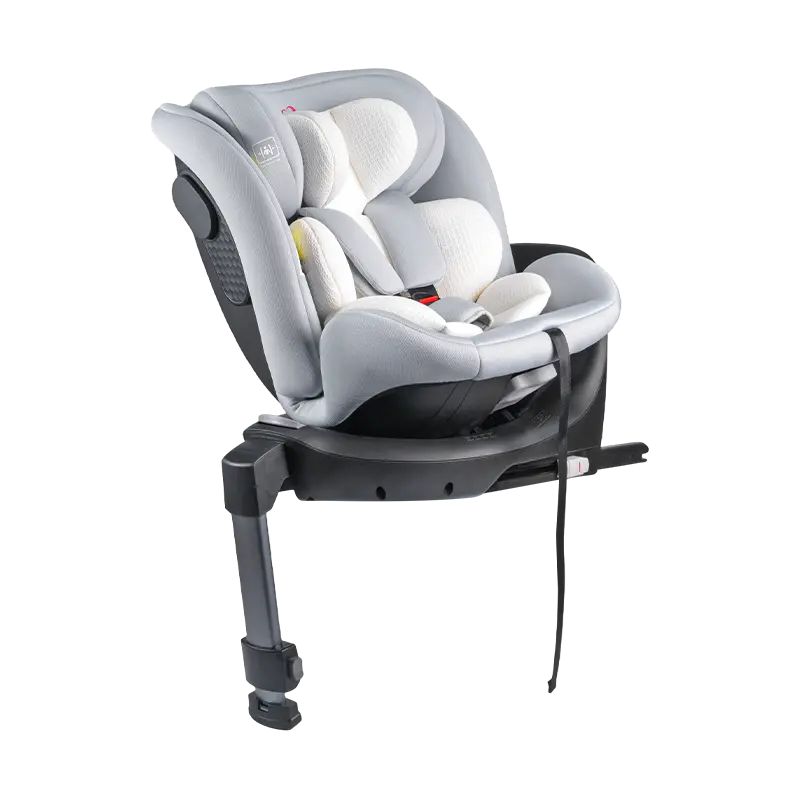 HB326 ISOFIX Support-Leg 360° Rotating i-Size Car SeatAn i-Size seat from 40–150 cm with ISOFIX and support leg, 360° rotation, and recline positions; relevant when checking structural rotation and approved use.View Product →
A 360-degree rotation feature is useful for loading and unloading, especially in tight parking spaces. It should not be confused with a safety function on its own. The seat must lock securely in the rearward or forward position, and the rotation mechanism must not introduce play in the shell. In our ISOFIX support-leg and top-tether designs, the rotation base is engineered as part of the structural system, not as an add-on. The same logic applies to recline adjustment: a reclining seat can improve comfort and head support, but the recline position must match the approved use for the child’s size and direction of travel.
Vehicle compatibility is the point where many purchases go wrong. An i-Size label does not mean the seat fits every car. It means the seat is approved to the i-Size framework and should be matched to a vehicle seating position that is suitable for i-Size use. For R44 seats, the vehicle list or owner’s manual still matters. Before ordering stock or fitting a seat for a child, check three things: the seat’s approval label, the vehicle’s seating position, and the physical clearance around the support leg, top tether, or belt buckle.
What the Difference Means on the Factory Floor
At our facility in Taixing, Jiangsu, the R44 and R129 product lines are managed as distinct engineering programmes. The company started in 2011, operates a 40,000-square-metre standardized plant, runs three assembly lines, and uses more than ten blow-moulding and injection-moulding machines. The production flow covers fabric design, layout, cutting, sewing, injection-moulded parts, assembly, and final inspection. That vertical control matters because an R129 seat depends on tighter coordination between the plastic shell, the foam, the textile cover, and the hardware.
An R44 Group 1-2-3 seat may prioritise long service life, simple belt routing, and a broad adjustment range. An R129 i-Size seat often requires a more complex headrest and harness system, a deeper side wing, and a base that interfaces with ISOFIX, a support leg, or a top tether. The mould design, shrink tolerance, and assembly fixture cannot be treated as identical. If the headrest moves unevenly, the harness can sit away from the child’s shoulders. If the ISOFIX arms are not aligned, the seat can be difficult to latch. These are the practical tolerances that separate a good sample from a stable production unit.
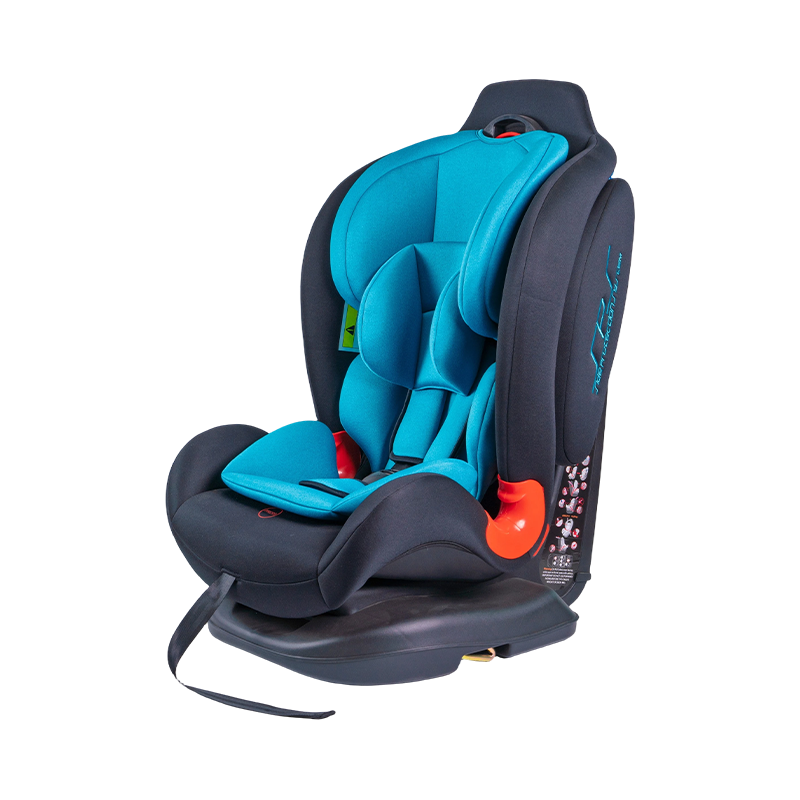
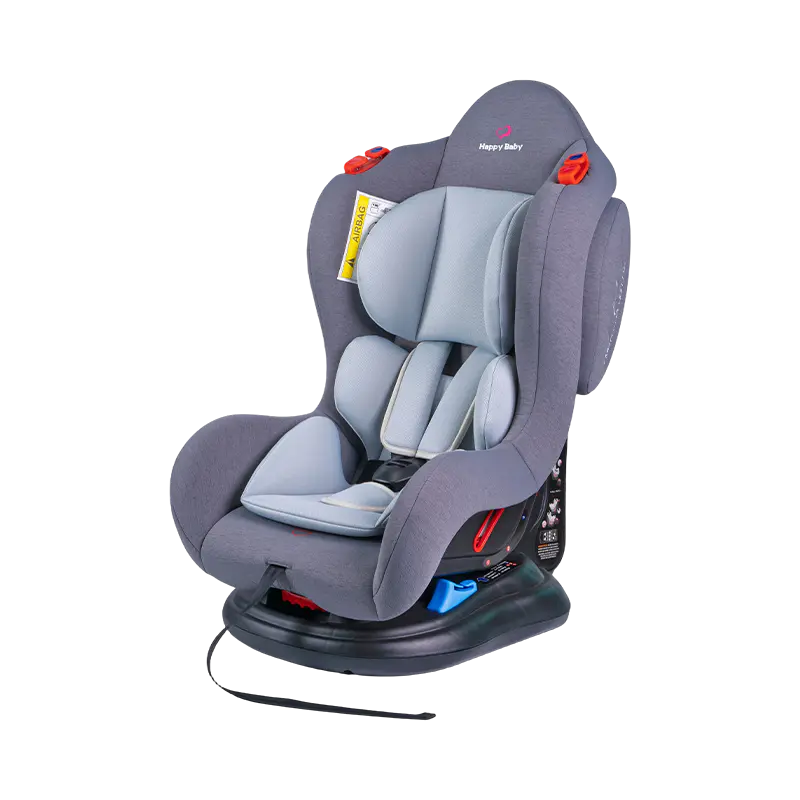
 HB919 PLUS Belted Reclining Group 0+/1/2 Car SeatECE R44/04 belted seat for birth to about 6 years and up to 25 kg, with recline and five-point harness; suited to familiar belt-installation markets.View Product →
The R44 line still has a clear role. It serves markets and vehicle fleets where weight-based approval is well understood, where belt installation is preferred, and where the vehicle list is already established. A belted reclining Group 1-2 seat, for example, can offer a practical balance of recline, harness adjustment, and familiar installation. The R129 line serves buyers who want height-based fitting, side-impact focus, and i-Size installation logic. Both lines follow the relevant ECE requirements, and both are supported by our ISO 9001 quality system and CCC-related production controls.
Quality control also differs in emphasis. For R44, the critical checks often focus on belt path geometry, harness buckle force, recline lock strength, and label durability. For R129, the checks extend to side-wing symmetry, headrest position retention, ISOFIX release force, support-leg height adjustment, and top-tether routing. A factory that understands both systems can explain why a particular seat is built the way it is, rather than simply quoting a standard number.
Sourcing and Stocking: How to Compare R129 and R44 Ranges
For importers, retail buyers, and brand owners, the R129 versus R44 question is also a range-planning question. The two standards can sit side by side in one catalogue, but they should not be presented as interchangeable. The label, the height or weight range, the installation method, and the target vehicle position all need to be clear at the point of sale. A confused range creates returns, fitting errors, and customer service costs.
Check the approval documents
Confirm the approval number, the standard, the child range, and the installation direction. The label on the production seat must match the documents supplied with the order.
Check the vehicle interface
For i-Size, confirm ISOFIX positions and whether a support leg or top tether is required. For R44, confirm belt routing and any vehicle list references.
Check the growth range
Compare height bands and weight groups against the market you serve. A 40–105 cm seat and a 76–150 cm seat solve different customer needs.
Check the service life
Review harness adjustment, cover removal, spare parts, and instruction clarity. A long-use seat must remain usable after repeated cleaning and adjustment.
| Area | R44 range | R129/i-Size range |
|---|---|---|
| Primary selling point | Familiar weight groups and broad vehicle experience | Height-based fit, side-impact focus, and i-Size installation |
| Label clarity | Group marking and weight limit must be prominent | Height range, i-Size marking, and direction limits must be prominent |
| Installation checks | Belt path, buckle clearance, and recline lock | ISOFIX latch, support leg or top tether, and rotation lock |
| Returns risk | Vehicle belt geometry and group mismatch | Vehicle position compatibility and height-band confusion |
| Documentation | Approval label, instruction manual, vehicle list where applicable | Approval label, i-Size information, installation manual, and anchor requirements |
The safest commercial approach is to segment the range by use case, not by jargon. A family replacing a newborn carrier may need a 40–105 cm rearward-facing seat. A family with a taller toddler may need a 76–150 cm convertible seat. A family moving into booster stage may need a 100–150 cm high-back booster. An R44 buyer may prefer a Group 1-2-3 seat for a familiar weight-based fit. Clear segmentation reduces the chance that a customer buys the wrong standard for the wrong reason.
The Product Range in Practice: From Infant Carrier to Booster
Our R129/i-Size range covers belted and ISOFIX configurations across several height bands. The belt-fitted i-Size seats include 40–105 cm and 76–150 cm options. The infant carrier line includes a newborn carrier seat designed for the first stage of travel. The ISOFIX range includes support-leg and top-tether versions with 360-degree rotation and rearward or forward-facing use across 40–150 cm. There is also a foldable ISOFIX i-Size seat for 76–150 cm, which can be useful where storage space is limited.
At the upper end, the i-Size booster range includes a 125–150 cm booster and an ISOFIX high-back booster for 100–150 cm. The high-back design matters because it guides the vehicle belt across the shoulder and supports the child’s head and torso. A backless booster can be convenient, but it depends more heavily on the vehicle seat shape and the child’s seated height. The R129 i-Size car seat range is organised so that the height band, installation method, and seat category are visible before a customer compares individual models.
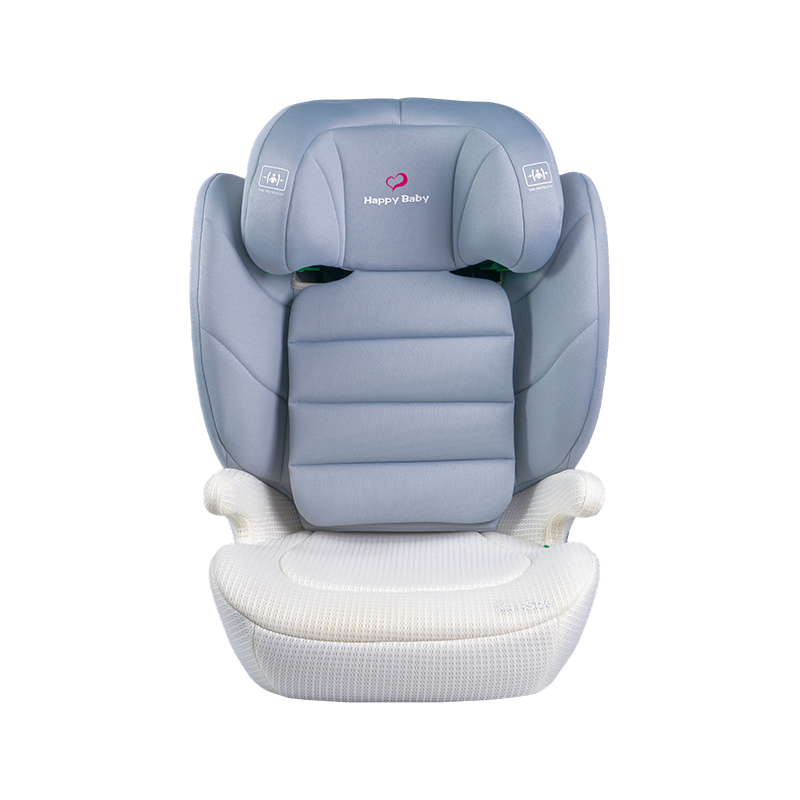 HB629 ISOFIX High-Back i-Size Booster 100–150 cmA forward-facing R129/03 i-Size booster for 100–150 cm with ISOFIX, side impact protection, and 13 headrest positions; useful when comparing high-back boosters.View Product →
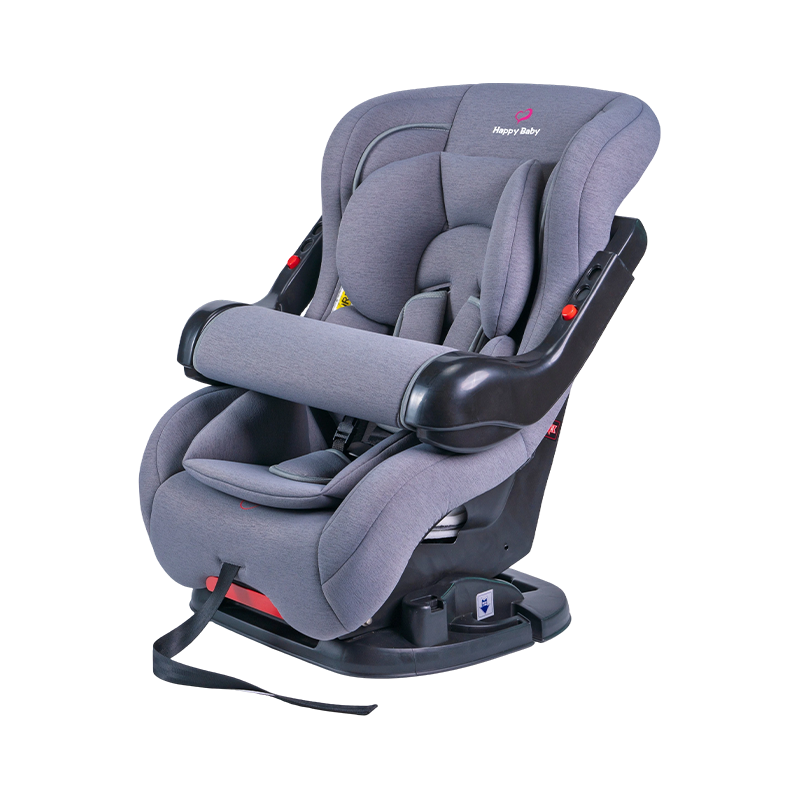
The R44 range follows the weight-group logic. It includes infant carriers with aluminium handles and standard newborn versions, Group 1 seats, Group 1-2 seats, Group 1-2-3 seats, and Group 3 booster seats with ISOFIX where applicable. Features across this line include belt fixing, adjustable recline, rearward and forward-facing use, five-point harnesses, and removable covers. The range is not a single universal seat; it is a set of products built around different weight stages and vehicle installation preferences.
For a buyer comparing the two families, the most useful question is not “which standard is newer?” It is “which seat matches the child, the vehicle, and the way the product will be used?” A 360-degree ISOFIX seat with a support leg solves a different problem from a lightweight belted Group 1-2 seat. An infant carrier with an aluminium handle solves a different problem from a 100–150 cm high-back booster. The standard is the approval framework; the product configuration is what the family actually lives with.
Common Misunderstandings That Affect Safety and Sales
“R129 is always safer than R44”
R129 adds side-impact assessment and height-based fitting, but a correctly installed R44 seat that matches the child and vehicle can still provide strong protection. The installation and fit matter as much as the standard label.
“R44 seats are no longer legal”
R44 has been phased down in some markets and product categories, but the legal status depends on the market and date. Buyers should check local rules rather than assume that every R44 seat is invalid.
“i-Size means it fits every car”
i-Size improves the matching logic, but the vehicle still needs a suitable seating position and, where required, ISOFIX anchors. A support leg or top tether must also be compatible with the vehicle.
“360 rotation is a safety feature by itself”
Rotation helps with loading and positioning. The safety benefit comes from correct locking, correct direction of travel, and a secure installation. A rotating seat with play in the base is not an advantage.
“A booster is just a cushion”
A booster changes how the vehicle belt fits the child. The shoulder belt must cross the correct point on the shoulder, and the lap belt must sit low across the hips. A poor belt fit can reduce protection.
“Height bands replace weight checks”
Height is the primary R129 classification, but weight still matters for newborn inserts, harness fit, and the child’s physical development. Always check both the label and the child’s fit.
These misunderstandings create real problems in retail and in use. A parent may reject a suitable R44 seat because they believe only R129 is legal. Another may buy an i-Size seat without checking whether the vehicle has the required anchor point. A third may move a child to a booster too early because the height number looks acceptable, while the shoulder belt still sits too close to the neck. Clear labelling, correct instructions, and a range that separates use cases are the practical answers.
Frequently Asked Questions
What is the main difference between R129 and R44?
R44 classifies seats by child weight and uses the established R44 test framework. R129 classifies seats primarily by child height, adds side-impact assessment, and uses Q-series dummies. i-Size is the ISOFIX-based part of the R129 framework. The practical difference is in how the child is matched to the seat and how the seat is installed.
Is an R129 seat required for every child?
No. The requirement depends on the market and the product category. Some markets have phased out certain R44 categories, while others still allow R44 seats under specific conditions. The seat label and local regulation are the decisive references. A correctly fitted R44 seat can still be appropriate where it remains legal and suitable for the child.
Can an R44 seat be used with ISOFIX?
Yes. R44 includes ISOFIX-approved seats as well as belt-fitted seats. The presence of ISOFIX does not make a seat R129. The approval label and the installation instructions define what the seat is approved for.
Does R129 always mean rearward-facing for longer?
R129 supports extended rearward-facing use, and many i-Size seats are designed to keep the child rearward-facing to a higher height. However, the exact limit is set by the individual approval. A 40–105 cm seat and a 76–150 cm seat may have different rearward-facing requirements, so the manual must be followed.
Why do R129 seats use height instead of weight?
Height is easier for parents to measure and it relates directly to how the child fits the shell, headrest, and harness. It also avoids some of the confusion caused by weight groups that overlap. Weight still matters for insert use, harness fit, and the child’s development, but height is the primary R129 classification.
What should I check before buying an i-Size seat?
Check the vehicle’s i-Size seating positions, the ISOFIX anchor points, and whether the seat requires a support leg or top tether. Confirm the child’s height against the seat’s lower and upper limits. Read the label and manual, and make sure the seat locks firmly in every approved position.
Is a high-back booster better than a backless booster?
A high-back booster provides head and torso support and helps guide the shoulder belt. A backless booster relies more on the vehicle seat shape. The better choice depends on the child’s height, the vehicle, and the booster’s approval. The belt must sit low across the hips and across the middle of the shoulder, never against the neck.
How can I tell whether a seat is genuinely approved?
Look for the approval label on the seat, the standard number, the approval number, the child range, and the installation direction. The label should match the manual and the documents supplied with the product. A seat without a clear label or with a label that does not match its configuration should not be used.
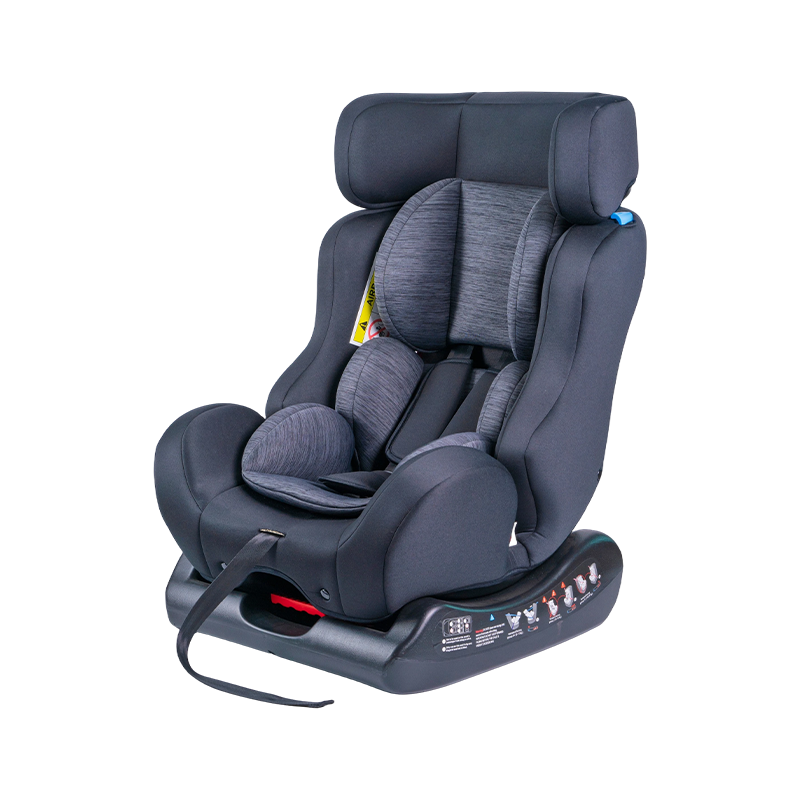
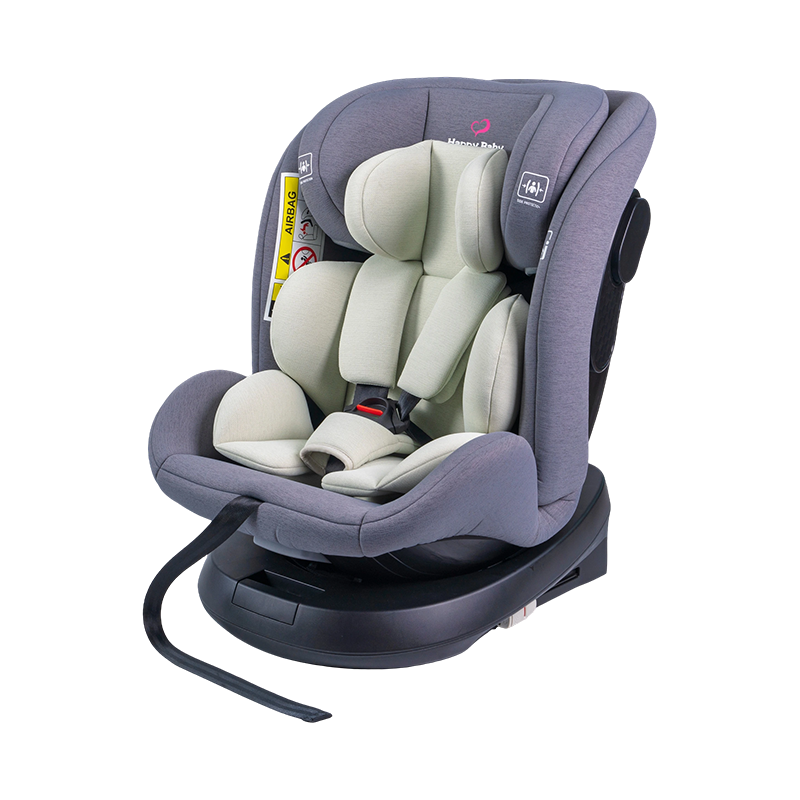

For the safety of babies' travel, we are committed to being a reliable partner for babies and families, and to becoming an expert in children's car safety seats. This is our eternal pursuit.
Contact Us
For exclusive deals and latest offers, sign up by entering your email address below.
CONTACT INFORMATION
-
Address: North of Sitong Road and west of Lianfu Port, Hongqiao Industrial Park, Taixing City, Jiangsu Province
-
Phone: +86 15996087029
-
E-mail: [email protected]
Copyright © JIANGSU HAPPY BABY SAFETY SEAT CO., LTD. All Rights Reserved.
Wholesale Child Travel Safety Seat Factory