
 English
 中文简体
中文简体 Home / News / Industry News / What age is an infant seat, and is it safe for a 2 month old to sit up
Industry News
What age is an infant seat, and is it safe for a 2 month old to sit up
2026-03-27
Content
- 1 What age is an infant seat?
- 2 Can I put my 2 month old baby in a sitting position?
- 3 The Advantages of an Adjustable Infant Seat
- 4 How long to stay in an infant seat?
- 5 FAQ:
- 5.1 Scientific Fact: What is Positional Asphyxia?
- 5.2 Q1: My baby looks "squished" in the seat; can I remove the inserts?
- 5.3 Q2: If my baby falls asleep in the car, can I let them keep sleeping in the seat at home?
- 5.4 Q3: Can I buy a second-hand infant seat?
- 5.5 Q4: Is it okay to wear a winter coat in the car seat?
- 5.6 Q5: What if my 2-month-old insists on sitting up to see the world?
What age is an infant seat?
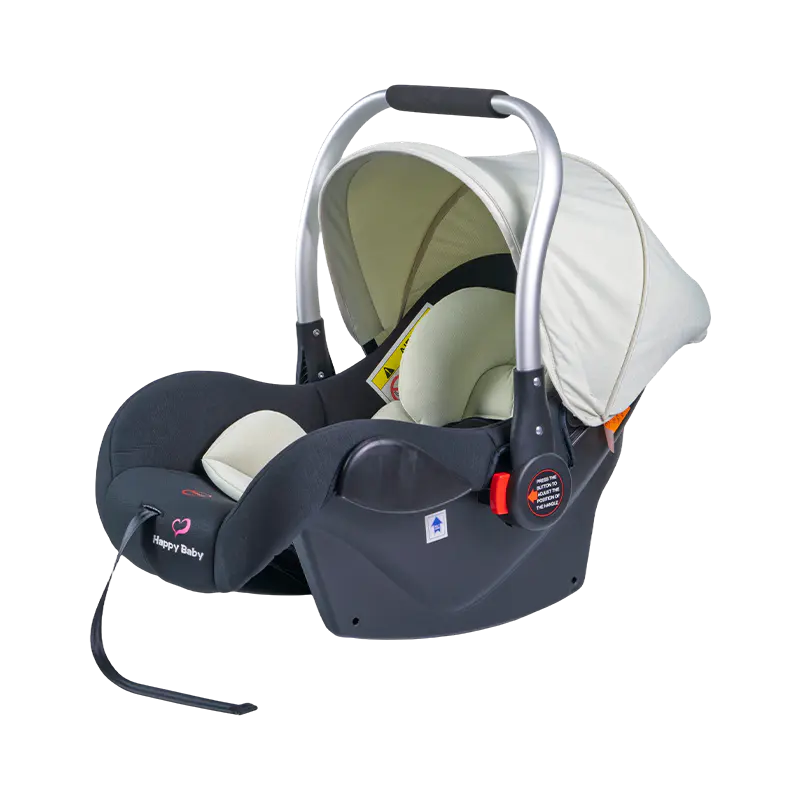
From the moment you bring your newborn home, your primary mission is to ensure their absolute safety during travel. For many new parents, the most fundamental and critical question is: What age is an infant seat? In other words, how long can this "carrier-style" or "rear-facing only" seat, specifically designed for the earliest stages of life, stay with your child?
Typically, an infant car seat is designed for babies from birth (newborn) up to approximately 12 to 15 months. However, age is merely a rough reference point. In the world of child safety, physical developmental markers—specifically height and weight—are the true deciding factors for when to switch seats.
The design intent of an infant seat is high-level containment. It acts like a rigid cocoon, absorbing impact forces and protecting the infant's underdeveloped head, neck, and spine. When parents ask, "What age is an infant seat?" the more accurate answer is: until your child reaches the maximum limits printed in the seat's manual.
Key Specifications and Transition Metrics Comparison
| Dimension | Infant Car Seat | Convertible Seat |
| Typical Age Range | Birth to 12-15 months | Birth to 4 years and up |
| Weight Limit | Approx. 13kg - 15kg (28-35 lbs) | Approx. 18kg - 30kg+ (40-65 lbs+) |
| Height Limit | Must have at least 2.5cm (1 inch) of space from head to top | Varies by brand, usually much higher |
| Installation Direction | Rear-facing only | Rear-facing or Forward-facing |
| Portability | Features a handle, detachable from base, stroller compatible | Heavy, stays fixed in the car, not portable |
Why "Rear-Facing" Is Non-Negotiable
When discussing What age is an infant seat?, the baseline of safety standards must be emphasized. Most international safety organizations recommend that children remain rear-facing for as long as possible until they reach the maximum limit of their seat.
Before the age of one, an infant's head accounts for about 25% of their total body weight, and their neck ligaments and bones are still in the process of ossification. In a frontal collision, a rear-facing seat allows the infant's entire back to absorb the force, preventing the head from jerking forward and causing spinal cord injury. Therefore, even if a child reaches one year of age, if their height and weight are still within the infant seat's limits, continuing to use it is generally safer than switching to a forward-facing seat too early.
Can I put my 2 month old baby in a sitting position?
By around 8 weeks, a baby’s curiosity about the world begins to surge. Parents often find themselves asking: Can I put my 2 month old baby in a sitting position? After all, seeing your baby struggle to lift their head to observe their surroundings makes it natural to want to help them "sit up."
From a physiological perspective, the answer requires great caution: It is not recommended to place a 2-month-old baby in a vertical, independent sitting position.
The Natural Rhythm of Spinal Development
At 2 months old, an infant's spine presents a large "C" curve, known as the primary curve. They have not yet developed the muscle strength required to support their torso, nor have they formed the secondary curves in the neck and lower back (which typically develop during the head-lifting and crawling stages).
If you attempt to make a baby "sit" at this stage, the following may occur:
C-Curve Collapse: Due to lack of back strength, the baby’s body will collapse forward or to the side.
Airway Risk: This is the greatest concern for safety experts. When a baby’s chin drops to their chest due to improper positioning, their narrow airway can become compressed, leading to Positional Asphyxia.
Muscle Overload: Forcing a baby into a position that does not belong to their current stage puts unnecessary pressure on fragile spinal joints rather than exercising the muscles.
Correct Methods of Assistance
While the direct answer to Can I put my 2 month old baby in a sitting position? is no, you can safely transition using these methods:
Semi-Reclined: Use an Adjustable Infant Seat to maintain a recline angle of 30 to 45 degrees.
Tummy Time: This is the true prerequisite for learning to sit. By lifting their head while on their stomach, the baby builds the neck, shoulder, and back muscles needed for future sitting.
The Advantages of an Adjustable Infant Seat
To meet the needs of infants at different developmental stages, the Adjustable Infant Seat has become a standard in modern parenting. This "adjustability" is not just for comfort; it is designed to match the infant’s ever-changing anatomy.
The Scientific Significance of Multi-Angle Adjustment
A high-quality Adjustable Infant Seat usually offers several recline positions. These are not set randomly; they serve specific functional purposes:
Newborn Mode (Maximum Recline): For newborns with absolutely no neck strength, a greater recline ensures the head rests naturally back, keeping the airway fully open.
Interaction/Feeding Mode (Moderate Recline): As the baby approaches 4-6 months and neck strength increases, a slightly higher angle provides a better view and can help reduce the chances of acid reflux.
Key Adjustment Parameter Recommendations
| Adjustment Part | Purpose | Safety Note |
| Recline Angle | Prevents head-tilt to protect airway | Must follow the level indicator when installed in the car |
| Harness Height | Ensures effective restraint during impact | For rear-facing, straps should be at or below shoulder level |
| Head Support | Limits side-to-side head movement | Only use the insert provided with the product; never add towels |
The Value of Modular Design
Another core feature of an Adjustable Infant Seat is the removable nature of the internal padding. Newborns require significant side padding to stabilize their bodies, but as they grow, these inserts must be removed. If left in too long, they can restrict growth space and cause distorted posture. This ability to adapt to growth is the true value of the "Adjustable" feature.
How long to stay in an infant seat?
Even if you own the most advanced seat, parents must understand a vital question: How long to stay in an infant seat? The "how long" here includes two meanings: the total lifespan of the seat for the child and the time limit for a single session.
The End of the Life Cycle: When to Retire the Carrier?
Many parents mistakenly believe a child must switch seats at exactly one year old. However, the scientific criteria are physical limits, not birthday candles. Regarding How long to stay in an infant seat?, observe these three "hard indicators":
The 1-Inch Rule: This is the most critical safety marker. When the baby is seated, if the top of their head is less than 1 inch (approx. 2.5 cm) from the top of the seat shell, you must switch, even if they haven't reached the weight limit.
Height and Weight Limits: Most infant carriers have a height limit between 76-81 cm (30-32 inches) and a weight limit around 13-15 kg (30-35 lbs).
Harness Position: In rear-facing mode, the harness slots must be at or slightly below the baby’s shoulders. If the straps are significantly below the shoulders even at the highest setting, the seat is too small.
Daily Usage Boundaries: The Famous "2-Hour Rule"
For daily travel, the answer to How long to stay in an infant seat? is: continuous use should not exceed 2 hours.
For infants 2-4 months old, it is recommended to shorten this interval to 1.5 hours. Medical research suggests that the semi-reclined posture in car seats can cause fluctuations in oxygen saturation over long periods.
Recommended Action: On long trips, stop every two hours to take the baby out of the seat, allowing them to stretch on a flat surface, change diapers, and engage in Tummy Time.
Beware of "Container Syndrome" and Developmental Traps
While the Adjustable Infant Seat provides great convenience, over-reliance on these "containers" can lead to developmental issues known as Container Baby Syndrome.
| Potential Impact | Physiological Manifestation | Preventive Measure |
| Positional Asphyxia | Head tilts forward, compressing the airway | Ensure correct recline; never use on non-rigid surfaces |
| Plagiocephaly (Flat Head) | Flattening of the back of the head from pressure | Reduce time spent in the seat outside of driving |
| Torticollis (Wry Neck) | Neck muscles tighten from leaning to one side | Encourage the baby to turn their head in different directions |
| Gross Motor Delay | Insufficient core strength for rolling or crawling | Ensure frequent, high-quality floor play time daily |
FAQ:
Scientific Fact: What is Positional Asphyxia?
Positional Asphyxia occurs when a person's body position prevents them from breathing adequately by compressing the airway. In an infant seat, if the recline is insufficient or the baby lacks neck strength, the head may fall forward (chin-to-chest), obstructing the airway. This is why the installation of an Adjustable Infant Seat must strictly follow the level indicators.
Q1: My baby looks "squished" in the seat; can I remove the inserts?
Adjustable Infant Seats usually come with newborn inserts. These are meant to fill gaps and prevent a tiny infant from moving during a crash. They can usually be removed once the baby reaches 5-6 months or their shoulders are clearly restricted, but you must consult the product manual specifically. Never remove or add parts that have not been crash-tested for that seat.
Q2: If my baby falls asleep in the car, can I let them keep sleeping in the seat at home?
Absolutely not. Car seats are designed to save lives during collisions, not as sleep furniture. When the seat is removed from its base and placed on the floor, the recline angle can change, significantly increasing the risk of airway obstruction. The only standard for safe sleep is: flat, firm, and empty.
Q3: Can I buy a second-hand infant seat?
It is highly discouraged. Infant seats have an expiration date (usually 6-10 years as plastic degrades), and their internal structure may be compromised if they have been in a moderate-to-severe crash. If you cannot verify the seat's complete history and crash records, always buy new.
Q4: Is it okay to wear a winter coat in the car seat?
Safety Tip: Bulky clothing creates a large gap between the harness and the baby’s body. During a crash, the fabric compresses, leaving the harness too loose to be effective. It is recommended to secure the harness first, then place a coat or blanket over the outside of the straps.
Q5: What if my 2-month-old insists on sitting up to see the world?
For parents asking Can I put my 2 month old baby in a sitting position?, the best advice is balance. The seat should be a tool for transportation, not a living space. A 2-month-old doesn't need to "sit" to see the world; they need to "lie down" to explore it. By spending time on a play mat, they are building the strength required to sit independently in the future.
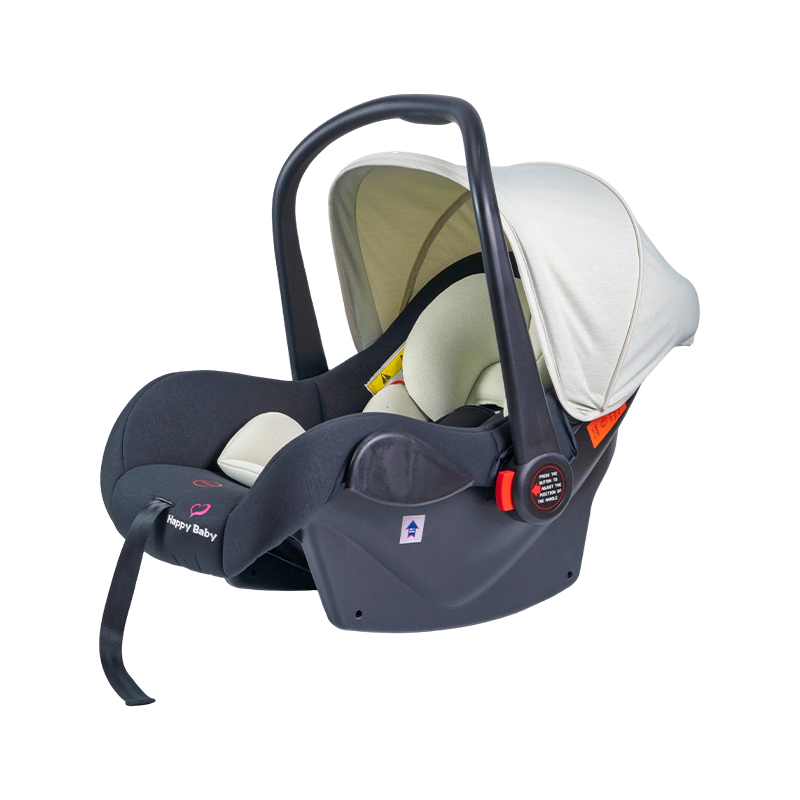


For the safety of babies' travel, we are committed to being a reliable partner for babies and families, and to becoming an expert in children's car safety seats. This is our eternal pursuit.
Contact Us
For exclusive deals and latest offers, sign up by entering your email address below.
CONTACT INFORMATION
-
Address: North of Sitong Road and west of Lianfu Port, Hongqiao Industrial Park, Taixing City, Jiangsu Province
-
Phone: +86 15996087029
-
E-mail: [email protected]
Copyright © JIANGSU HAPPY BABY SAFETY SEAT CO., LTD. All Rights Reserved.
Wholesale Child Travel Safety Seat Factory