
 English
 中文简体
 Home / News / Industry News / Car Seat Groups 0+, 1, 2 and 3 Explained: Which One Fits Your Child Safely

Industry News
Car Seat Groups 0+, 1, 2 and 3 Explained: Which One Fits Your Child Safely
2026-11-17
Content
- 1 Group 0+ Starts With Rear-Facing Geometry, Not a Birth Date
- 2 Group 1 Is Where Harness Routing and Shell Depth Decide Comfort
- 3 Group 2 and Group 3: A Booster Corrects the Belt, Not the Child’s Age
- 4 R44 Groups and R129 i-Size Heights Are Two Different Languages
- 5 A Practical Range Chart for Group 0+, 1, 2 and 3
- 6 Which One Fits Your Child? Use Height, Weight and Rear-Facing Tolerance
- 7 Installation Variables That Change the Answer More Than the Label
- 8 Harness Fit, Clothing and Daily Checks
- 9 Travel, Second Cars and Spare Seats
- 10 Common Buying Risks With Group 0+, 1, 2 and 3 Seats
- 11 Factory Checks Behind a Reliable Group 1 or i-Size Seat
- 12 FAQ: Car Seat Groups 0+, 1, 2 and 3
- 12.1 Is Group 0+ the same as Group 0?
- 12.2 Can a Group 1 seat be used rear-facing?
- 12.3 When should a child move from Group 1 to Group 2?
- 12.4 Is a high-back booster better than a backless booster?
- 12.5 Does an i-Size seat replace the Group 0+, 1, 2 and 3 labels?
- 12.6 How tight should the harness be?
- 12.7 Can I use a Group 2 or Group 3 booster with a lap belt only?
- 12.8 How much movement is acceptable after installation?
- 12.9 When does a child no longer need a booster?
Group 0+ Starts With Rear-Facing Geometry, Not a Birth Date
A Group 0+ seat is a rear-facing restraint system, not simply a smaller version of a Group 1 seat. In the ECE R44 language, Group 0 covers roughly birth to 10 kg, while Group 0+ extends the rear-facing window to about 13 kg. That difference matters because a newborn’s head, neck and spine need the seat shell, insert and recline angle to share crash forces across the back. A seat that labels itself Group 0+ but leaves the baby’s chin close to the chest, or allows the head to flop forward in daily use, is not a fit even if the weight on the box says it is.
For an i-Size seat, the equivalent starting point is usually a 40–105 cm range. Height-based labelling is more useful in the first year because two babies at the same weight can have very different torso lengths. The practical check is whether the shoulder harness sits at or just below the shoulder line, the crotch pad sits flat against the body, and the newborn insert supports the head without pushing the chin down. If the insert is removed too early, the harness may sit too high and leave a gap at the collarbone. If it is kept too long, the baby may be pushed forward into a rounded posture.
 HB819 i-Size Infant Carrier Car SeatRear-facing infant carrier for 40–87 cm with seven harness heights, adjustable headrest, stroller compatibility and a four-position handle that doubles as a rocker.View Product →
Group 0+ infant carriers also introduce a handling question that weight labels do not answer. A carrier with an aluminum handle and a stable release mechanism is easier to move between car and home, but the handle must only be used in the position allowed by the manufacturer. A carrier that is convenient to lift but difficult to install correctly in the car is a poor trade. Check the belt path, the shoulder belt guide and the amount of side-to-side movement at the base before you focus on fabric or colour.
- Use the newborn insert only while the harness slots and head support match the manual.
- Keep the child rear-facing for the full Group 0+ window, not only until the first birthday.
- Check that the harness is snug across the hips and collarbone, with no slack at the waist.
- Check the recline angle on level ground and on the actual vehicle seat, because seat cushion slope changes the angle.
- Remove thick coats before tightening the harness; a puffy jacket can hide a loose harness.
Group 1 Is Where Harness Routing and Shell Depth Decide Comfort
Group 1 normally covers 9–18 kg, but the label is only a range. The real question is whether the seat can keep the child rear-facing comfortably, or whether the child has reached the rear-facing height limit and must move to a forward-facing configuration. A Group 1 seat with a five-point harness, adjustable headrest and multiple recline positions can serve a long torso child very differently from a seat with a shallow shell and fixed harness slots. The harness must pass through the correct slot for the selected direction; a slot approved for forward-facing use is not automatically correct for rear-facing use.
| Configuration | Typical range | Main benefit | Main check before buying |
|---|---|---|---|
| Belted rear-facing Group 1 | About 9–18 kg | Works in cars without ISOFIX and can be moved between vehicles | Belt path must be accessible and the buckle must not sit in the belt route |
| ISOFIX forward-facing Group 1 | About 9–18 kg harness stage | Reduces installation variation when the vehicle has compliant anchorages | Lower anchor weight limit, top tether or support leg requirement, and seat contour fit |
| 360-degree rotation ISOFIX | Often 40–150 cm in i-Size designs | Easier loading and switching between rear-facing and forward-facing positions | Rotation lock must engage clearly and the seat must not foul the vehicle door or centre console |
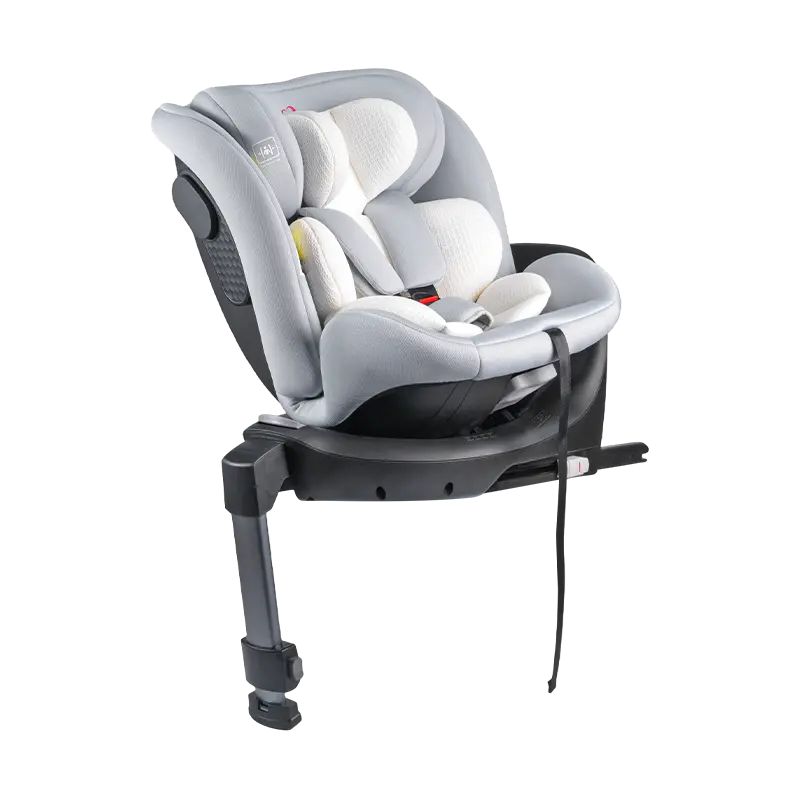 HB326 ISOFIX 360° Rotating Car Seati-Size seat with ISOFIX and support leg, 360-degree rotation, rear-facing from 40–105 cm and forward-facing options up to 150 cm, plus adjustable harness and headrest.View Product →
A deep shell is not automatically safer. A shell that is too upright for a sleeping child can cause the head to fall forward, while a shell that is too reclined may not fit behind the front seats. For a compact car, measure the distance from the rear seat cushion to the back of the front seat before choosing a rotating seat. For a taller child, check the top harness slot and the remaining head support height. These are the details that determine whether a Group 1 seat stays comfortable through the second and third year, rather than only passing the first fit check.
Group 2 and Group 3: A Booster Corrects the Belt, Not the Child’s Age
Group 2 is usually linked to 15–25 kg, and Group 3 to 22–36 kg. The purpose changes at this stage. A Group 2 or Group 3 booster raises the child so the vehicle’s three-point belt crosses the strong parts of the body: the lap section over the upper thighs and hip bones, and the shoulder section across the middle of the shoulder and chest. A booster that lets the lap belt ride over the stomach, or lets the shoulder belt press into the neck, is not doing its job even if the child is within the weight range. This is why high-back boosters with belt guides are often easier to fit than backless cushions in cars with low seat backs or unusual belt geometry.
For i-Size booster seats, the common ranges are 100–150 cm and 125–150 cm. The 100–150 cm high-back booster gives more head and side support for a younger booster user, while a 125–150 cm backless booster is more compact for older children and travel. The choice should follow the child’s seated height and the vehicle’s belt position, not only the age on the packaging. A child who still falls asleep in the car may need a high-back booster with a deeper side wing, while a tall, mature child may prefer a simpler booster that leaves more room for the shoulders.
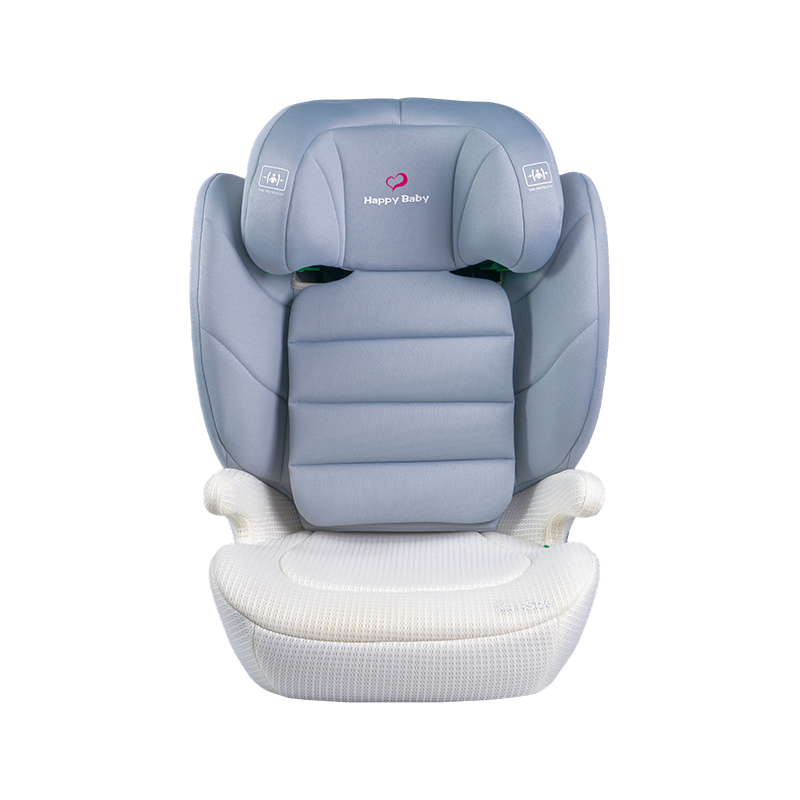 HB629 i-Size High-Back Booster SeatHigh-back i-Size booster for 100–150 cm with ISOFIX installation, side impact protection, 13-position headrest and a lightweight blow-molded cushion for moving between vehicles.View Product →
Do not move to a booster because the child has turned six or seven. Move when the forward-facing harness seat is outgrown by height or weight, and when the child can sit upright for the whole journey without sliding the shoulder belt under the arm or behind the back. A booster is a positioning tool, and a child who cannot stay in position gains little from it. In a vehicle with a narrow rear bench, check that the booster base does not overlap the buckle stalk, because a buried buckle encourages a twisted belt or an unbuckled seat.
R44 Groups and R129 i-Size Heights Are Two Different Languages
ECE R44 describes seats by weight groups, while ECE R129 describes them by height and, for i-Size, by a more controlled installation interface. A Group 1 seat and a 76–150 cm i-Size seat may both be forward-facing options, but they are not interchangeable labels. The i-Size route uses height bands and requires the seat to fit the vehicle according to the vehicle’s i-Size compatibility list or the seat’s approved installation method. The R44 route uses weight classes and allows more variation in vehicle fit. Neither system is automatically better; the correct answer depends on the child’s measurements, the vehicle and the seat’s approval.
| R44 label | Usual weight band | Typical i-Size height language | Practical meaning |
|---|---|---|---|
| Group 0+ | Birth to about 13 kg | 40–105 cm infant or convertible seat | Rear-facing start, often with a carrier or a fixed shell |
| Group 1 | About 9–18 kg | 76–105 cm or 76–150 cm depending on the seat | Harness stage; rear-facing can continue longer on some seats |
| Group 2 | About 15–25 kg | 100–150 cm high-back booster | Belt-positioning stage with head and side support |
| Group 3 | About 22–36 kg | 125–150 cm booster | Final belt-positioning stage before the adult belt fits correctly |
If you are comparing a Group 0+ carrier with an i-Size 40–105 cm seat, read the approval label and the vehicle list before comparing prices. A seat may be approved for a height range but still fit poorly in a particular rear seat because of the seat cushion angle or the position of the buckle. The R129 i-Size selection guide is useful for understanding why height bands and installation rules matter together, rather than as separate selling points.
A Practical Range Chart for Group 0+, 1, 2 and 3
The chart below is a planning aid, not a replacement for the seat label. The bars show the usual overlap between groups. The overlaps are the reason a child can be legally within two different groups at the same time, yet only one seat will fit well in a given car.
Group 0+
0–13 kg
Group 1
9–18 kg
Group 2
15–25 kg
Group 3
22–36 kg
i-Size infant
40–105 cm
i-Size booster
100–150 cm
Use the chart to narrow the shopping list, then use the child’s seated height and the vehicle’s rear seat shape to make the final decision. A child at 17 kg may still have a long torso and need the tallest harness slot in a Group 1 seat, while another child at the same weight may have outgrown the shell by height. The label tells you the approved range; the fit check tells you whether the range is usable in your car.
Which One Fits Your Child? Use Height, Weight and Rear-Facing Tolerance
The shortest answer is this: start with a rear-facing Group 0+ or 40–105 cm seat, continue rear-facing through the Group 1 window if the seat allows it, then move to a high-back booster when the harness seat is outgrown and the child can sit correctly with the three-point belt. The longer answer depends on three measurements: weight, seated height and the distance from the top of the head to the top of the seat shell.
Newborn to about 13 kg
Choose a rear-facing carrier or convertible with a newborn insert that supports the head and keeps the chin off the chest. Check the harness slot and the recline angle in the actual car.
About 9–18 kg
Use a Group 1 harness seat or continue with an i-Size seat that still has rear-facing height and weight capacity. The harness must be snug and the head support must still fit.
About 15–25 kg
Move to a high-back booster when the harness seat is outgrown. The lap belt must sit low over the hips, and the shoulder belt must cross the middle of the shoulder.
About 22–36 kg
Use a Group 3 or 125–150 cm booster until the adult belt fits without a booster. Check that the child does not put the shoulder belt behind the back or under the arm.
Rear-facing tolerance is the part many buyers overlook. Some children dislike the more reclined posture, while others sleep better in it. A 360-degree rotation seat can help with loading, but the rotation mechanism must lock firmly in both directions. If the seat wobbles at the rotation base after installation, the convenience is not worth the movement. For a second car used mainly for short trips, a lighter belted Group 1 seat may be more practical than a heavy rotating seat that is difficult to move between vehicles.
Installation Variables That Change the Answer More Than the Label
Two seats with the same group label can behave differently in the same car because installation is a system of forces, not a single buckle. A belted seat routes the vehicle belt through a specific path and relies on the belt tensioner and the seat’s geometry. An ISOFIX seat uses lower anchorages and may also require a support leg or top tether. A support leg transfers force to the vehicle floor, while a top tether transfers force to a designated anchor behind the seat. Using one without the other, when both are required, changes the approval condition.
- Check the vehicle manual for ISOFIX seating positions and any restriction on support legs or top tethers.
- Check the child seat manual for the maximum weight allowed on the lower anchors; some seats require the vehicle belt beyond a certain weight.
- Pull the seat at the belt path after installation. Movement should be minimal, and the seat should not slide forward or sideways.
- Check that the buckle stalk does not sit inside the belt path or press into the seat shell.
- Check the front seat position after installation; a rear-facing seat may need the front passenger seat moved forward.
Vehicle seat contours matter more than many buyers expect. A deep sports seat, a contoured rear bench or a centre seat with a hump can prevent the base from sitting flat. In that case, a different seating position may be the correct answer. The R129 i-Size seat range includes belted, ISOFIX, support-leg and top-tether configurations because no single installation method suits every vehicle and every child. The right choice is the one that can be installed correctly every time, including on a rainy evening when the child is tired and the light is poor.
Harness Fit, Clothing and Daily Checks
A correct harness fit is not a one-time event. The harness should be snug enough that you cannot pinch a horizontal fold at the collarbone, but not so tight that it leaves deep marks or restricts breathing. The chest clip, where fitted, should sit at armpit level. The harness should lie flat, with no twists, and the buckle should click clearly. In cold weather, remove bulky coats before tightening; a thin fleece is usually acceptable if the harness still fits snugly over it.
- Place the child in the seat and remove thick outer layers.
- Route the harness through the correct slots for the seat direction.
- Fasten the buckle and tighten the harness until slack is removed at the hips and shoulders.
- Check that the chest clip is level with the armpits and that the harness is not twisted.
- Check the head support and shoulder height as the child grows; move the headrest before the shoulders pass the slot.
- Check the installation movement at the belt path after every adjustment or seat change.
Daily checks also include the seat’s contact points. Food crumbs in the buckle, a twisted vehicle belt or a loose top tether can all change how the restraint performs. Clean the buckle according to the manual, not with solvent or lubricant. If a seat has been in a moderate or severe collision, replace it according to the manufacturer’s instructions, even if the shell looks intact. The same applies if the seat has been dropped from a height or if the harness webbing shows cuts, fraying or heat damage.
Travel, Second Cars and Spare Seats
Travel exposes the weakness in any group-based buying decision: the seat that fits the family car may not fit a rental car, a taxi or a grandparent’s vehicle. A Group 0+ carrier with a seat-belt base is often easier to move than a fixed ISOFIX seat, but the base must still be installed correctly. A foldable i-Size seat can be useful for occasional trips, but folding mechanisms add joints and handling steps that must be checked every time. A backless booster is compact, yet it depends heavily on the vehicle’s belt geometry and the child’s ability to stay in position.
Second car
Choose a seat with a simple belt path if the second car lacks ISOFIX, or a lightweight ISOFIX seat if the anchorages are easy to reach.
Air travel
Check the airline’s approval rules and the seat’s width. A carrier or compact convertible is usually easier to manage than a large rotating seat.
Grandparent car
Install the seat once and leave it in place when possible. A seat that is reinstalled for every short trip invites avoidable errors.
Taxi or rental
Carry the child’s own seat when practical. If using a spare booster, check the belt fit before moving off.
For a spare seat, do not choose by group label alone. Check the vehicle’s seat cushion length, the buckle position and the headrest. Some vehicles have fixed headrests that push a high-back booster forward, while others have deep buckets that make a backless booster sit unevenly. A quick test fit with the child present is more informative than a dimensions chart, because the belt path and the child’s seated posture interact.
Common Buying Risks With Group 0+, 1, 2 and 3 Seats
Most buying mistakes are not caused by a missing certification. They come from a mismatch between the approved range and the real use case. The table below lists risks that appear repeatedly in fit checks and returns, and the practical check that reduces each one.
| Risk | Where it appears | Practical check |
|---|---|---|
| Child outgrows the shell by height before the weight limit | Group 0+ and Group 1 | Measure seated height and check the top harness slot and head support before buying |
| Seat is too upright for a newborn | Group 0+ carrier or convertible | Test the recline angle on a level surface and in the actual vehicle |
| Support leg or top tether cannot be used in the chosen seating position | ISOFIX Group 1 and i-Size | Read the vehicle manual for approved positions and floor storage compartments |
| Booster places the lap belt on the stomach | Group 2 and Group 3 | Check that the belt sits low over the hips and that the belt guide is used correctly |
| Rotating seat fouls the door or centre console | 360-degree ISOFIX | Test the rotation arc with the child seat installed and the door closed |
| Harness cannot be tightened evenly | Group 1 harness seats | Check the splitter plate, harness slots and buckle operation before first use |
Factory Checks Behind a Reliable Group 1 or i-Size Seat
A seat group is a regulatory category, but the product is a manufactured assembly. The shell, insert, harness, buckle, recline mechanism and ISOFIX connectors all have tolerances. A moulded shell that is slightly out of tolerance can make the harness slots feel tight, while a buckle release that is too stiff can encourage parents to leave the harness loose. These are not abstract quality issues; they show up in daily use as a seat that is difficult to install correctly or uncomfortable for the child.
At a manufacturing level, the checks that matter include moulded-part consistency, webbing stitch quality, buckle cycle testing, harness adjustment smoothness and the fit between the insert and the shell. A production line with defined assembly steps and inspection points is better placed to catch these variations than a line that only checks the finished seat visually. This is the practical reason to look beyond the group label and ask how the seat is built, not only what range it claims.
JIANGSU HAPPY BABY SAFETY SEAT CO., LTD. operates from a 40,000 square metre factory in Taixing with three assembly lines and more than ten blow-moulding and injection-moulding machines. Its product development follows ECE R44, ECE R129, China GB and ISO 9001 requirements, and its range covers belted and ISOFIX seats, infant carriers, 360-degree rotation seats, foldable i-Size seats and boosters. That breadth is useful because the correct answer for a family is rarely one universal seat; it is the seat that matches the child’s height, the vehicle’s installation options and the daily loading routine.
FAQ: Car Seat Groups 0+, 1, 2 and 3
Is Group 0+ the same as Group 0?
No. Group 0 is usually birth to about 10 kg, while Group 0+ extends to about 13 kg. Both are rear-facing categories, but Group 0+ seats are often designed to keep a baby rear-facing for a longer part of the first year. Always use the seat’s own height and weight limits rather than the group name alone.
Can a Group 1 seat be used rear-facing?
Some Group 1 seats are approved for rear-facing use, while others are forward-facing only. The harness slots, recline positions and installation method may change with direction. Check the seat label and manual for the approved direction and weight range before turning the seat.
When should a child move from Group 1 to Group 2?
Move when the harness seat is outgrown by height or weight, not when the child reaches a particular birthday. The top of the head should remain within the shell’s allowed zone, the harness should still fit the shoulders, and the child should be ready to sit correctly with a three-point belt.
Is a high-back booster better than a backless booster?
A high-back booster usually provides more head and side support and helps route the shoulder belt for smaller children. A backless booster is compact and can work well for older children in vehicles with good belt geometry. The deciding factor is the belt fit and the child’s seated posture.
Does an i-Size seat replace the Group 0+, 1, 2 and 3 labels?
i-Size uses height bands and a different approval framework. It does not make the older group labels meaningless, but it changes how seats are selected and installed. A 76–150 cm i-Size seat and a Group 1 seat may overlap in use, yet their approval conditions are not identical.
How tight should the harness be?
The harness should be snug enough that you cannot pinch slack at the collarbone, with the chest clip at armpit level where fitted. It should not leave deep pressure marks or restrict breathing. Remove thick coats before tightening, because the harness can feel tight over a coat while still being loose against the body.
Can I use a Group 2 or Group 3 booster with a lap belt only?
No. A booster is designed to position a three-point belt. A lap-only belt does not provide upper-body restraint, and a booster cannot correct that. Use a harness seat approved for the vehicle and child instead.
How much movement is acceptable after installation?
Movement at the belt path should be minimal, and the seat should not slide forward or sideways. Check the manual for the manufacturer’s tolerance. A seat that moves more than the allowed amount, or that loosens after a short drive, needs to be reinstalled or replaced with a different installation method.
When does a child no longer need a booster?
A child can stop using a booster when the adult belt fits correctly without it: the lap belt sits low over the hips, the shoulder belt crosses the middle of the shoulder, and the child can sit upright for the whole journey. Height and seated posture matter more than age alone.
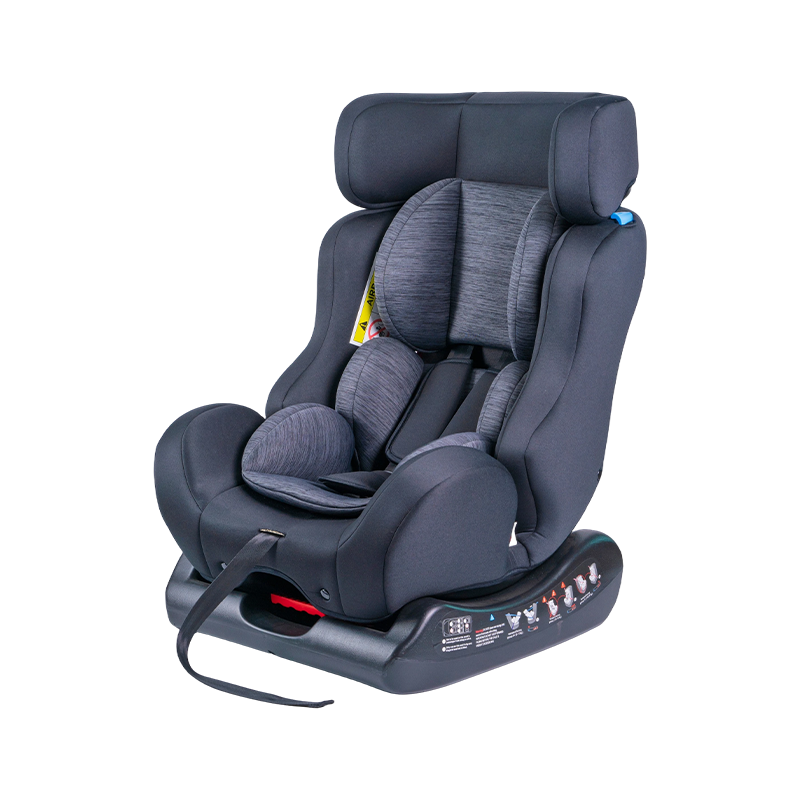
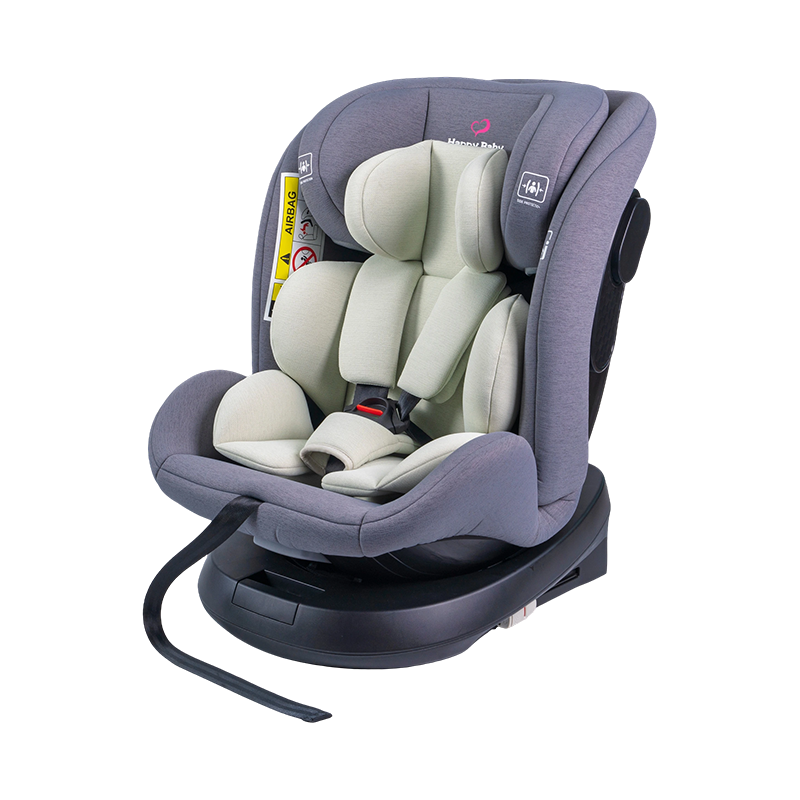

For the safety of babies' travel, we are committed to being a reliable partner for babies and families, and to becoming an expert in children's car safety seats. This is our eternal pursuit.
Contact Us
For exclusive deals and latest offers, sign up by entering your email address below.
CONTACT INFORMATION
-
Address: North of Sitong Road and west of Lianfu Port, Hongqiao Industrial Park, Taixing City, Jiangsu Province
-
Phone: +86 15996087029
-
E-mail: [email protected]
Copyright © JIANGSU HAPPY BABY SAFETY SEAT CO., LTD. All Rights Reserved.
Wholesale Child Travel Safety Seat Factory