
 English
 中文简体
中文简体

Industry News
How to Choose the Safest Baby Car Seat for Every Growth Stage
2026-05-15
Content
- 1 Side Impact Protection and Full-Period Adaptation: Scientific Choices for the Newborn Stage
- 2 Critical Growth Period at 1 Year Old: Seat Transition and Core Parameter Comparison
- 3 Flexibility and Portability: Solving Family Travel Pain Points
- 4 Pre-school and Older Children's Advanced Protection: The Indispensable Rear Guard
In the daily life of family parenting and travel, the choice of a car seat is directly related to the child's life safety and comfort. With the diversification of travel scenarios and the continuous upgrading of safety standards, the categories of seats for different age groups and functional focuses have become increasingly rich. How should parents choose among the wide range of products? This guide provides a scientific selection and application analysis based on professional technical parameters, application scenarios, and children's physical development characteristics.
Side Impact Protection and Full-Period Adaptation: Scientific Choices for the Newborn Stage
For newborns who have just left the hospital and entered the family, their neck muscles are not yet fully developed and their bones are extremely fragile. Therefore, in daily travel or long-distance journeys, a qualified newborn car seat is an indispensable safety barrier.
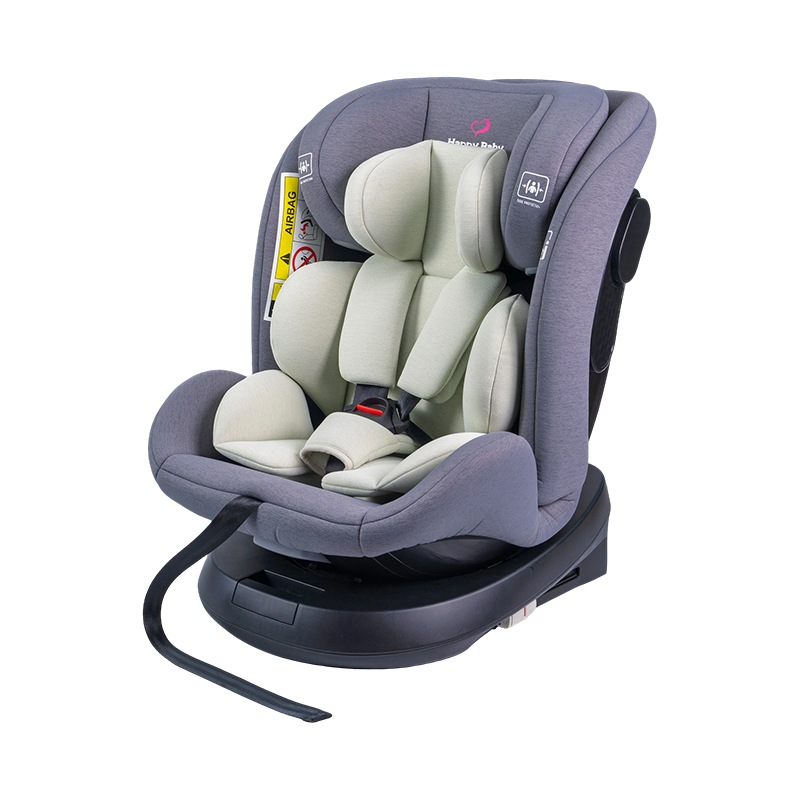
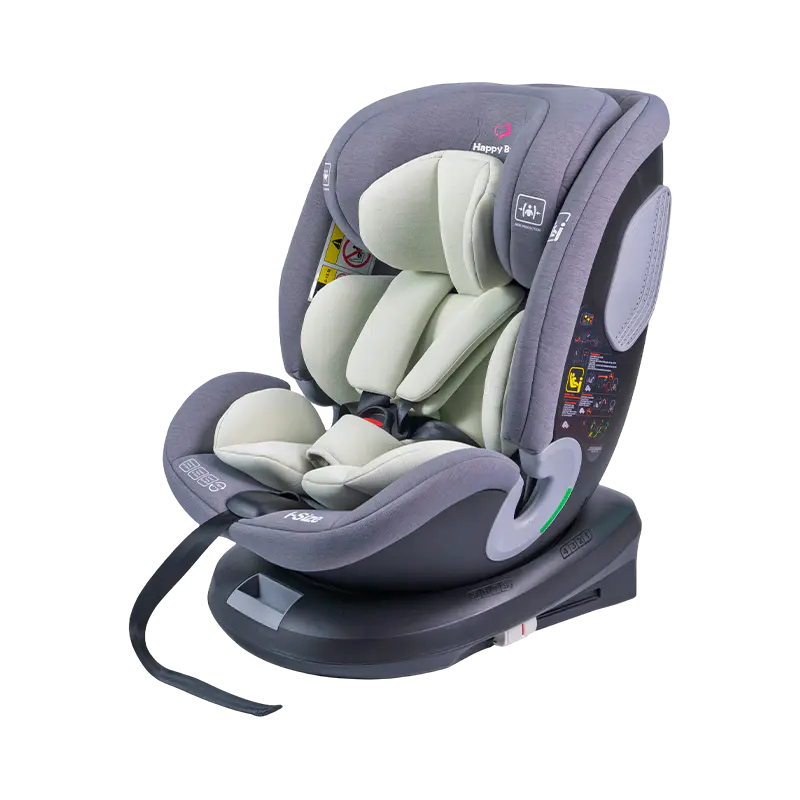
A professional newborn car seat is usually designed with a shell-like wrapping structure to simulate the comfort of the mother's womb while providing excellent side impact protection. During installation and daily use, these seats emphasize a large tilt angle for a lying position to prevent the newborn's head from leaning forward and compressing the airway. To ensure installation stability and reduce the error rate, mainstream products are equipped with isofix car seat interfaces. This rigid connection method locks the seat directly to the vehicle chassis, significantly improving anti-torsion capability and stability compared to traditional seat belt fixation.
Critical Growth Period at 1 Year Old: Seat Transition and Core Parameter Comparison
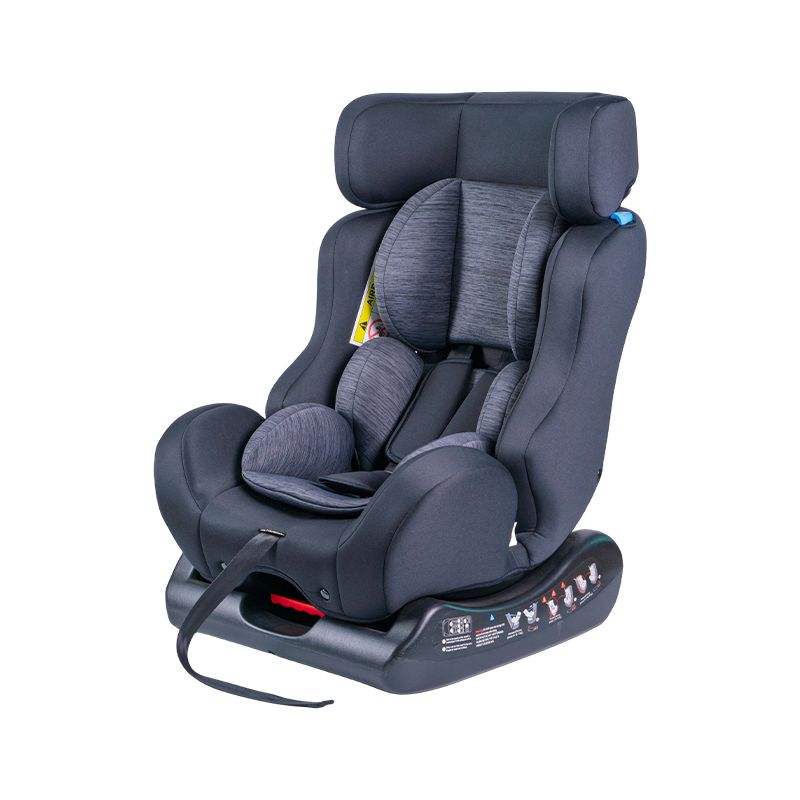
When a baby reaches about 1 year old, their weight usually reaches 9kg to 13kg, and their height increases significantly. At this time, the original infant carrier may feel cramped, making the selection of a suitable car seat for 1 year old a top priority for parents.
At this stage, the baby's ability to sit independently enhances, but the spine is still in a rapid development period. Professional organizations strongly recommend that toddlers around 1 year old should extend the time of rear-facing installation as much as possible. To facilitate parents in switching between forward and rear-facing and to make it easier to hold the baby in and out of the car, the 360 spin car seat has become a popular choice in recent years.
The following is a comparison of core professional parameters and functions between the mainstream 360 spin car seat and the traditional fixed isofix car seat for 1-year-olds:
| Evaluation Dimension | 360 spin car seat (Rotational) | Traditional Fixed isofix car seat |
| Installation Interface Type | Must be equipped with rigid isofix car seat interface + support leg/anti-rotation device | isofix car seat interface or vehicle three-point seat belt |
| Rotation Convenience | Supports 360-degree rotation with side hovering, convenient for getting in and out | Fixed direction, cannot rotate |
| Age Span | Usually covers 0-4 years or 0-7 years | Usually segmented, such as 9 months-12 years or 1-12 years |
| Rear-facing Limit | Supports rear-facing installation for higher weight limits (up to 105cm / 18kg) | Some models only support forward-facing or have a small rear-facing span |
| Side Protection Space | Due to the rotation mechanism, the base is relatively high, occupying more longitudinal space | Relatively compact structure, low center of gravity base, good anti-vibration stability |
The comparison shows that the 360 spin car seat has obvious advantages in convenience and rear-facing extension, effectively solving the pain point of 1-year-old toddlers resisting restraint when getting on and off the car.
Flexibility and Portability: Solving Family Travel Pain Points
With the increase in outdoor activities, cross-city travel, and taxi use by modern families, traditional heavy seats often feel inadequate in mobile scenarios. In these cases, a lightweight and easy-to-disassemble travel car seat can play a huge role.
An excellent travel car seat needs to achieve a perfect balance between weight reduction and rigidity. They are often made of high-strength aviation-grade aluminum alloy frames or one-piece molded engineering plastics, with the overall weight controlled at a low level. Some models even support folding and can be placed in luggage or aircraft overhead bins. While ensuring core crash safety, the travel car seat allows parents to achieve rapid deployment within seconds when renting a car or taking a ride-share, ensuring that the young owner of the Baby Car Seat is protected by standardized safety at any time and anywhere.
Pre-school and Older Children's Advanced Protection: The Indispensable Rear Guard
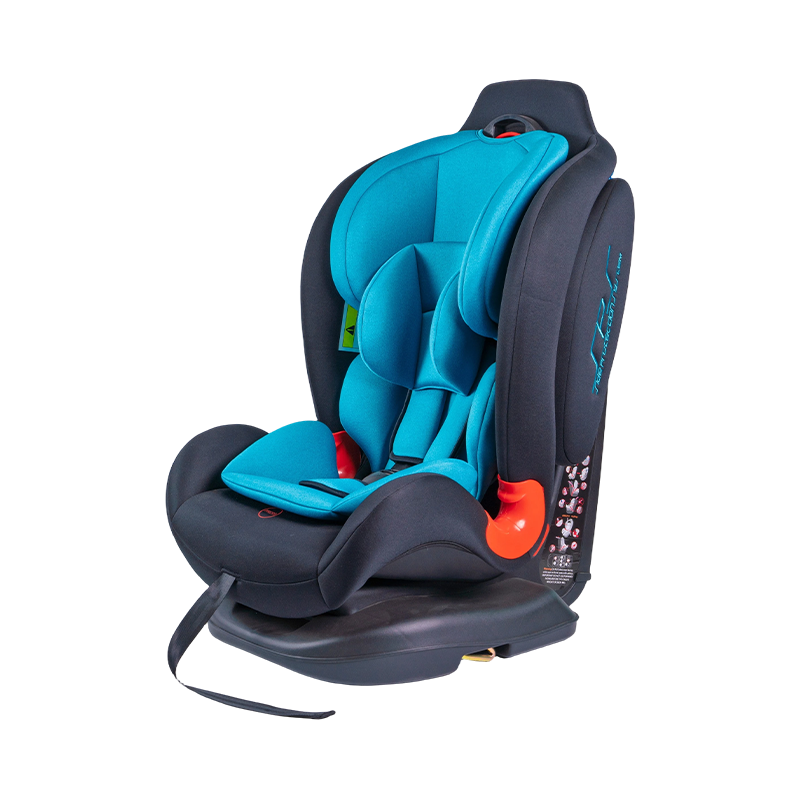
Many parents mistakenly believe that when a child reaches 4 years old or exceeds 100cm in height, they can directly use adult seat belts. In fact, because the height and bones of older children are not yet mature, adult seat belts often choke their necks or bellies, which can easily cause secondary injuries during emergency braking. Therefore, for children aged 4-12, a high back booster seat is an essential safety device.
The core principle of the high back booster seat is to lift the child and optimize the seat belt path. It guides the vehicle's three-point seat belt shoulder strap to the child's broad collarbone and the lap belt to the strong pelvis, avoiding the fragile neck and internal organs. Unlike simple booster cushions, a high back booster seat with a high backrest provides irreplaceable lateral protection for the head and torso. Its adjustable headrest can extend upward as the child grows, ensuring that energy-absorbing materials always wrap around the child's head to effectively resist side impact forces.
Whether choosing a versatile Baby Car Seat or a newborn car seat and high back booster seat focused on specific age groups, clarifying the child's current height, weight, and the family's actual vehicle usage scenario is the professional solution to ensure every trip is safe.
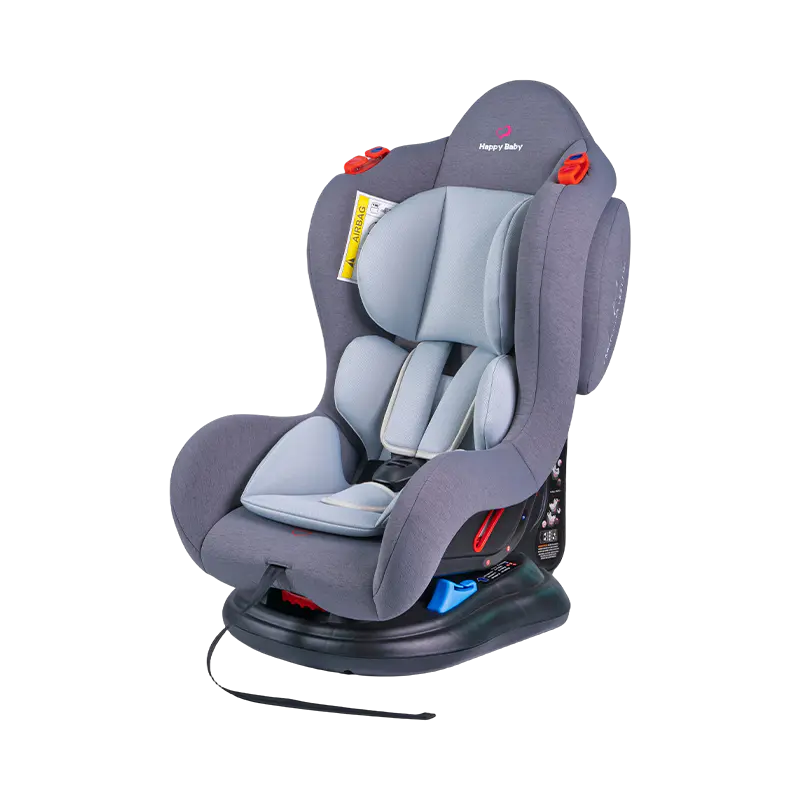
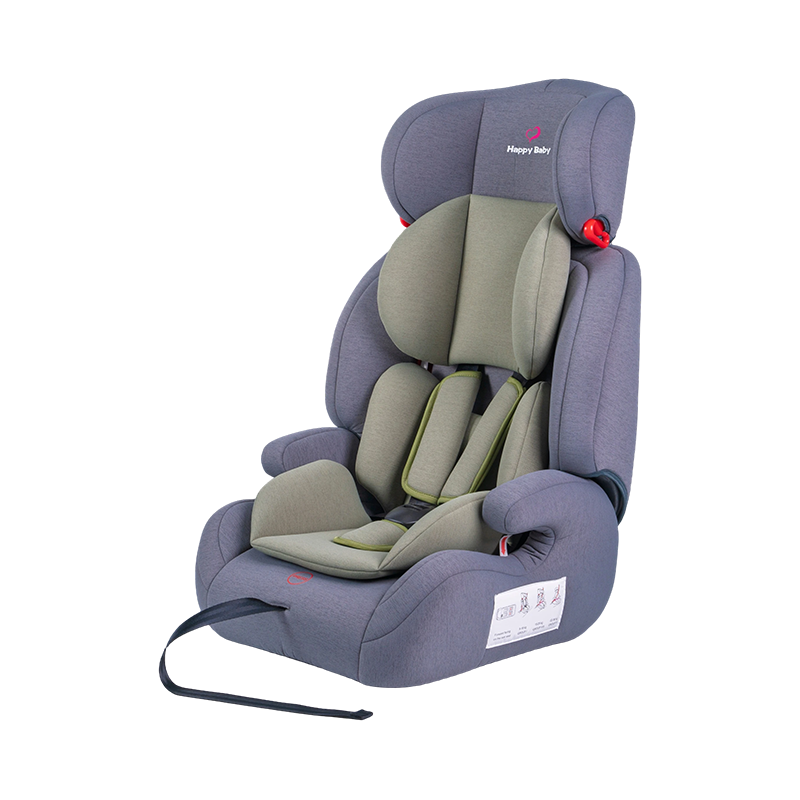

For the safety of babies' travel, we are committed to being a reliable partner for babies and families, and to becoming an expert in children's car safety seats. This is our eternal pursuit.
Contact Us
For exclusive deals and latest offers, sign up by entering your email address below.
CONTACT INFORMATION
-
Address: North of Sitong Road and west of Lianfu Port, Hongqiao Industrial Park, Taixing City, Jiangsu Province
-
Phone: +86 15996087029
-
E-mail: [email protected]
Copyright © JIANGSU HAPPY BABY SAFETY SEAT CO., LTD. All Rights Reserved.
Wholesale Child Travel Safety Seat Factory