
 English
 中文简体
 Home / News / Industry News / Child Car Seat Wholesale Sourcing: Certification, MOQ and Testing Checklist Guide

Industry News
Child Car Seat Wholesale Sourcing: Certification, MOQ and Testing Checklist Guide
2026-11-19
Content
- 1 What the Label Must Prove
- 2 The Testing Checklist That Belongs in the Contract
- 3 MOQ Is a Container Calculation, Not a Round Number
- 4 Factory Audit: Five Questions That Separate Manufacturing from Assembly
- 5 Reading a Quotation: Where the Money Actually Sits
- 6 Matching the Platform to the Sales Channel
- 7 Sampling and Pre-Production Sign-Off
- 8 Line Quality Control and AQL
- 9 Documentation, Customs and Destination Compliance
- 10 Lead Times, Tooling and Seasonality
- 11 Common Sourcing Mistakes
- 12 Frequently Asked Questions
- 12.1 What is the difference between an ECE R129 certificate and an i-Size label?
- 12.2 What MOQ should I expect for a private-label child car seat?
- 12.3 Can a factory use an existing approval for my brand?
- 12.4 Which tests should I witness?
- 12.5 Is R44 still acceptable?
- 12.6 How do I check that the test report matches the production seat?
- 12.7 What is a reasonable sample fee and timeline?
- 12.8 How should I plan a mixed container?
- 12.9 What documents do I need for customs clearance?
- 12.10 How do I handle warranty and spare parts?
- 13 One-Page Sourcing Scorecard
A 40–150 cm i-Size seat and a Group 1-2-3 belted seat can leave the same assembly line, yet they carry different approval evidence, different labelling duties and very different MOQ economics. Before a purchase order is raised, confirm three things in this order: the approval number matches the exact model and size range; the factory can link that approval to a production batch; and the carton programme fits the quantity your channel can actually sell.
The first sourcing error is treating a certificate as a generic company document. A child car seat approval is model-specific. It lists the seat category, the mass group or height range, the installation method, the dummy sizes used and the vehicle seating positions covered. If a quotation says “R129 approved” but the approval sheet describes a 76–150 cm forward-facing seat while your sample is a 40–150 cm rotating seat, you do not have a valid approval for the product in front of you. The same logic applies to an R44 seat: the approval must match the shell, the harness routing, the ISOFIX arms and the comfort insert configuration.
| Checkpoint | ECE R44/04 | ECE R129 and i-Size |
|---|---|---|
| Child sizing | Mass groups, such as 0+, Group 1, Group 1-2-3 | Height range in centimetres, often combined with a maximum weight |
| Installation | Vehicle belt as the primary reference; ISOFIX appears on some later approvals | Belt or ISOFIX; integral i-Size seats require ISOFIX and an anti-rotation device |
| Side impact | Not part of the R44 dynamic test programme | Side-impact test is part of the R129 assessment |
| Dummy family | P-series dummies | Q-series dummies, including Q0, Q1, Q3, Q6 and Q10 depending on the size range |
| Vehicle fit | Specific vehicle list and belt routing are central | i-Size seating positions are defined; belt-fit R129 seats still need a vehicle list |
| Evidence pack | Approval certificate, test report, conformity of production record | Approval certificate, test report, conformity of production record, i-Size label artwork |
| Market status | EU market placement ended on 1 September 2023; several other markets still accept R44 | Current EU framework and increasingly referenced in other regulated markets |
| Typical sourcing risk | Old stock supported by an approval that no longer reflects current production | Label artwork, size range or installation method does not match the shipped model |
In the European Union, R44/04 seats could no longer be placed on the market after 1 September 2023. That does not make every R44 tool obsolete. Large volumes still move into markets where R44 remains recognised, and some buyers source R44 for price-sensitive channels. The decision should be market-led, not habit-led. If your destination accepts only R129, an R44 quotation is not a cheaper option; it is a dead end. If your destination still accepts R44, ask for the current approval, the production conformity record and a written statement that the mould and harness have not changed since the approval was granted.
What the Label Must Prove
The approval label is a compact contract between the factory, the test house and the market authority. Read it as a data sheet, not as a badge. The E-mark identifies the approval authority, for example E1, E4, E8 or E11. The approval number identifies the approved type. The label also carries the manufacturer name or mark, the model reference, the height or mass range, the installation direction and, for i-Size seats, the i-Size descriptor.
A label that looks correct in a photograph may still fail at retail. Ask for the production label artwork in the destination language, the manual in the same language, the warning pictogram layout and the registration or warranty card if the market requires one. Check the durability of the label itself: it should resist abrasion, cleaning agents and UV exposure. A label that peels off in a hot car is not a cosmetic issue. It removes the traceability that authorities and retailers rely on.
Three documents should travel together: the approval certificate, the full test report and the conformity of production plan. The certificate proves the type was approved. The test report shows what was tested and with which dummy, fixture and installation configuration. The production plan explains how the factory keeps subsequent batches identical to the approved sample. If any one of the three is missing, the approval is a claim rather than a controlled process.
Practical check: compare the model reference on the certificate, the label artwork, the carton printing and the commercial invoice. Four documents, one model code. Any mismatch is a customs or retail compliance risk, even when the seat itself is well made.
The Testing Checklist That Belongs in the Contract
A test report is most useful when it is read against the exact product configuration you intend to buy. The same shell with a different comfort insert, a different harness pad or a different ISOFIX connector can fall outside the approved type. Build the following checklist into the technical annex of the purchase agreement, not into an email thread.
- Frontal dynamic impact: confirm the test speed, the dummy size, the installation method and the vehicle seat fixture used. The report should show the seat in the same rearward or forward-facing configuration as your order.
- Rear impact: relevant to R129 and to the structural integrity of the shell and headrest. Ask which dummy and which seat position were used.
- Side impact: R129 includes a side-impact assessment. Confirm that the tested seat has the same side wings, energy-absorbing foam and headrest geometry as the production version.
- ISOFIX connector strength and durability: the locking indicators, release mechanism and anti-rotation device should be exercised repeatedly. Ask for the cycle count and the acceptance criteria.
- Buckle and harness: buckle release force, harness webbing strength, adjuster slip and locking device performance. A buckle that is hard to release in a test rig may be harder in a real vehicle with a compressed seat.
- Flammability: interior fabrics, foams and belts should meet the burn-rate requirement applicable to the destination market. Keep the test report with the fabric reference, not just the seat model.
- Chemical safety: review REACH restricted substances, phthalates, PAHs, azo dyes, formaldehyde and heavy metals. Textile and foam suppliers can change without notice, so request a material declaration for each colourway.
- Corrosion and temperature: metal parts should survive salt-mist and humidity testing. Plastic parts should survive high-temperature ageing without cracking or losing latch function.
- Misuse and installation: the manual, routing diagrams and colour-coded belt paths should be tested with users who have not seen the product before. Misuse is a design issue, not only a consumer issue.
- Packaging performance: carton drop, compression and vibration tests should match the transport mode. A seat that survives the laboratory but arrives with a cracked shell creates returns and chargebacks.
- Label durability: abrasion, adhesion and legibility after cleaning. Include the serial number or date code format in the artwork approval.
- Production conformity: annual surveillance, batch testing and retention of test pieces. Ask how the factory handles a change in resin supplier, foam density or harness vendor.
| Test area | Evidence to request | Red flag |
|---|---|---|
| Dynamic impact | Full report with dummy size, speed, installation and fixture photos | One-page certificate summary only, with no test configuration |
| Side impact | R129 report showing the door intrusion and head containment | Claim of “side protection” without a test reference |
| ISOFIX | Connector strength and durability report, plus indicator function check | Connector supplier changed after approval |
| Textiles | Flammability and chemical reports by fabric reference and colour | Report covers a different fabric weight or dye lot |
| Production conformity | Batch test record, date code and retention sample | No link between the test piece and the shipped batch |
If the order value justifies it, witness the dynamic test or appoint a third-party inspector to confirm the seat configuration before the sled run. A witnessed test is not a guarantee of quality, but it closes the gap between a certificate PDF and the product you will receive.
MOQ Is a Container Calculation, Not a Round Number
MOQ often gets quoted as a clean figure, such as 300 pieces per model. The real constraint is usually a combination of carton volume, fabric minimums, mould changeover time and the factory’s line balance. A 40HQ container has roughly 76 m³ of internal volume, with 68–72 m³ usable after pallets and loading gaps. A large rotating seat can occupy 0.28–0.35 m³ per carton. A booster may sit near 0.10–0.14 m³. The difference between those two products is the difference between a 220-piece order and a 650-piece order in the same container.
Illustrative load plan for a 40HQ container at 68 m³ usable volume and one seat per carton. Actual carton dimensions must be confirmed with the factory.
Model MOQ
Common range: 200–500 pieces per model and colour. The lower end usually applies to stock fabrics and existing moulds; the upper end applies to a new colourway or a changed comfort insert.
Fabric minimum
A custom print or dyed fabric may require 500–1,000 metres. That quantity can support several hundred seats, but it also creates a colour-lot commitment that outlives the first order.
Tooling amortisation
A new injection mould for a shell can run from USD 15,000 to USD 60,000 depending on size and complexity. Ask whether the tooling is amortised in the unit price or invoiced separately, and who owns it.
Mixed container
Three to five SKUs in one 40HQ is workable when cartons are similar in size. Too many small lots increase picking errors, label mix-ups and the risk of a short shipment.
Negotiate the MOQ against the container, not against the catalogue. Ask for a loading plan with carton dimensions, gross weight and stack height. Then check the plan against your warehouse restrictions. A 40HQ that is volume-efficient but weighs 24 tonnes may still be a problem on the destination road. For heavier seats, the weight limit can bind before the cubic limit.
Factory Audit: Five Questions That Separate Manufacturing from Assembly
Many suppliers can assemble a seat from purchased shells, covers and harnesses. Fewer can control the moulding, the fabric cutting, the foam density and the batch traceability that sit behind a stable approval. The audit should test process ownership, not just the showroom.
- Do you mould the structural shell in-house? Ask for the number of injection or blow-moulding machines, the clamping force range and the mould maintenance record. If the shell is bought from a third party, the approval holder must still control the supplier and the change process.
- How do you trace a finished seat back to its batch? Look for a date code, mould number, operator ID, resin lot and harness lot. A serial number on the label is not traceability unless it links to those records.
- Which laboratory performed the dynamic test, and can we see the full report? The answer should name an accredited facility and provide the complete report, not a certificate summary. Confirm that the test house is independent of the factory.
- How is conformity of production controlled? Ask about annual surveillance, batch testing, retention samples, calibration of torque tools and buckle gauges, and the procedure for a resin or foam change.
- Who owns the tooling and the approval? If the buyer pays for a new mould or a new approval, the ownership and transfer conditions should be in writing. Otherwise a change of supplier becomes a change of product.
Audit signal: a factory that can show you a calibration log, a mould maintenance sheet and a batch retention sample is usually easier to work with than one that can only show a certificate wall. The documents reveal the routine.
Reading a Quotation: Where the Money Actually Sits
A child car seat quotation is rarely a single number. It is a bundle of material, labour, certification, packaging and risk. Comparing two FOB prices without comparing the bill of materials is like comparing two seats by colour. The table below shows a typical cost split for a mid-range convertible seat. The percentages move with size, harness complexity and order volume, but the structure is useful for negotiation.
Shell and structural plastics
18–24% of unit cost. Resin grade, wall thickness and mould cycle time matter more than the cosmetic finish.
Textiles, foam and padding
15–20%. Fabric weight, dye lot, flame-retardant treatment and foam density are common sources of hidden cost.
ISOFIX, harness and hardware
10–15%. Connector quality and buckle consistency are not places to accept an unbranded substitute.
Labour and assembly
8–12%. Line balance and inspection time are embedded here; a very low figure often means inspection has been moved elsewhere.
Testing and certification
3–6%. A new approval, a new size range or a new market can add a fixed cost that must be amortised over the order.
Packaging and logistics
6–10%. Carton strength, print, manual language and pallet configuration are visible costs with direct damage consequences.
Ask for the quotation to separate tooling, certification, samples, packaging and freight. A supplier that hides certification inside the unit price may also hide a change of test house or a change of harness supplier. Confirm the Incoterm, the payment schedule, the currency and the validity period. A 30/70 deposit and balance against a copy of the bill of lading is common; a full advance payment against a new supplier is a risk that should be priced.
Matching the Platform to the Sales Channel
Product architecture should follow the channel. A newborn-focused retailer needs an infant carrier that clicks into a stroller frame and is easy to carry. A family-focused online channel usually needs a long-use convertible seat that covers a wide height range and reduces the number of SKUs on the shelf. A value retailer may prefer a belted Group 1-2-3 seat with a simple shell and a low carton volume. The approval and the MOQ should support that decision, not fight it.
Infant carrier with aluminium handle
For newborn-focused ranges, the carrier is often the first seat a family buys. The handle, canopy, insert and rocker base influence perceived quality more than the shell colour. Check the handle-lock mechanism, the release force and the carrier's stability on a flat surface. The product card below links to our aluminium-handle infant carrier platform.
 HB801AL Aluminum-Handle Infant Carrier Car SeatA rear-facing Group 0+ infant carrier for newborns up to 13 kg, with aluminium handle, canopy and stroller or rocker use; suited to newborn ranges.View Product →
Belted i-Size 76–150 cm
A belted i-Size seat in the 76–150 cm range suits channels that need a long-use product without ISOFIX dependence. The belt path must be obvious, the headrest adjustment must be smooth and the cover removal must not require tools. For markets where vehicle ISOFIX is not universal, this platform often carries a lower installation barrier than a fixed ISOFIX seat.
 HB659 i-Size Belted Car Seat 76–150 cmA belt-installed universal i-Size seat for 76–150 cm, moving from five-point harness to booster use without ISOFIX dependence.View Product →
ISOFIX 40–150 cm rotating seat
A rotating 40–150 cm seat supports a premium position on the shelf, but it also raises the audit bar. The rotation mechanism, support leg or top tether, recline positions and side wings all affect the approval configuration. Ask for the exact approved installation combinations and confirm that the production seat uses the same connector and anti-rotation device as the test sample.
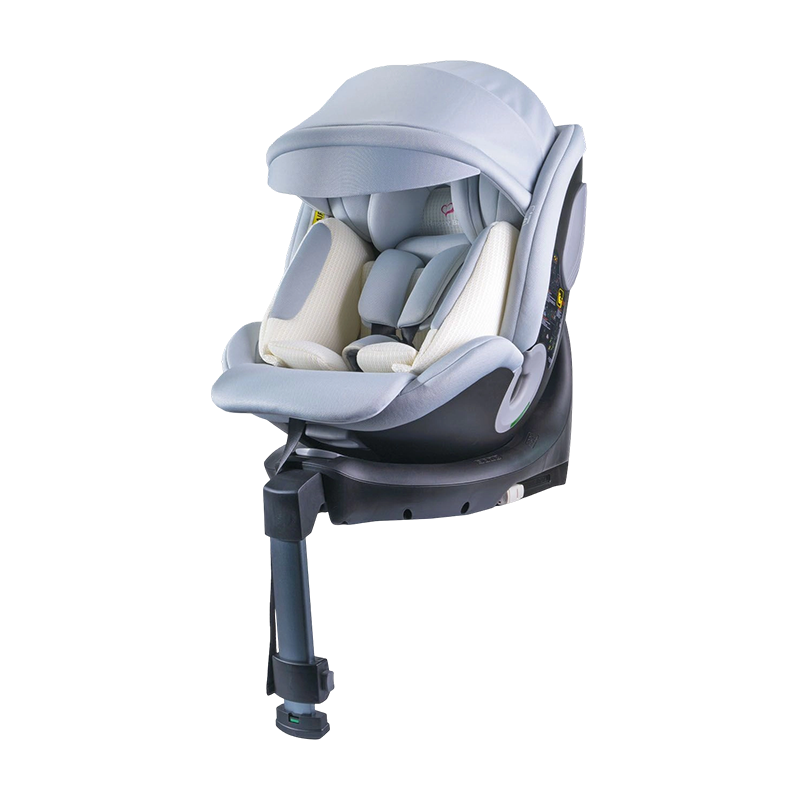 HB336 360° Rotating i-Size Car Seat 40–150 cmAn ISOFIX i-Size seat with 360° rotation, support leg and rear- to forward-facing use across 40–150 cm for multiple growth stages.View Product →
Whichever platform you choose, keep the range logic simple. A 40–105 cm rearward-facing seat and a 100–150 cm booster solve different problems. Mixing them in one promotional programme without clear fit guidance creates returns, not range depth. For a closer comparison of the two approval families, see our article on the key differences between R44 and R129 car seats.
Sampling and Pre-Production Sign-Off
The sample is not a gift; it is the reference against which the shipment will be judged. Sign it, date it, photograph it and keep it in a sealed bag. If the factory sends a “marketing sample” with a different cover or insert, the sign-off is already compromised. A proper pre-production process has twelve gates.
- Approve the technical specification: size range, installation method, harness type, ISOFIX or belt, recline positions and weight.
- Approve the bill of materials, including resin grade, foam density, fabric reference and hardware supplier.
- Approve the colour lab dips under daylight and store lighting.
- Approve the label artwork, manual language and carton printing.
- Build a golden sample and sign it on every critical surface.
- Run a pre-production sample on the actual line, not in the sample room.
- Confirm the approval configuration against the pre-production sample.
- Test the packaging with a drop and compression check.
- Approve the barcode, serial number format and carton mark.
- Confirm the inspection plan, AQL levels and critical defect list.
- Confirm the production schedule, material arrival and line capacity.
- Freeze the specification. Any later change needs a written deviation and, where relevant, a new approval assessment.
Samples usually take 7–15 days when the factory has the mould and fabric in stock. A new colour or a new insert can take 20–30 days. Pay for the sample if the factory asks; a free sample often arrives with less engineering attention. The sample fee should be credited against the bulk order.
Line Quality Control and AQL
Final inspection alone cannot catch a harness routed the wrong way or a buckle that was forced during assembly. Build in-process checks at the stations that matter: shell inspection after moulding, harness routing before the cover is closed, ISOFIX function before packing and carton label verification before sealing. Use ISO 2859-1 sampling for final inspection, with critical defects at zero acceptance.
| Class | Examples | Acceptance |
|---|---|---|
| Critical | Buckle does not lock or release, ISOFIX connector fails to engage, harness webbing cut or reversed, missing approval label, sharp edge on a touchable surface | Zero acceptance |
| Major | Headrest adjustment binds, cover seam open, recline mechanism stiff, carton printing wrong model, manual missing | AQL 2.5 or tighter |
| Minor | Cosmetic mould flow line, slight colour variation within approved limit, excess thread, carton scuff | AQL 4.0 |
Inspection should include a functional check with the seat configured as it would be sold. Install the ISOFIX arms on a fixture, route the belt, adjust the headrest through its full range and operate the buckle ten times. Then inspect the carton. A correct seat in a damaged carton is still a return. Check the carton drop, the inner protection and the polybag warning text. If the destination requires it, confirm the recycling mark and the packaging material declaration.
Documentation, Customs and Destination Compliance
The shipping documents should tell the same story as the approval file. A commercial invoice, packing list, bill of lading and certificate of origin are the baseline. Child car seats usually fall under HS heading 9401.80, but the national tariff line can differ. Confirm the code with your customs broker before the first shipment, especially when the seat is part of a mixed container.
- Approval certificate and full test report for the exact model and size range.
- Declaration of conformity or manufacturer’s declaration, where the destination requires it.
- Chemical compliance file: REACH, phthalates, PAHs, azo dyes, formaldehyde and heavy metals, matched to the fabric and colour.
- Flammability report for the interior materials.
- Carton and label artwork approval, including the serial number format.
- Fumigation or ISPM 15 statement if wooden pallets are used.
- Certificate of origin and the agreed Incoterm on the invoice.
Destination compliance is not only a border issue. Retailers increasingly ask for a product compliance file before listing a seat. A missing report can delay a launch by weeks, even when the container has already arrived. Keep a digital folder per SKU with the approval, test report, material declarations, label artwork, manual and inspection report. That folder is part of the product, not an afterthought.
Lead Times, Tooling and Seasonality
A realistic lead time starts when the deposit, the approved sample and the approved artwork are all in place. Material preparation for stock fabrics usually takes 10–15 days. Production of 300–500 seats can take 20–30 days on a balanced line. Inspection and loading add 5–8 days. Sea freight to Europe or North America commonly takes 25–40 days, depending on the port and the service.
Days 0–15 Sample approval, artwork freeze, material order
Days 15–25 Incoming material inspection, mould set-up, pre-production
Days 25–50 Bulk production, in-process checks, final inspection
Days 50–60 Packing, container loading, document release
Days 60–100 Sea freight and destination clearance
Seasonality matters more than many buyers expect. Chinese New Year can remove two to four weeks of capacity from the schedule, and the effect is felt before and after the holiday. Peak retail season for child seats in many markets runs from late summer into autumn, which means production slots fill in the second quarter. If your launch is fixed, book the line earlier than the standard lead time suggests. If the order includes a new mould, add 30–45 days for tooling, trial and approval.
Common Sourcing Mistakes
Buying a certificate, not a product
The certificate may be genuine but may not cover the size range, harness or connector on the quotation. Match the approval to the SKU.
Ignoring carton volume
A low unit price with a bulky carton can erase the saving in freight. Calculate the landed cost per seat, not the FOB price per piece.
Changing a component after approval
A new buckle, foam or ISOFIX supplier can move the seat outside the approved configuration. Treat every change as a technical review.
Accepting a label without a language check
Wrong wording, missing warnings or a manual in the wrong language can stop a retail launch even when the seat is safe.
Skipping the golden sample
Without a signed reference, the first bulk shipment becomes the new standard. That is a quality conversation you do not want to have after loading.
Over-mixing the container
Too many SKUs in one load raises picking errors and label mix-ups. Keep the mix manageable and verify the loading plan before production ends.
Frequently Asked Questions
What is the difference between an ECE R129 certificate and an i-Size label?
R129 is the regulation. i-Size is a specific approval route within R129 for integral seats that use ISOFIX and meet the i-Size sizing and compatibility requirements. An R129 seat is not automatically an i-Size seat. Read the approval number and the label descriptor, then confirm that the seat is approved for the height range you intend to sell.
What MOQ should I expect for a private-label child car seat?
For an existing mould and a stock fabric, 200–500 pieces per model and colour is a common range. A new colourway, a new comfort insert or a new harness can push the MOQ higher because of fabric minimums and line changeover. Always compare the MOQ with the container loading plan, not with the catalogue page.
Can a factory use an existing approval for my brand?
Only if the approval holder authorises the brand change and the label, manual and model reference remain consistent with the approved type. A private label does not create a new approval by itself. If the shell, harness, ISOFIX connector or size range changes, the factory should confirm whether a new approval or an extension is required.
Which tests should I witness?
The dynamic frontal test is the most valuable to witness because it reveals the exact dummy, installation and fixture. If the seat is R129, also review the side-impact report and the ISOFIX strength evidence. For textile-heavy programmes, review the flammability and chemical reports by fabric reference.
Is R44 still acceptable?
It depends on the destination. R44/04 seats could no longer be placed on the EU market after 1 September 2023, but several other markets still recognise R44. Do not assume that a lower R44 price is usable in an R129-only market. Confirm the destination regulation before the quotation is approved.
How do I check that the test report matches the production seat?
Compare the model reference, shell mould number, harness routing, ISOFIX connector, comfort insert and size range. Then ask for a production conformity record that links a batch to the approved configuration. A report that lists a different connector or a different headrest is not evidence for the seat you are buying.
What is a reasonable sample fee and timeline?
Samples usually take 7–15 days when the mould and fabric are available. A new colour or a new insert can take 20–30 days. The fee varies with the platform, but it should be credited against the bulk order. Paying a sample fee is normal; receiving a sample with no specification sheet is not.
How should I plan a mixed container?
Start with carton dimensions and gross weight, then build the load plan around the largest carton first. Keep the number of SKUs manageable, usually three to five, and leave a small buffer for loading gaps. Confirm the stack height and the pallet configuration with the destination warehouse before production is completed.
What documents do I need for customs clearance?
Commercial invoice, packing list, bill of lading, certificate of origin and the applicable product compliance file. Confirm the HS code with a customs broker, and keep the approval certificate and test report accessible in case the destination authority asks for them.
How do I handle warranty and spare parts?
Agree the warranty period, the spare-part list and the response time before the first order. Common spares include buckle assemblies, harness sets, covers and ISOFIX connectors. Ask the factory to hold a small stock of the exact approved components so a replacement does not become a new production run.
One-Page Sourcing Scorecard
| Area | Question to answer | Evidence |
|---|---|---|
| Approval | Does the approval number match the exact model, size range and installation method? | Certificate, label artwork, test report |
| Testing | Have frontal, rear and side tests been reviewed against the production configuration? | Full report with dummy and fixture details |
| MOQ | Does the order fit the carton plan and the fabric minimum? | Loading plan, carton dimensions, fabric commitment |
| Factory | Does the supplier control moulding, assembly and batch traceability? | Audit notes, calibration logs, retention samples |
| Quality | Are critical defects at zero acceptance and major defects at AQL 2.5 or tighter? | Inspection plan, defect classification, golden sample |
| Compliance | Are chemical, flammability and labelling files complete for the destination? | Material declarations, reports, manual and label proof |
| Commercial | Are tooling, certification, packaging and freight separated in the quotation? | Cost breakdown, Incoterm, payment terms |
| Delivery | Does the lead time include Chinese New Year, peak season and sea freight? | Production schedule, booking confirmation, buffer plan |
Use the scorecard as a gate, not as a formality. A “yes” without a document is a maybe. A maybe at the quotation stage becomes a chargeback, a delayed launch or a returned container later. The strongest sourcing files are boring: one model code, one approval, one golden sample, one batch record and one loading plan that agree with each other. For a wider comparison of approval routes, the article on i-Size versus traditional ECE R44/04 car seats is a useful reference for the product conversation.
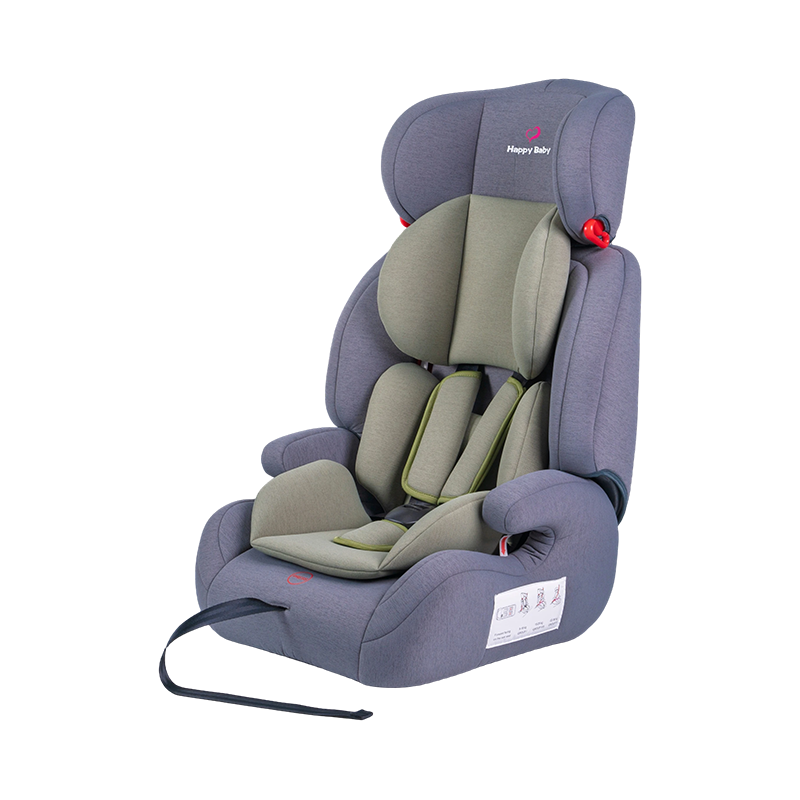
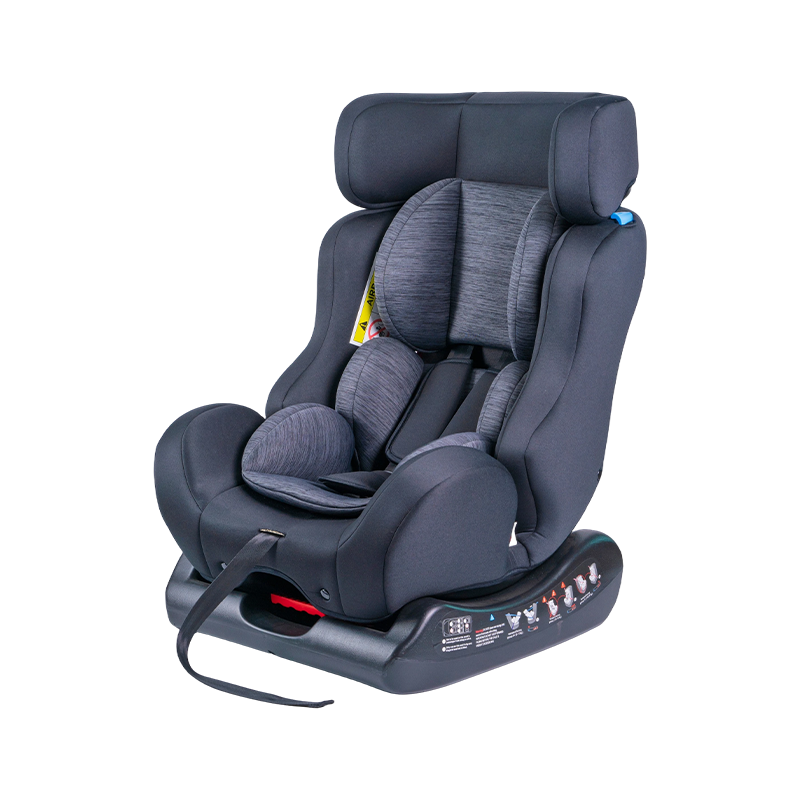
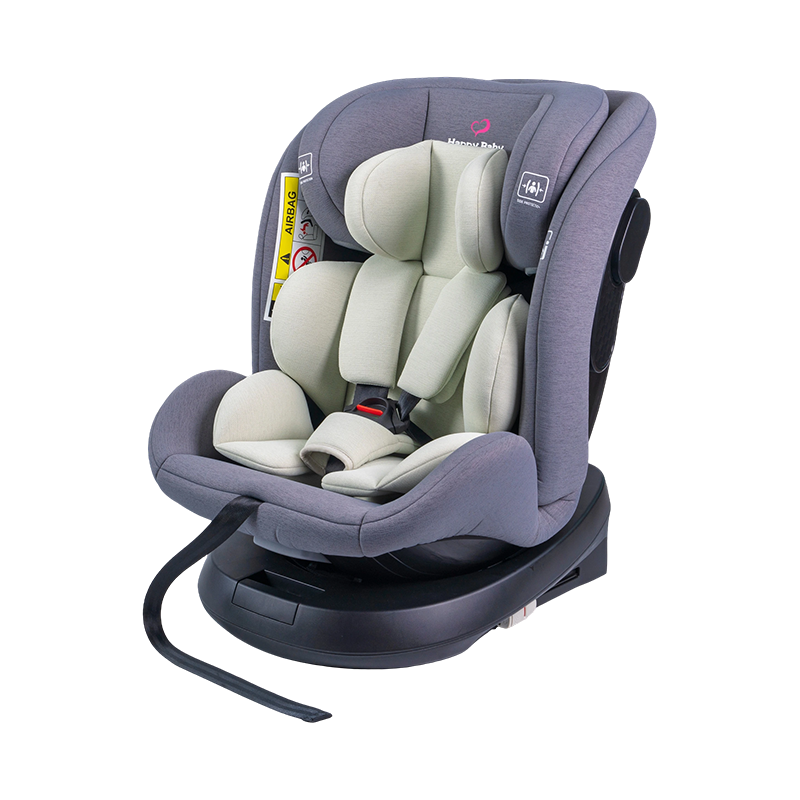

For the safety of babies' travel, we are committed to being a reliable partner for babies and families, and to becoming an expert in children's car safety seats. This is our eternal pursuit.
Contact Us
For exclusive deals and latest offers, sign up by entering your email address below.
CONTACT INFORMATION
-
Address: North of Sitong Road and west of Lianfu Port, Hongqiao Industrial Park, Taixing City, Jiangsu Province
-
Phone: +86 15996087029
-
E-mail: [email protected]
Copyright © JIANGSU HAPPY BABY SAFETY SEAT CO., LTD. All Rights Reserved.
Wholesale Child Travel Safety Seat Factory